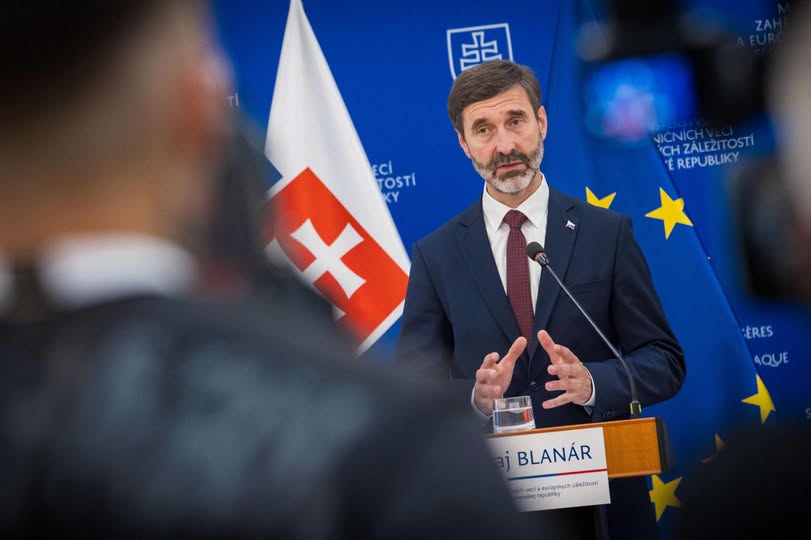

(Photo courtesy of the Ministry of Foreign and European Affairs of the Slovak Republic)
MANILA – Slovak Foreign Minister Juraj Blanár is set to visit the Philippines from November 12 to 15 to strengthen bilateral relations and explore opportunities for expanded trade and investment cooperation, the Department of Foreign Affairs (DFA) announced Wednesday.
The visit will mark the first official trip by a Slovak foreign minister to the Philippines and will include the formal opening of the Slovak Embassy in Manila.
Blanár is scheduled to meet with Foreign Affairs Secretary Ma. Theresa Lazaro and Trade and Industry Secretary Cristina Roque to discuss initiatives aimed at deepening economic ties between the two countries.
Accompanied by a business delegation, the Slovak official will also deliver the keynote address at the Philippines-Slovak Business Forum on November 13.
According to the DFA, bilateral trade between the Philippines and Slovakia reached USD 29.74 million in 2025, making Slovakia the country’s 75th-largest trading partner.
Blanár’s meeting with Lazaro will be their third engagement, following discussions during the 4th European Union Indo-Pacific Ministerial Forum in Brussels in November 2025 and the 25th ASEAN-EU Ministerial Meeting in Brunei in April 2026.
Aside from economic cooperation, the two officials are expected to discuss political relations, people-to-people exchanges and regional and international developments.
During his visit, Blanár will also sign the Declaration on the Deposit of Slovakia’s Instrument of Accession to the Treaty of Amity and Cooperation in Southeast Asia.
The DFA said Slovakia’s accession would provide a framework for stronger engagement with the Association of Southeast Asian Nations (ASEAN), consistent with its Strategic Concept on the Indo-Pacific launched in 2025.
The Philippines and Slovakia established diplomatic relations in 1993 and have since expanded cooperation in various sectors.
Slovakia is currently home to approximately 3,600 Filipinos.
The two countries also established a bilateral political consultation mechanism in October 2014 to facilitate discussions on issues of mutual interest.