
By Alexander Lopez
BUTUAN CITY – A PHP80.7-million climate field school has been launched in Siargao to equip farmers and fisherfolk with science-based tools and knowledge to protect their livelihoods from increasingly unpredictable weather and other climate-related threats.
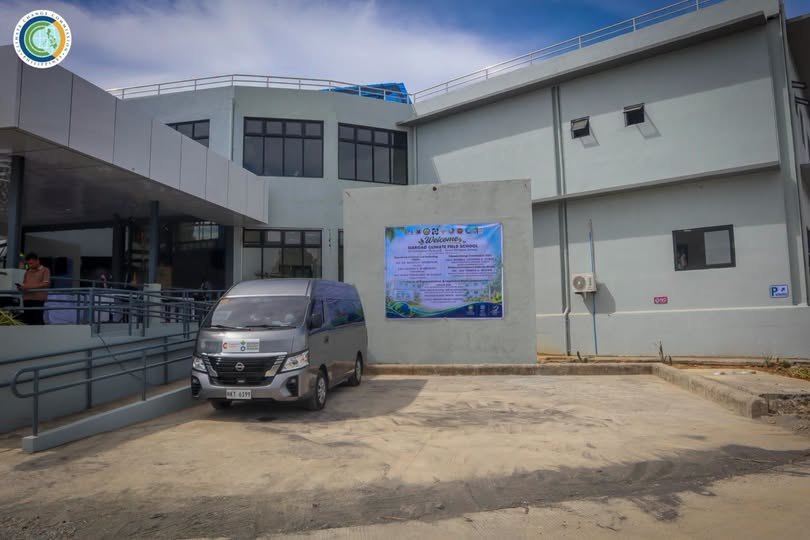
The Siargao Climate Field School for Farmers and Fisherfolk-Future Philippine Journey, a flagship recipient of the People’s Survival Fund, was launched at the Surigao del Norte State University-Del Carmen Campus (SNSU-Del Carmen) together with a new Water Testing Laboratory and Department of Science and Technology (DOST) iHub.
The Climate Change Commission (CCC) said the facilities represent a shift from national climate policies to practical, community-based measures designed to strengthen the resilience of small island communities.
“Climate change is not an abstract concept or a distant concern for Siargao, you are living on its frontlines,” CCC Assistant Secretary Romell Antonio Cuenca said in a statement Thursday, noting the threats posed by unpredictable weather and extreme events to fisheries, water resources, food security and livelihoods.
Del Carmen Mayor Alfredo Coro II said the field school would serve as a training ground where farmers and fisherfolk could improve their livelihoods while adapting to the municipality’s climate vulnerabilities.
“Our project serves as the benchmark for other local government units in accessing the People’s Survival Fund, especially for small island municipalities,” Coro said.
The project will initially accommodate 60 farmers and fisherfolk who will undergo hands-on learning intended to help them apply climate-resilient practices in agriculture and fisheries.
SNSU President Dr. Rowena Plando said integrating the field school, Water Testing Laboratory and DOST iHub into the Del Carmen campus would enable the university to translate climate science into practical technologies that communities can use to protect their livelihoods and water resources.
DOST Undersecretary for Regional Operations Sancho Mabborang said the facilities would also give communities access to scientific data, water-quality services and science-related interventions as they confront climate hazards.
The CCC said the project demonstrates how the People’s Survival Fund can finance not only physical infrastructure but also knowledge, scientific capacity and community-driven adaptation measures responsive to specific local climate risks.
CCC Vice Chairperson and Executive Director Robert Borje said the field school reflects the national goal of building a climate-smart and climate-resilient Philippines and translates strategies under the National Adaptation Plan into action at the community level.
The commission said the real measure of the field school’s success would be seen beyond the facility through “the practices adopted, the risks reduced, the livelihoods strengthened, and the communities made safer.” (PNA)

