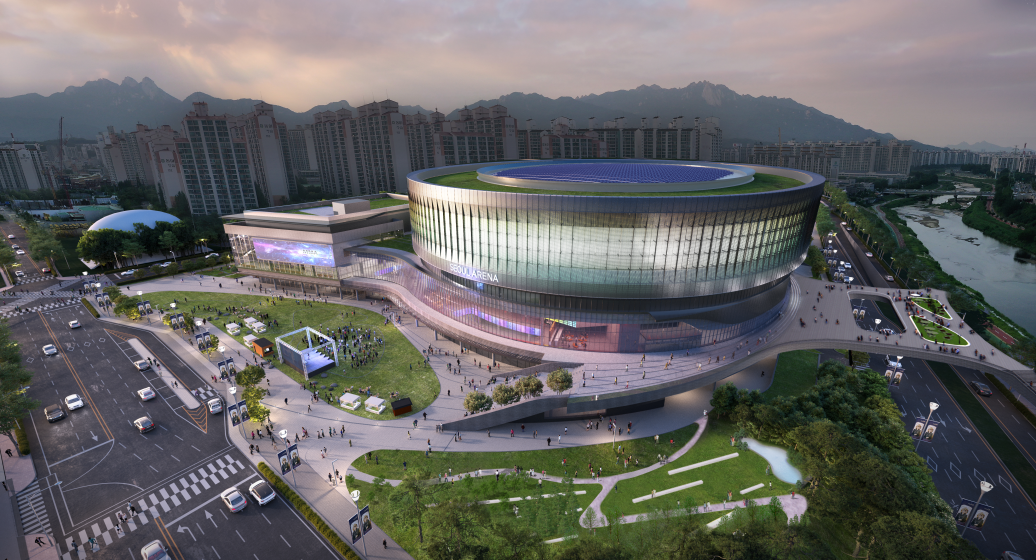

Seoul is doubling down on its status as the global capital of K-pop with the construction of Seoul Arena, a massive cultural landmark designed to rival the world’s top performance venues. The arena, currently rising in Dobong-gu, northeastern Seoul, is scheduled to open in the first half of 2027.
Once completed, it will be the city’s first purpose-built concert hall capable of hosting more than 20,000 fans—answering long-standing criticism that Seoul, despite being the epicenter of the Hallyu wave, has lacked a venue worthy of its global music influence.
For years, mega-concerts by K-pop giants have been squeezed into sports stadiums or pushed to satellite cities like Incheon and Goyang. Seoul Arena aims to end that, offering a main hall that can seat up to 28,000 spectators and a secondary hall for 7,000 more. Both venues will be equipped with cutting-edge acoustics, flexible staging, and unobstructed views—directly addressing the complaints of both performers and audiences at existing facilities.
But the project goes beyond music. The arena complex will also house shopping areas, a cinema, and leisure spaces, transforming it into a year-round cultural destination. City officials see it as the anchor of a broader redevelopment effort, particularly for the northeast districts of Seoul, which have historically lagged behind in cultural investment.
“Seoul Arena will not only fill a gap in infrastructure but also bring new energy to this part of the city,” the Seoul Metropolitan Government said in a statement. “It will strengthen cultural tourism and symbolize balanced regional growth.”
Its location is strategic: steps away from Changdong and Nowon subway stations, and soon to be linked by the GTX-C high-speed rail, the arena will be reachable from downtown Seoul and Gangnam in 20 minutes, and from Incheon International Airport in under an hour.
Seoul Mayor Oh Se-hoon, who toured the site this week, called the project a “world-class landmark for global pop culture.” The city projects that Seoul Arena will draw 2.7 million visitors annually, boosting both the entertainment economy and tourism.
The bet is clear: as K-pop’s influence continues to expand worldwide, Seoul wants to make sure the biggest stages are built at home. By 2027, the city is hoping its new arena won’t just be a concert hall, but the beating heart of the K-pop experience for millions of fans traveling from around the world.