
By Wilnard Bacelonia
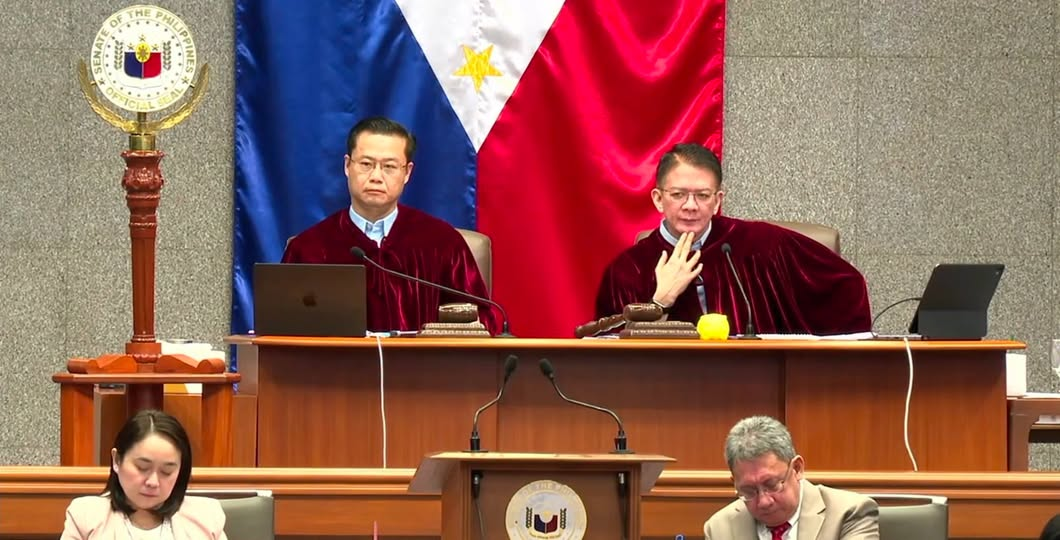
MANILA – The Senate impeachment court is finalizing rules on handling confidential financial records before the prosecution formally offers its evidence against Vice President Sara Duterte, seeking to protect sensitive information without compromising transparency in the proceedings.
Presiding officer Francis “Chiz” Escudero said Monday the court needed additional time to settle the procedures for receiving and admitting confidential documents, particularly those obtained from banks and other financial institutions during the prosecution’s presentation of evidence.
“We are finalizing some administrative matters that we are not yet sure about regarding the order the court will issue, especially with respect to confidential documents that will be made part of the formal offer,” Escudero said.
He explained that the court had been unable to complete the necessary arrangements because of the successive whole-day hearings devoted to examining financial records and hearing testimony under Article II of the impeachment complaint.
The challenge, he said, was to establish safeguards that would preserve the confidentiality of sensitive records while maintaining public access to the impeachment proceedings.
“We haven’t had time given these successive trials for the whole day to be able to come up with a rational order on how to deal with the confidentiality of the documents and at the same time be able to be transparent with respect to the court’s proceedings,” he said.
The clarification came after defense lawyer Sheila Sison questioned the need to extend the proceedings to Tuesday when both panels were already present and the prosecution had identified forensic expert Alexander Cabrera as its final witness under Article II.
Sison suggested that the court could immediately settle the schedule for the prosecution’s formal offer of evidence and allow the parties to submit their corresponding pleadings, avoiding another appearance devoted to administrative matters.
Escudero, however, explained that the unfinished preparations primarily concerned the court’s own procedures rather than matters that the prosecution or defense could resolve independently.
He said the court hoped to complete the arrangements Monday evening so that the necessary orders could be issued during the next session.
The development comes as the House prosecution panel prepares to conclude its presentation after weeks of testimony from bank officials, financial institutions, government agencies and forensic experts concerning allegations of unexplained wealth.
House prosecutor Chel Diokno confirmed that Cabrera was the panel’s last witness under Article II.
Escudero also acknowledged receipt of the prosecution’s Oct. 6 manifestation expressing its intention to withdraw Article III, which concerns bribery.
The court has taken the manifestation under advisement, pending the prosecution’s final confirmation and other procedural requirements before it formally rests its case.
The impeachment court suspended proceedings until 1 p.m. Tuesday, Oct. 13, when it is expected to receive the parties’ remaining manifestations and address matters concerning the formal offer of evidence.
Escudero said the session would likely be devoted to procedural matters and could last only half a day.