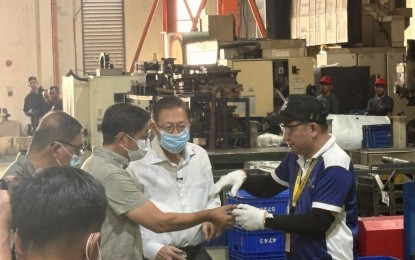
The arrest of Global Ferronickel Holdings Inc. (FNI) chairman Joseph Sy has sparked a high-stakes standoff between regulators and one of the country’s largest nickel producers, raising questions about corporate governance, market confidence, and the boundaries of state authority.
Sy, who was taken into custody at the Ninoy Aquino International Airport on August 21 over allegations of misrepresenting his citizenship, now finds his personal legal battle colliding with the fortunes of a publicly listed company. The Securities and Exchange Commission (SEC) said Tuesday it is “closely monitoring” the case and weighing whether to intervene under its jurisdiction.
“Given Mr. Sy’s role as chairman of a publicly listed company, the SEC will carefully evaluate if any regulatory actions are necessary,” the Commission said, stressing that its priority is to safeguard investors and preserve market stability.
The SEC also reminded all listed companies that material developments—particularly those involving top executives—must be promptly disclosed to the public in accordance with securities laws and Philippine Stock Exchange rules.
Behind the regulatory language, however, lies a deeper tension: how to protect investors while avoiding destabilization of one of the country’s top nickel producers at a time when the Philippines is positioning itself as a critical supplier in the global green energy transition.
Global Ferronickel, for its part, has gone on the offensive. In a strongly worded statement, the mining giant denounced Sy’s arrest as “unlawful” and “baseless,” saying his Filipino citizenship has already been affirmed multiple times by the Bureau of Immigration, the Department of Justice, and even the Supreme Court.
“This accusation is baseless: Mr. Sy is a Filipino citizen, as confirmed by at least six rulings,” the company declared. It added that Sy entered the country on a valid Philippine passport, which under the law is proof of nationality.
While calling his detention a “grave injustice,” FNI was quick to assure shareholders that its operations remain “stable, legitimate, and unaffected.”
Analysts note that the incident highlights a growing dilemma for regulators: how to deal with corporate leaders entangled in legal controversies without undermining investor confidence or fueling perceptions of political targeting.
For now, the SEC has not signaled any immediate sanctions, saying only that its actions will be guided by transparency, accountability, and the need to preserve trust in capital markets. But with the mining sector under heavy scrutiny and political intrigue never far from the boardroom, the case of Joseph Sy is shaping up to be more than a personal legal fight—it is a test of how far regulatory oversight should reach into the heart of corporate Philippines.