
(Photo courtesy of Anadolu)
ISTANBUL – Russia and Ukraine exchanged accusations at the United Nations Security Council on Monday over escalating attacks on commercial shipping and energy infrastructure, with Moscow rejecting proposals to revive a grain export agreement and Kyiv accusing Russian forces of stealing Ukrainian agricultural products.
Russia’s representative dismissed the possibility of a new grain agreement, claiming that previous arrangements primarily benefited Western countries rather than vulnerable nations facing food shortages.
“I dwelt on this in detail to ensure that nobody here has any doubt about the fact that we will not accept any new grain deal, which in practice is nothing other than a scheme of Ukrainian food in exchange for Western weapons,” the Russian envoy said.
The representative claimed that countries in need received only 3 percent of grain exports under the previous agreement, while as much as 70 percent of Ukrainian agricultural products went to European Union and Western markets.
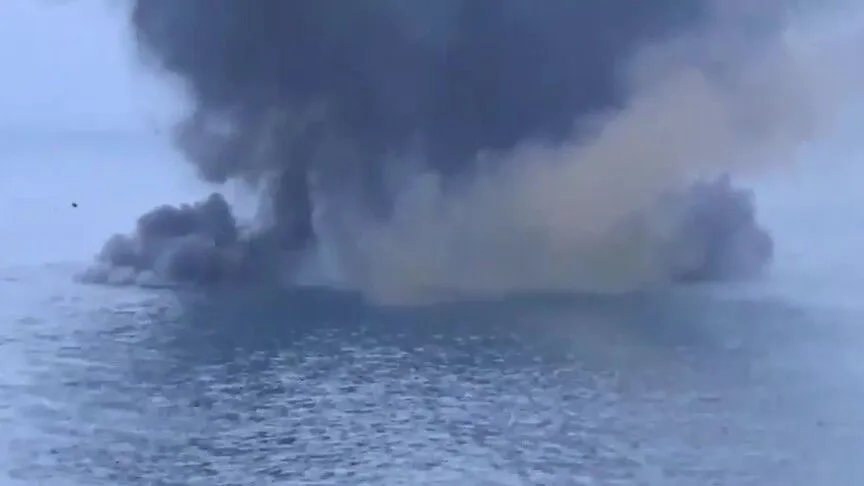
Moscow also accused Ukrainian forces of targeting more than 200 commercial vessels across several maritime regions since July.
Russia defended its military operations, maintaining that its forces targeted only military logistics vessels and dual-purpose facilities. It also rejected Western calls for an energy and maritime ceasefire, alleging that such proposals were intended to restrict Russian exports while allowing Ukraine to strengthen its military capabilities.
The Russian envoy maintained that Moscow remained a major contributor to global food security, supplying agricultural products to 160 countries and expressing readiness to address potential grain shortages.
Ukraine condemns attacks on energy infrastructure
Ukraine’s representative accused Russia of systematically targeting civilian energy infrastructure, claiming that virtually every power plant in the country and more than 800 units of energy equipment had sustained damage.
“Since mid-July, not a single day has passed without a Russian attack on Ukraine’s energy system,” the Ukrainian envoy said.
According to Kyiv, attacks in November forced three thermal power plants to shut down and left more than 850,000 people without electricity.
Ukraine also raised concerns over the safety of the Zaporizhzhia Nuclear Power Plant, which reportedly lost its external power supply for the 28th time. Kyiv renewed its calls for the facility to be returned to Ukrainian control.
The representative said the Ukraine Energy Support Fund had secured more than €2.4 billion ($2.6 billion) from 41 donors but stressed that additional air defense capabilities remained a priority ahead of winter.
On maritime security, Ukraine reported 89 attacks on civilian vessels between June and August, compared with 25 incidents throughout 2025.
Kyiv further accused Moscow of operating a “shadow grain fleet” to transport agricultural products allegedly taken from occupied Ukrainian territories.
“Grain stolen from Ukrainian land must be seized, not bought,” the envoy said.
US calls for protection of civilian infrastructure
The United States urged both Russia and Ukraine to immediately halt attacks on energy networks, civilian ports, food distribution facilities, and commercial vessels, warning that continued hostilities threatened global food supplies and maritime safety.
“Food distribution sites must not be hit. Colleagues, the best way to protect food supplies on the Black Sea is for the war to end,” the US representative said.
Washington also highlighted progress in discussions with Ukraine and European partners on four key areas: security guarantees, a pathway toward European Union membership, post-war economic recovery, and long-term security arrangements.
The initiatives build on recent negotiations in Abu Dhabi aimed at establishing a framework for lasting peace.
Tensions persisted toward the end of the Security Council meeting as Russia accused Ukraine of expanding maritime attacks beyond the Black Sea, citing recent incidents in the Mediterranean.
Ukraine rejected Moscow’s allegations, describing them as a “distortion and finger pointing,” while reiterating its demand for the withdrawal of Russian forces.
“Russia chose to invade Ukraine. Russia continues its aggression, and Russia bears full responsibility for this war,” the Ukrainian representative said.
The competing accusations underscored continuing diplomatic divisions over the conflict, as concerns mounted over energy security, international shipping, and global food supplies.