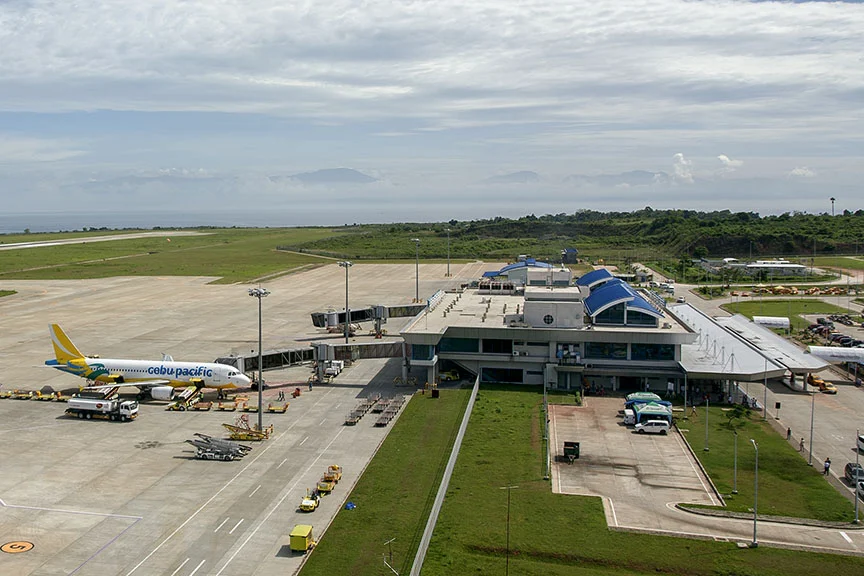

The government is moving to address what it sees as a structural cause of persistently high domestic airfares, with the Department of Transportation ordering that all airport runways—both new builds and upgrades—meet a minimum length of 2,100 meters to accommodate larger, more efficient aircraft.
Transortation Secretary Banoy Lopez said the directive is intended to future-proof the country’s airport network while directly responding to complaints that flying within the Philippines can be more expensive than traveling abroad.
Short runways, he noted, limit airlines to smaller aircraft with fewer seats, driving up per-seat costs and ultimately ticket prices.
The policy aligns with concerns earlier raised by the Air Carriers Association of the Philippines, which has pointed to infrastructure constraints—rather than fuel prices alone—as a key factor behind expensive local flights.
Larger aircraft, the group has argued, allow airlines to spread fixed costs over more passengers, creating room for lower fares.
Lopez said the runway standard will be mandatory for all newly developed airports, ensuring they are ready to handle bigger planes as demand grows.
While extensions at existing airports will depend on location and feasibility, the department is coordinating closely with the Civil Aviation Authority of the Philippines to prioritize sites where runway upgrades could deliver the biggest impact on connectivity and prices.
Beyond runway length, the DOTr is also pushing to expand night-rated operations, particularly at tourist gateways. By equipping more airports with runway lighting and navigation systems for nighttime use, the government hopes to open up more red-eye flights, which airlines typically price lower due to off-peak demand.
Lopez said tourist destinations are being prioritized under the program to give travelers more choices and ease congestion during daytime slots.
The department is likewise studying complementary measures to further reduce travel costs, including a possible reduction in terminal fees at CAAP-managed airports. Officials believe this could provide immediate relief to airlines and passengers while longer-term infrastructure upgrades are underway.
For destinations where air access remains constrained, such as Siargao, the DOTr said it is also evaluating alternative transport options and network strategies to sustain tourism growth without pushing fares out of reach.
Taken together, the runway expansion policy, night-rating push, and fee review signal a shift in government strategy—from short-term fare interventions to fixing the physical and regulatory bottlenecks that shape airline costs.
If implemented as planned, officials believe these changes could gradually make domestic air travel more competitive, accessible, and supportive of the country’s tourism ambitions.