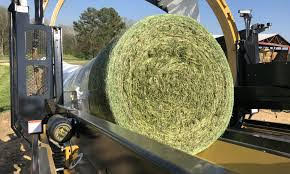

With the country continually facing a mounting waste crisis characterized by overflowing open dumps and the high cost of transporting loose garbage between islands, the Philippine government is looking at adopting the ’round bale’ method as a means of addressing the burgeoning problem of waste management and disposal.
Just recently, government representatives met with officials from the Royal Norwegian Embassy, Innovation Norway and Norwegian industrial firm Orkel to discuss the logistical challenges of managing waste across the ciuntry’s 7,641 islands.
The ‘Waste Burden to Energy Resource’ forum was successfully convened last January 15 at Seda Vertis North, where the dialogue was led by Ana Florentino of the Royal Norwegian Embassy alongside representation from the Department of Environment and Natural Resources (DENR), Department of Energy ( DoE), Department of Agriculture (DA) and various local government units (LGUs) to evaluate a ‘moveable’ solution for the nation’s mounting trash crisis.
It was highlighted that the Philippines faces a mounting waste crisis characterized by overflowing open dumps and the high cost of transporting loose trash between islands whuchb often pose significant environmental risks, including toxic runoff into marine protected areas and frequent landfill fires.
The propsed solution arrived at is to use Orkel’s ‘round bale’ technology that aims to transform loose, hazardous waste into dense, sealed round bales and thereby creating Refuse-Derived Fuel (RDF)—nonrecyclable waste that is compressed and wrapped to become a stable energy source.
Orkel representative Joanne Lee acknowledged key advantages of the mobile baling system that include odors and leakage control through tightly wrapped bales that prevent smell and toxic runoff and reduce health risks for nearby coastal communities and 70 percent volume reduction by utilizing high-density compaction that significantly extends the life of existing landfills and reduces the need for land expansion.
Aside from these positive aspects, the method also establishes logistical efficiency as sealed bales are safer and easier to ship via barge or truck and allowing small islands to export their waste to mainland energy plants or cement kilns more affordably.
As proof in the practicality of the technology, Lee also demonstrated how the technology prevents plastic and residuals from entering river systems and oceans by converting residuals into feedstock for industrial users and creating a circular economy where ‘trash’ becomes a marketable commodity for power facilities.
“Because the machinery is mobile and scalable, it can be moved between various LGUs as needed, making it uniquely suited for Philippine geography,” she pointed out.
Meanwhile, the Norwegian Embassy and Innovation Norway emphasized that Orkel’s technology is not a replacement for traditional waste sorting but instead serves as a critical final step in prioritizing segregation and recycling first, then packing the remaining unavoidable waste for safe storage and shipment.
“By adopting mobile, compacted waste solutions, the Philippines may be able to turn its dispersed trash problem into a sustainable, manageable resource, protecting both its tourism industry and its marine environments,” the embassy stressed.