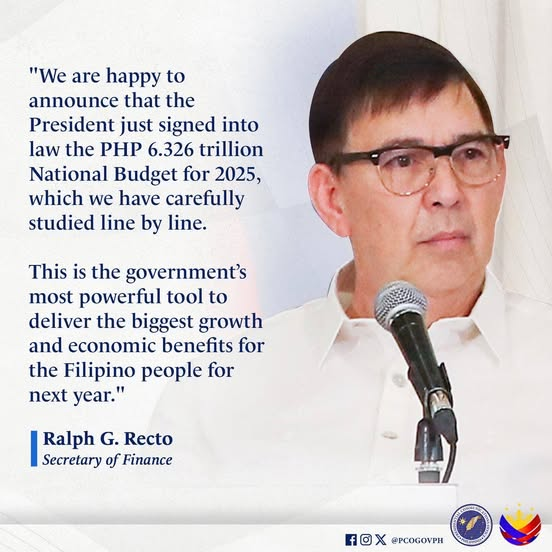

Department of Finance (DOF) Secretary Ralph Recto urged the Philippine Health Insurance Corporation (PhilHealth) on Monday to significantly expand its benefit packages for the country’s 10 most common illnesses, proposing an up to 200% increase.
During a press briefing at Malacañang following the signing of the 2025 General Appropriations Act (GAA), Recto emphasized the importance of focusing PhilHealth’s resources on high-priority diseases to maximize its impact on public health.
“Maybe we should focus on the top 10 illnesses,” Recto said. “Let’s increase the benefit package by 100%, even 200%. This would benefit the public and ensure that PhilHealth funds are used effectively.”
PhilHealth did not receive a subsidy allocation under the 2025 national budget signed by President Ferdinand R. Marcos Jr.
Budget Secretary Amenah Pangandaman explained that the President’s authority over the budget is limited to vetoing line items in the enrolled bill and does not extend to adding new allocations.
Despite the absence of a subsidy, Recto noted that PhilHealth’s financial reserves are robust.
Strong financial position
According to Recto, PhilHealth has a reserve fund of P280 billion and reported a surplus of approximately P150 billion, according to the latest figures.
“Congress likely deemed PhilHealth’s operating budget sufficient,” he explained. “They have investments exceeding P400 billion and are expected to generate around P200 billion in revenue for 2025 while spending an estimated P150 billion.”
Recto also stressed the need for vigilance in managing PhilHealth’s funds to ensure effective and efficient expenditure in the coming year.
Maximum impact
The proposal to enhance benefits packages is seen as a strategic move to address the healthcare needs of most Filipinos. By concentrating resources on the most common illnesses, the government aims to alleviate the financial burden on patients and improve overall healthcare outcomes.
The suggestion aligns with ongoing efforts to strengthen PhilHealth’s role as a key pillar in the country’s universal healthcare system. Recto underscored that increasing benefit packages for the top illnesses would benefit patients and reinforce public confidence in the state health insurer.
The DOF will work closely with PhilHealth to monitor its spending and evaluate the feasibility of Recto’s proposal. If implemented, the enhanced benefit packages could mark a significant step toward more accessible and equitable healthcare for Filipinos.
“This is about ensuring that PhilHealth’s funds are used where they matter most—to save lives and uplift the quality of life for our people,” Recto said.