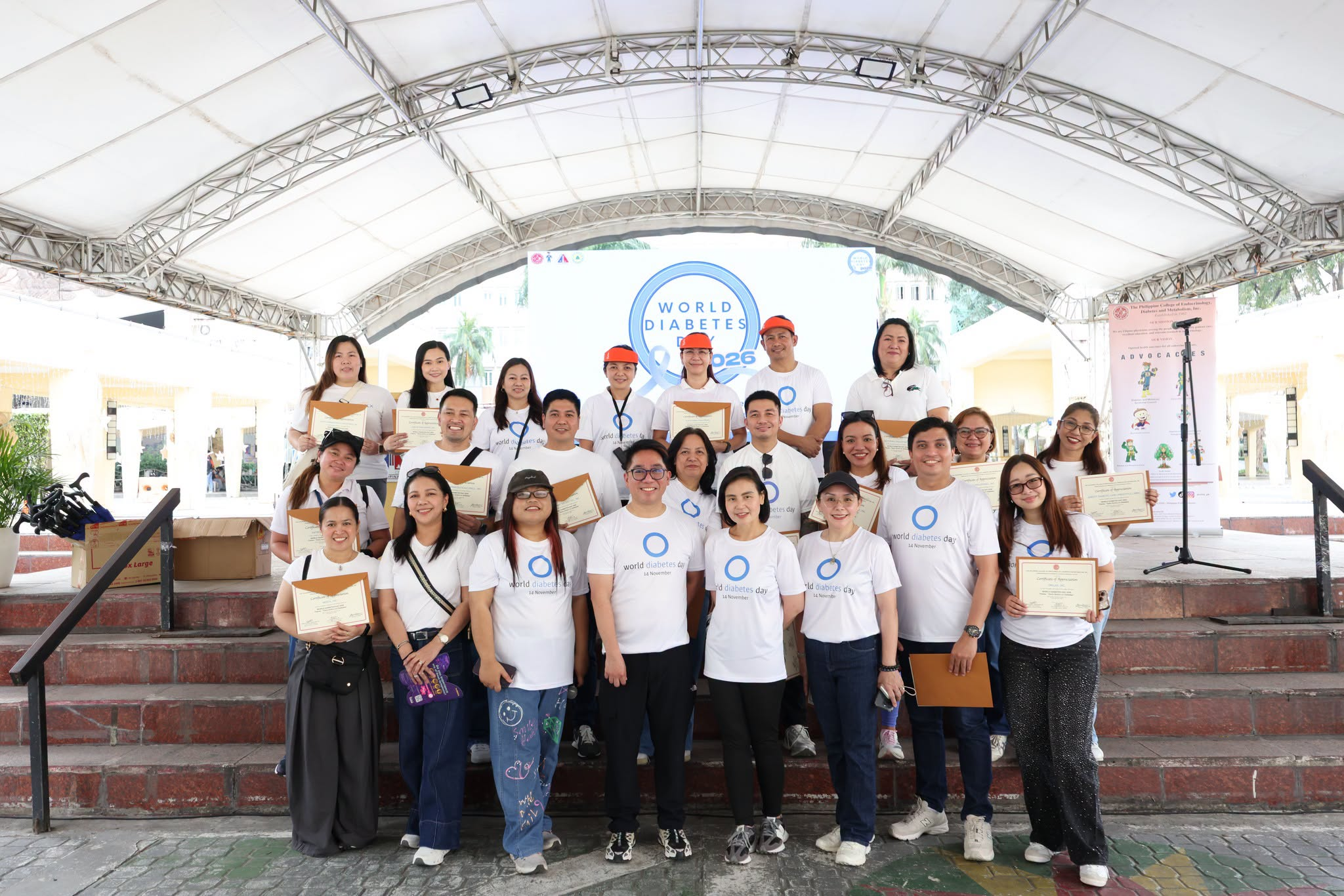

The Quezon City government stepped up its campaign against diabetes by offering free health screenings and promoting early detection during its observance of World Diabetes Day 2026 on Sunday, November 15.
The event, organized by the Philippine College of Endocrinology, Diabetes and Metabolism (PCEDM) in partnership with the Quezon City Health Department (QCHD), was held at the Risen Garden of Quezon City Hall.
Residents were offered free urine albumin detection tests, blood sugar monitoring, blood pressure checks, and other health services aimed at identifying potential health risks and encouraging preventive care.
Urine albumin testing helps detect early signs of kidney damage, a possible complication of diabetes, while blood sugar monitoring can help identify individuals who may require further evaluation for elevated glucose levels.
The initiative emphasized the importance of regular health assessments, particularly for individuals at risk of developing diabetes and its complications.
Participants also took part in a Blue Circle Formation, symbolizing unity and collective action in raising awareness about diabetes prevention, early diagnosis, and effective disease management.
Councilor Kristine Matias attended the event on behalf of Quezon City Mayor Joy Belmonte.
Also present were PCEDM President Dr. Elaine Cunanan, founding president Dr. Augusto Litonjua, Board of Trustees member Dr. Jay Fonte, QCHD head Dr. Ramona Abarquez, Diabetes Advocacy Society Inc. President Cynthia Clemen Yu-Duntz, and World Health Organization representative Marvin Fajardo.
Diabetes is a chronic condition characterized by elevated blood sugar levels that, when left uncontrolled, can lead to serious complications affecting the heart, kidneys, eyes, and nerves.
Health experts emphasize that early detection, proper nutrition, regular physical activity, and appropriate medical management are essential in reducing the risk of diabetes-related complications.
Through the activity, the city government and its healthcare partners sought to encourage residents to undergo regular screenings and take preventive measures before complications develop.
The observance also reinforced the importance of cooperation between local government, medical professionals, and community organizations in improving access to preventive healthcare services.