
(Photo courtesy of Anadolu)
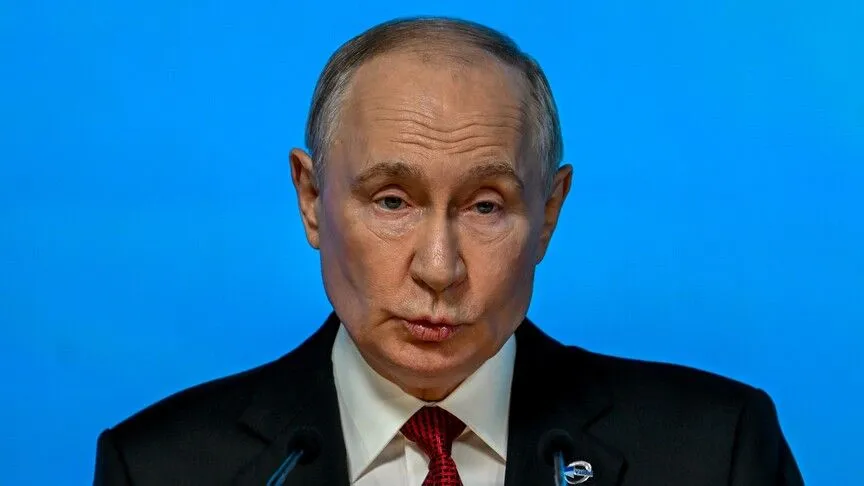
Russian President Vladimir Putin warned Tuesday that Moscow would inevitably retaliate against Ukrainian attacks on Russian oil refineries, accusing Kyiv of continuing its strikes despite calls from US President Donald Trump to halt such operations.
Speaking during a meeting on the development of Russia’s fuel and energy sector in Moscow, Putin said Ukraine’s attacks had persisted despite Washington’s intervention.
“The Kyiv regime does not stop attacking our oil refining facilities, despite the appeal and direct request of the US president to refrain from these attacks,” Putin said.
“Therefore, I would like to note that retaliatory actions on our part are inevitable. Everyone should know this,” he added.
Putin claimed that Ukraine’s escalation, which began in early June and was intended to last 40 days, would not inflict critical damage on Russia. He called for additional security measures to protect oil refineries and their employees.
Despite mounting pressure on the country’s energy infrastructure, Putin said Russia had maintained stable fuel supplies for consumers and businesses, including agricultural producers facing seasonal increases in demand.
He said the government had expanded fuel production, increased reserves, adjusted supply chains, and imposed restrictions on exports of gasoline, jet fuel, and diesel to stabilize the domestic market.
Gasoline prices had generally stabilized across most Russian regions following peaks in early October, although Putin acknowledged that challenges remained in the petroleum products market.
The Russian leader also criticized European efforts to restrict imports of Russian energy resources, arguing that such policies would create further economic difficulties for European countries.
“Less of our oil and gas will reach them, while they will have more problems,” he said.
Putin maintained that Moscow would pursue new export markets and strengthen cooperation with what he described as “predictable and responsible partners.”
He also called for the development of alternative energy supply routes, particularly the Northern Sea Route under the Trans-Arctic Transport Corridor, which he said could significantly reduce cargo delivery times and logistics costs.
To maximize the potential of the Arctic route, Putin urged the expansion of Russia’s domestic shipbuilding industry, including the production of ice-class cargo vessels and icebreakers.
He likewise pushed for greater investment in transportation infrastructure across Siberia and the Russian Far East, alongside the expansion of oil refining and petrochemical industries in eastern Russia, to meet growing demand from Asian markets.