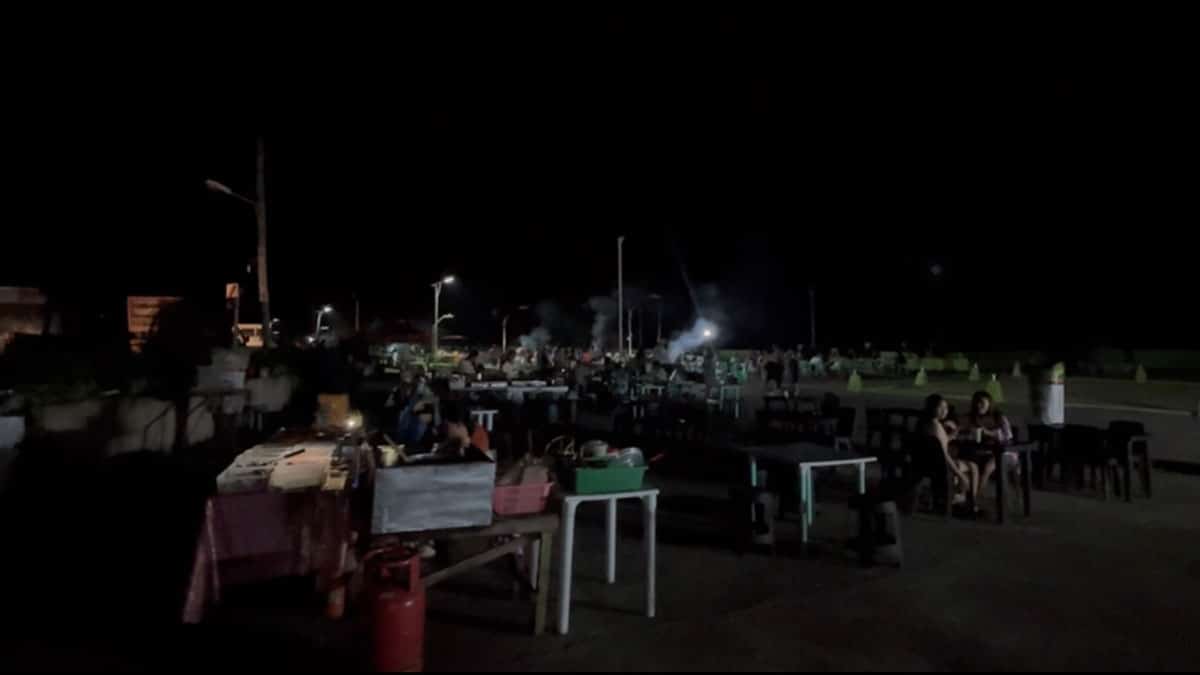
Power has been restored in blackout-hit Siquijor as of Monday, exactly one week after President Ferdinand Marcos Jr. directed energy officials to address the power crisis in the province.
National Electrification Administration (NEA) administrator Antonio Mariano Almeda reported that two generators from Total Power arrived in Siquijor at 6 a.m. on Sunday. These generators were installed and integrated into the system by 9 p.m. However, variances in frequency caused the system to trip for several hours, necessitating further adjustments.
“Tinitimpla-timpla nila. It was only until 2 a.m. this morning that the first genset was able to dispatch 900 kW. The second genset was able to dispatch another 300 kW. So by 2 a.m. this morning, wala ng brownout,” Almeda stated in a radio interview with DZMM. He expressed confidence that there would be no further brownouts in Siquijor, even during peak demand at noon. “On the supply side, it is more than enough. It is just the integration of the system; may mga final touches sila,” he added.
Almeda acknowledged that the rental of generators is a temporary solution to the power crisis, emphasizing that NEA is still working on a permanent fix. A team of engineers from the University of the Philippines also visited the island over the weekend to conduct an independent audit of the Siquijor Island Power Corp. (Sipcor) plant.
Energy Secretary Sharon Garin previously noted that Sipcor, the sole power supplier on the island, can only deliver 5-6 megawatts of power, while demand ranges from 8-9 MW. President Marcos Jr. has stated that Sipcor, which is owned by the Villar group, must fulfill its obligations under its power supply agreement with the Province of Siquijor Electric Cooperative, Inc. (PROSIELCO) or face contract termination.
The island had been experiencing blackouts lasting up to 20 hours, occurring less than a month after the President’s visit to Siquijor. Almeda mentioned that PROSIELCO is set to conduct a competitive selection process this week for a planned increase of 11 megawatts to meet the island’s energy needs over the next five years. “Titingnan natin if that will be enough solution for a replacement if ever,” he said.