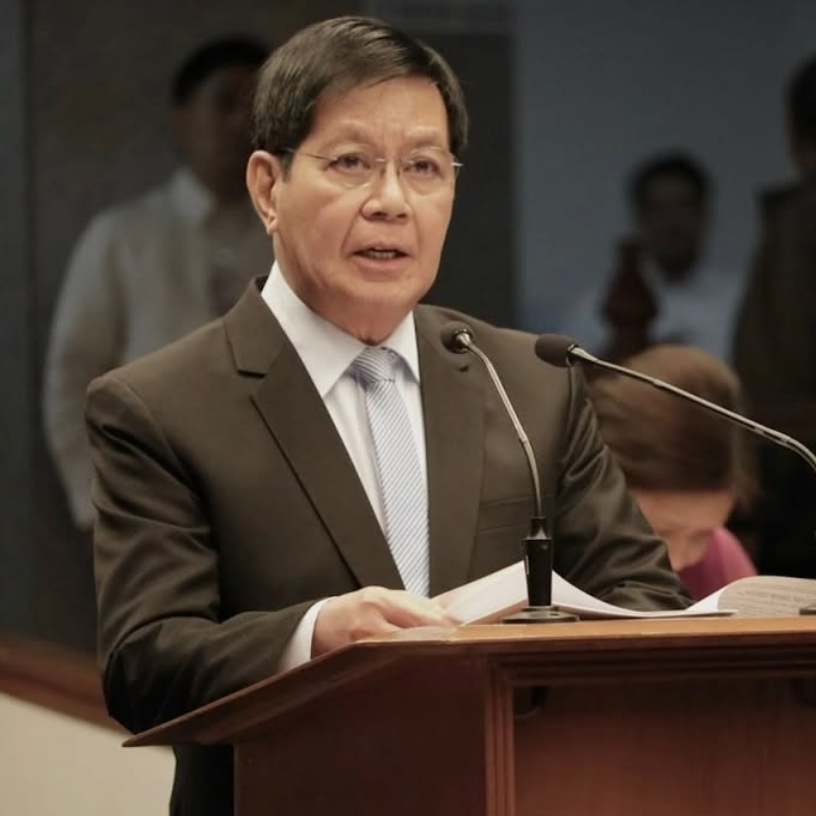

Former Senator Panfilo “Ping” Lacson is once again raising alarms over what he describes as a resurgence of pork barrel allocations in the national budget—despite the Supreme Court’s 2013 ruling declaring the Priority Development Assistance Fund (PDAF) unconstitutional.
In a recent interview, Lacson revealed what he described as disturbing discrepancies in government spending, claiming that individual lawmakers—both in the House of Representatives and the Senate—are now receiving allocations amounting to billions of pesos. According to him, one congressman was allotted a staggering P15 billion, while some senators reportedly control between P5 billion and P10 billion in public funds.
“Back when PDAF was still legal, senators only had P200 million, and House members had P70 million each,” Lacson pointed out. “Now, even after it was outlawed, we’re seeing allocations that are astronomically higher.”
Lacson, who ended his Senate career in 2022, emphasized that during his final term, he and the late Senator Franklin Drilon had worked to eliminate budget items they believed were prone to corruption—particularly those tied to flood control and dredging projects. However, he now says those same types of projects have returned with even larger budgets.
“We managed to remove them before we stepped down, but now they’re back—and in even greater amounts,” he said. “This signals a disturbing return to the same old practices.”
What’s more alarming, Lacson added, is the apparent misuse of these massive allocations. In reviewing the proposed 2025 national budget, he flagged one small barangay in an unnamed municipality that received P1.9 billion. Another town—home to just 10,000 residents—was allocated a massive P10 billion.
“These figures raise serious questions,” Lacson said. “Why does a tiny municipality receive such an enormous amount? It’s supposedly for flood control, but are we sure this isn’t just a convenient excuse?”
Lacson suggested that the allocation may have less to do with genuine public need and more with political influence or backdoor negotiations.
He is now pushing for further examination of the national budget, particularly those for fiscal years 2023, 2024, and 2025. His aim: to shed light on questionable spending and prevent public funds from being funneled into opaque or politically motivated projects.
While he is no longer in office, Lacson’s watchdog role continues to make waves in public discourse—reviving debates on transparency, accountability, and the persistent shadow of pork barrel politics that many believed had been relegated to the past.
“The people deserve to know where their taxes are going,” he concluded. “This is not just about numbers. It’s about trust in government.”