
By Christopher Lloyd T. Caliwan
MANILA – The Philippine National Police (PNP) on Wednesday launched a deeper inquiry into individuals and groups that may have facilitated the operation of a foreign-led scam hub that was dismantled in Pasay City.
PNP Chief, Gen. Jose Melencio C. Nartatez Jr., directed the Criminal Investigation and Detection Group (CIDG) to expand the investigation and determine the full extent of support networks linked to the hub’s operation, including financiers, recruiters, facilitators, and other possible accomplices.
The CIDG dismantled the scam hub operating inside the KE Tower Building C on Cuneta Avenue, Pasay City, on Tuesday afternoon, which resulted in the rescue and profiling of 166 foreign nationals coerced into cyber-fraud operations comprising 138 Indonesians, 16 Vietnamese, 10 Chinese, and 2 Malaysians.
“This operation demonstrates that the PNP will not allow foreign criminal syndicates to exploit Philippine territory and use it as a base for victimizing people across borders. We are sending a clear message that organized fraud will be pursued relentlessly, regardless of the nationality or influence of those behind it,” Nartatez said in a statement.
The crackdown stemmed from complaints filed by three Indonesian nationals who were lured to the Philippines by an online gambling syndicate run by Indonesian citizens under the false promise of legitimate employment as “virtual assistants.”
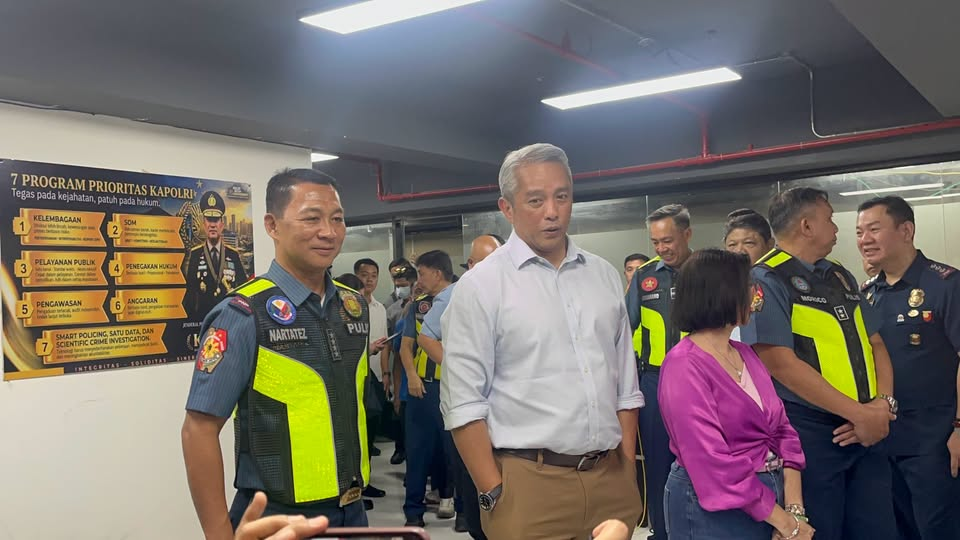
Nartatez and Interior Secretary Jonvic Remulla inspected the facility on Tuesday, and according to investigators, the syndicate targeted victims from Vietnam, China, Malaysia, and Indonesia through a four-stage fraud scheme. Members of the group allegedly used a database containing the names, addresses, and telephone numbers of prospective victims.
Scammers would contact their targets and falsely claim that a parcel addressed to them contained illegal drugs. They then posed as police officers and threatened victims with criminal investigations, frozen bank accounts, and the seizure of assets. Another member of the group would later act as a “good cop” and offer assistance in exchange for money transfers.
Investigators also found that the syndicate recruited workers through Telegram and Instagram by advertising virtual assistant positions. Police learned that the foreign nationals involved did not possess working visas as they entered the country as tourists.
The operation was uncovered after three individuals allegedly forced to work inside the facility escaped and reported the activity to authorities. Their accounts led police to the location and the subsequent raid.
Recovered from the compound were Indonesian and Vietnamese police uniforms, as well as photographs and tarpaulins of Indonesian and Vietnamese police officials allegedly used to intimidate victims and make the scheme appear legitimate.
Nartatez said the case highlights the determination of organized criminal groups to establish operations in the country and exploit both foreign victims and workers recruited through deceptive means.
“Do not allow the promise of easy money to compromise your safety or involve you in criminal activities. Verify every job offer, know who you are dealing with, and remember that legitimate employment will never require you to participate in deception or illegal operations,” he added.
Detailed investigations are ongoing to uncover the full global scale of the syndicate’s financial reach, and to file appropriate criminal charges against the suspects. (PNA)