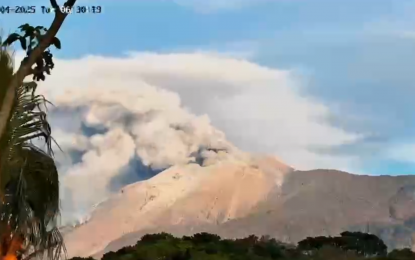
Kanlaon Volcano’s early morning explosive eruption on Tuesday, which lasted from 5:51 a.m. to 6:47 a.m., was caused by a sudden build-up of gas pressure beneath the surface, according to the Philippine Institute of Volcanology and Seismology (Phivolcs).
In an interview with the Philippine News Agency, Phivolcs Director Teresito Bacolcol explained that the eruption was not preceded by typical warning signs such as high sulfur dioxide (SO₂) emissions or numerous volcanic earthquakes.
“Sulfur dioxide emissions have been low prior to the eruption. Volcanic earthquakes were also few, just 16 for the past 48 hours. This indicates pressure beneath the volcano because of gas,” Bacolcol said.
He described explosive eruptions as violent and powerful events triggered by the rapid release of gas and pressure from magma deep underground. The Kanlaon eruption featured ash columns, volcanic gases, and pyroclastic density currents (PDCs), with the latter flowing down the volcano’s southern slope.
Phivolcs recorded an SO₂ emission of 1,655 tons on Monday and 1,419 tons on April 6. Reports of a sulfuric smell also came from Barangay Cubay in La Carlota City.
Despite the eruption, Kanlaon remains at Alert Level 3, which indicates magmatic unrest with the potential for further explosive activity. Phivolcs warns that hazardous eruptions could still occur within weeks.
Meanwhile, the Armed Forces of the Philippines (AFP) has assured its readiness to support emergency response efforts in the region. AFP Chief Gen. Romeo Brawner Jr. gave the assurance during his visit to Camp Gerona in Murcia, Negros Oriental on Monday.
“Gen. Brawner encouraged military personnel to stay mission-focused and remain committed to national security and disaster response efforts,” said AFP public affairs office chief Col. Xerxes Trinidad.
He added that the AFP stands ready to assist with evacuation, relief, and other humanitarian operations should the situation worsen.
Authorities continue to monitor Kanlaon closely and advise residents near the volcano to remain vigilant and heed warnings from local disaster officials.