
The Philippines has set its sights on turning its farmlands and coastal communities into engines of sustainable wealth, pitching a $108.88-million agrifood investment package before the global stage in Rome.
At the 2025 Hand-in-Hand Investment Forum, held during the World Food Forum at the UN Food and Agriculture Organization (FAO) headquarters, the Department of Agriculture (DA) unveiled an ambitious portfolio built around four of the country’s most iconic commodities—mango, abaca, seaweed, and bamboo. Each, the DA said, carries not just profit potential but also the promise of climate resilience and rural transformation.
Under the proposed investment plan, the DA projects a net present value (NPV) of $131.9 million and an internal rate of return (IRR) of 34.39 percent—figures that make Philippine agrifood a compelling choice for both local and foreign investors.
Beyond numbers, however, the portfolio represents a deeper strategy: empowering more than 35,000 farmers and fisherfolk while aligning agricultural growth with national climate goals. The projects are expected to sequester more than 280,000 tons of carbon dioxide equivalent emissions—an environmental return that underscores the country’s shift toward green and inclusive development.
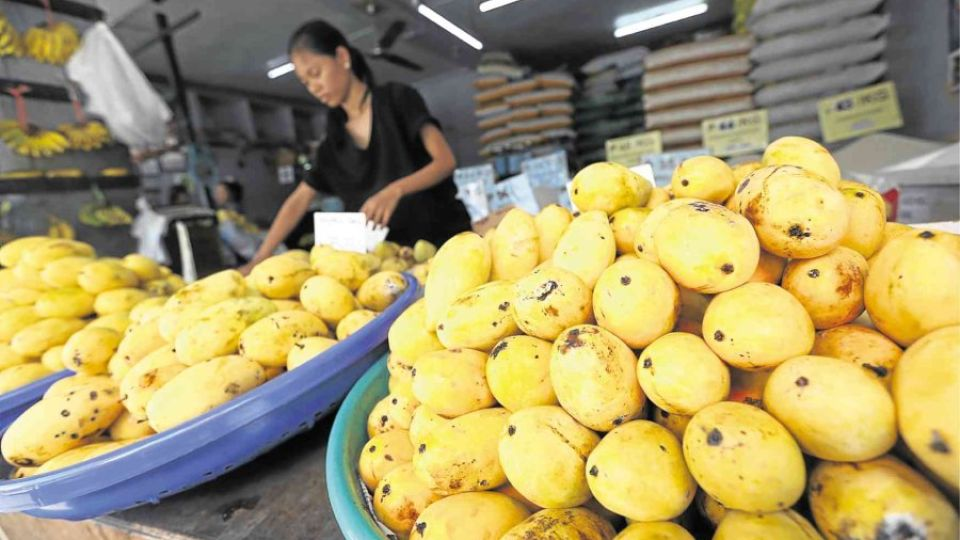
At the center of the pitch is mango—the fruit that has long symbolized Filipino sweetness. The DA’s proposal envisions a robust processing ecosystem for the famed Guimaras and Zambales mangoes, anchored on cold-storage networks, post-harvest treatment facilities, and value-added production lines for frozen, dried, and pureed exports.
The mango project alone carries an IRR of 39.58 percent and an NPV of $83.4 million, signaling strong profitability for investors while stabilizing incomes for small growers who often bear the brunt of post-harvest losses.
The Philippines already supplies more than 85 percent of the world’s abaca fiber—but the DA wants to elevate this natural advantage. The plan calls for the rehabilitation of degraded abaca farms, the creation of modern processing hubs, and the training of 300 farmers to meet a global supply gap of 25,000 metric tons.
Expected to raise farmer incomes by 50 percent, the abaca component aims to reclaim the country’s title as the world’s premier supplier of sustainable fibers for aerospace, automotive, and high-end textile industries.
On the aquatic front, the DA hopes to scale up the country’s seaweed industry through the multiple-raft cultivation method—an innovative approach that allows farming in deeper, current-rich waters to enhance yield and seed quality. With over 73,000 hectares of potential cultivation areas still untapped, the project could boost fisherfolk earnings by as much as 60 percent and reinforce the Philippines’ leadership in carrageenan exports.
The final piece of the portfolio is bamboo—poised to anchor the Philippines’ push into the $72.1-billion global market for sustainable materials. With 1.5 million hectares earmarked for bamboo cultivation, the initiative seeks to create new livelihoods, replace carbon-intensive materials, and supply eco-friendly alternatives for construction and manufacturing
Agriculture Secretary Francisco P. Tiu Laurel Jr. (or his representative, depending on event attribution) said the investment pitch is more than a funding appeal—it’s a call to partner in transforming the countryside.
“This is about empowering our farmers and fisherfolk, restoring our ecosystems, and ensuring that Philippine agriculture competes and thrives on the global stage,” the DA said in its statement.
With Rome as the venue and sustainability as the vision, the Philippines’ agrifood investment plan reimagines the archipelago’s farms and coasts as gateways to inclusive prosperity—and as a blueprint for the green economy it hopes to lead in Asia.