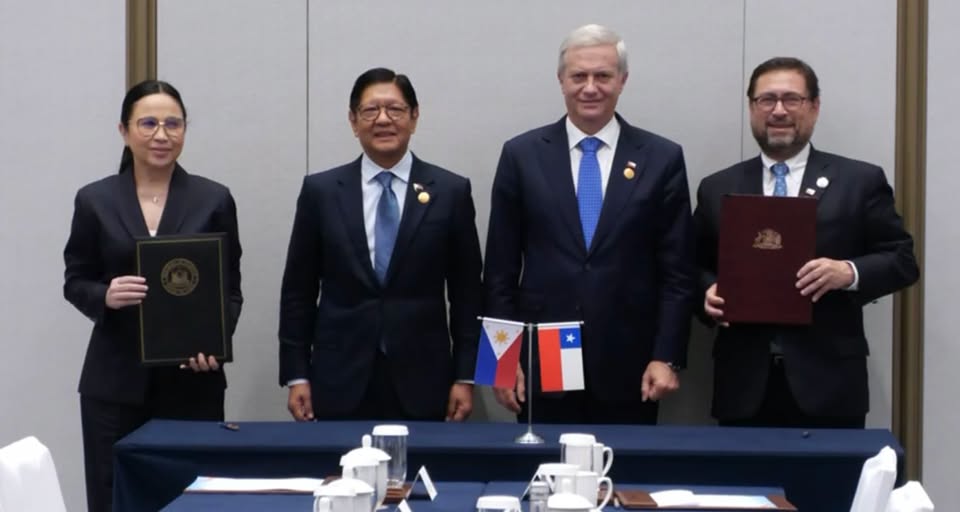
Financial Stability Coordination Council (FSCC) Chairman and Bangko Sentral ng Pilipinas (BSP) Governor Eli M. Remolona, Jr. (lower photo, third from left) leads the FSCC quarterly meeting on 20 May 2026. With him are (lower photos, from left) Deputy Insurance Commissioner Arturo S. Trinidad II, Treasurer of the Philippines Sharon P. Almanza, Philippine Deposit Insurance Corporation President Roberto B. Tan, Securities and Exchange Commission Commissioner Javey Paul D. Francisco, and BSP Assistant Governor Veronica B. Bayangos.
The Philippine financial system is entering a more challenging phase of the economic cycle, with policymakers warning that global conflict, rising debt burdens, and tighter financial conditions could test the resilience of businesses and consumers in the months ahead.
But despite growing risks, financial regulators say the country’s banking sector remains firmly positioned to withstand shocks.
The Financial Stability Coordination Council (FSCC), during its latest quarterly meeting at the Bangko Sentral ng Pilipinas headquarters in Manila on May 20, highlighted emerging vulnerabilities that could shape the outlook for Philippine finance—while underscoring that banks remain adequately capitalized and liquid even as uncertainty builds.
At the center of the concern is a global environment that has become increasingly volatile.
Geopolitical tensions threaten inflation and growth
The ongoing conflict in the Middle East has re-emerged as a key financial stability risk, reflecting how geopolitical events thousands of kilometers away can ripple through the Philippine economy.
A prolonged conflict could fuel higher oil prices, reigniting inflationary pressures that central banks worldwide—including the BSP—have spent years trying to contain.
More expensive energy does not only raise fuel costs. It can increase transportation expenses, lift operating costs for businesses, squeeze household budgets, and dampen consumer spending.
The FSCC also warned that sustained geopolitical tensions could weaken investor sentiment, tighten global financial conditions, and slow both domestic and international economic activity.
“Geopolitical risks remain a key source of uncertainty. We are watching global developments closely to spot and address potential systemic risks,” BSP Governor and FSCC Chairman Eli M. Remolona Jr. said.
For an economy like the Philippines—where consumption remains a major growth driver and energy imports play a critical role—global disruptions can quickly feed into broader financial risks.
Corporate debt pressures are becoming more complex
The Council also flagged vulnerabilities in corporate borrowing, particularly among sectors highly exposed to energy prices and interest rate movements.
Businesses operating in power-intensive industries or carrying substantial debt could face mounting strain if borrowing costs remain elevated while energy expenses continue to rise.
That combination can compress profit margins, weaken cash flows, and increase debt servicing burdens.
The risk extends beyond corporations themselves.
If financially stressed firms struggle to meet obligations, banks may face pressure on asset quality, potentially increasing non-performing loans and tightening credit conditions.
The FSCC further noted that higher bond yields could generate valuation pressures on banks’ investment portfolios.
Financial institutions typically hold government and corporate securities as part of their balance sheet management. When yields rise, bond prices fall—potentially creating mark-to-market losses that can affect capital positions.
While these pressures remain manageable, regulators are closely monitoring whether persistent market volatility could eventually reduce financial buffers.
Household debt enters regulators’ watchlist
The Council is also paying closer attention to Filipino households.
As borrowing costs remain elevated and consumer debt continues expanding, regulators are assessing borrowers’ ability to sustain loan repayments.
Higher interest rates can gradually strain disposable income, particularly among households juggling housing loans, auto financing, personal credit, and other obligations.
A deterioration in repayment capacity could ripple across the financial system by affecting bank lending performance and consumer spending patterns.
The concern does not necessarily indicate immediate distress, but rather reflects regulators’ effort to identify emerging vulnerabilities before they become systemic risks.
Banking sector remains resilient
Despite these challenges, Philippine banks continue to show resilience.
According to the FSCC, financial institutions maintain sufficient capital and liquidity buffers to absorb shocks while continuing to support economic activity through lending.
“We see pockets of vulnerability in energy- and interest-rate-sensitive sectors and in valuation pressures from higher bond yields. Nonetheless, the financial system remains on solid footing. Banks have adequate capital and liquidity buffers to absorb shocks and keep lending to households and firms,” Remolona said.
The assessment reinforces a broader message from regulators: the Philippine banking sector today is structurally stronger than in previous periods of global stress, benefiting from years of capital strengthening, tighter supervision, and more conservative risk management frameworks.
Expanding oversight beyond banks
Financial stability authorities are also widening their focus beyond traditional lenders.
The FSCC said it is strengthening oversight of non-bank financial institutions (NBFIs), including quasi-banks, investment houses, pawnshops, trust corporations, and non-stock savings and loan associations.
The move reflects growing recognition that risks can emerge across interconnected parts of the financial system—not just within banks.
As credit markets evolve and financial products become increasingly interconnected, regulators are working to improve monitoring of system-wide vulnerabilities and institutional linkages that could amplify shocks during periods of stress.
The FSCC is composed of the BSP, Department of Finance, Securities and Exchange Commission, Insurance Commission, and Philippine Deposit Insurance Corporation.
Its latest assessment sends a clear signal: while external risks are rising, Philippine financial regulators believe the country’s banking system remains equipped to navigate a more uncertain global landscape.