
By Ma. Teresa Montemayor
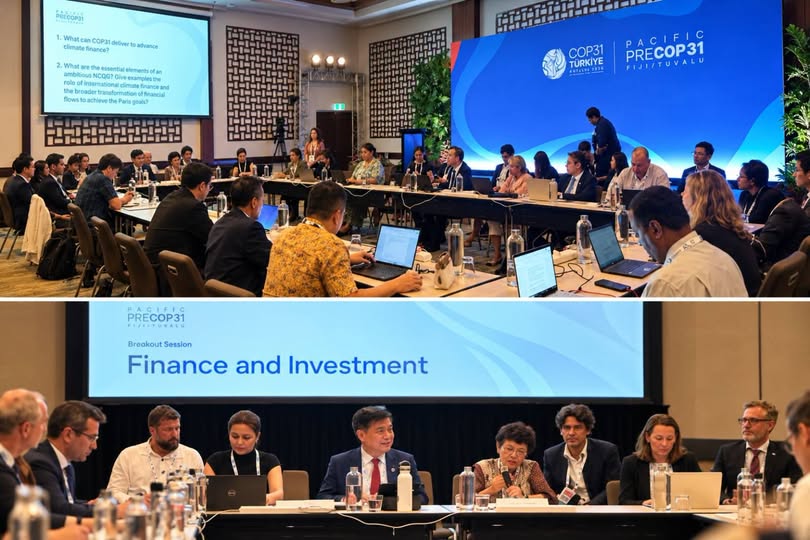
MANILA – The Philippines has called for more accessible and predictable climate financing for developing countries as it co-facilitated discussions on finance and investment at the Pacific Pre-COP31 (Conference of the Parties) in Nadi, Fiji.
In a news release Monday, the Climate Change Commission (CCC) co-led discussions among parties to the United Nations Framework Convention on Climate Change (UNFCCC) on translating global climate finance commitments into concrete support for projects and communities.
CCC Vice Chairperson and Executive Director Robert E.A. Borje was paired with French Minister for Ecological Transition, Biodiversity, and International Negotiations on Climate and Nature Monique Barbut in the minister-led finance process.
“I thank Australia’s COP31 Presidency for its confidence in the Philippines. We worked to keep the discussion grounded in practical ways to make climate finance support implementation,” Borje said.
Reporting the outcome of consultations to the Pre-COP31 plenary, Borje said participants called for the implementation of existing climate finance commitments, including the New Collective Quantified Goal on Climate Finance.
They identified debt pressures, limited fiscal space, high borrowing costs, lengthy approval processes, complex accreditation requirements and restricted access to funding as major barriers.
Proposed solutions included streamlining procedures, speeding up fund approvals, providing grants and concessional financing for adaptation, strengthening cooperation with international financial institutions and expanding the use of financing tools such as guarantees, risk-sharing mechanisms, climate-resilient debt clauses and debt-for-climate swaps.
Participants said mobilizing private investment under Article 2.1(c) of the Paris Agreement should complement, not replace, developed countries’ financing obligations under Article 9.1.
During the plenary, Borje cited United Nations Environment Programme estimates that developing countries would need USD310 billion to USD365 billion annually for climate adaptation by 2035, compared with USD26 billion in international public adaptation financing in 2023.
“A large share of an inadequate pool remains inadequate,” he said, calling for sufficient, predictable and accessible financing for national and local institutions.
Philippine Ambassador to Fiji Noel Novicio likewise urged COP31 to become “a COP of implementation, moving from pledges to predictable flows and from access barriers to actual access.”
The CCC said the Philippines’ participation builds on the climate policy agenda of President Ferdinand R. Marcos Jr., including the country’s first National Adaptation Plan for 2023-2050 and its updated Nationally Determined Contribution, submitted to the UNFCCC in September 2026.
Borje also participated in the 2026 UNFCCC Standing Committee on Finance Forum in Sydney, which focused on financing climate action for water
