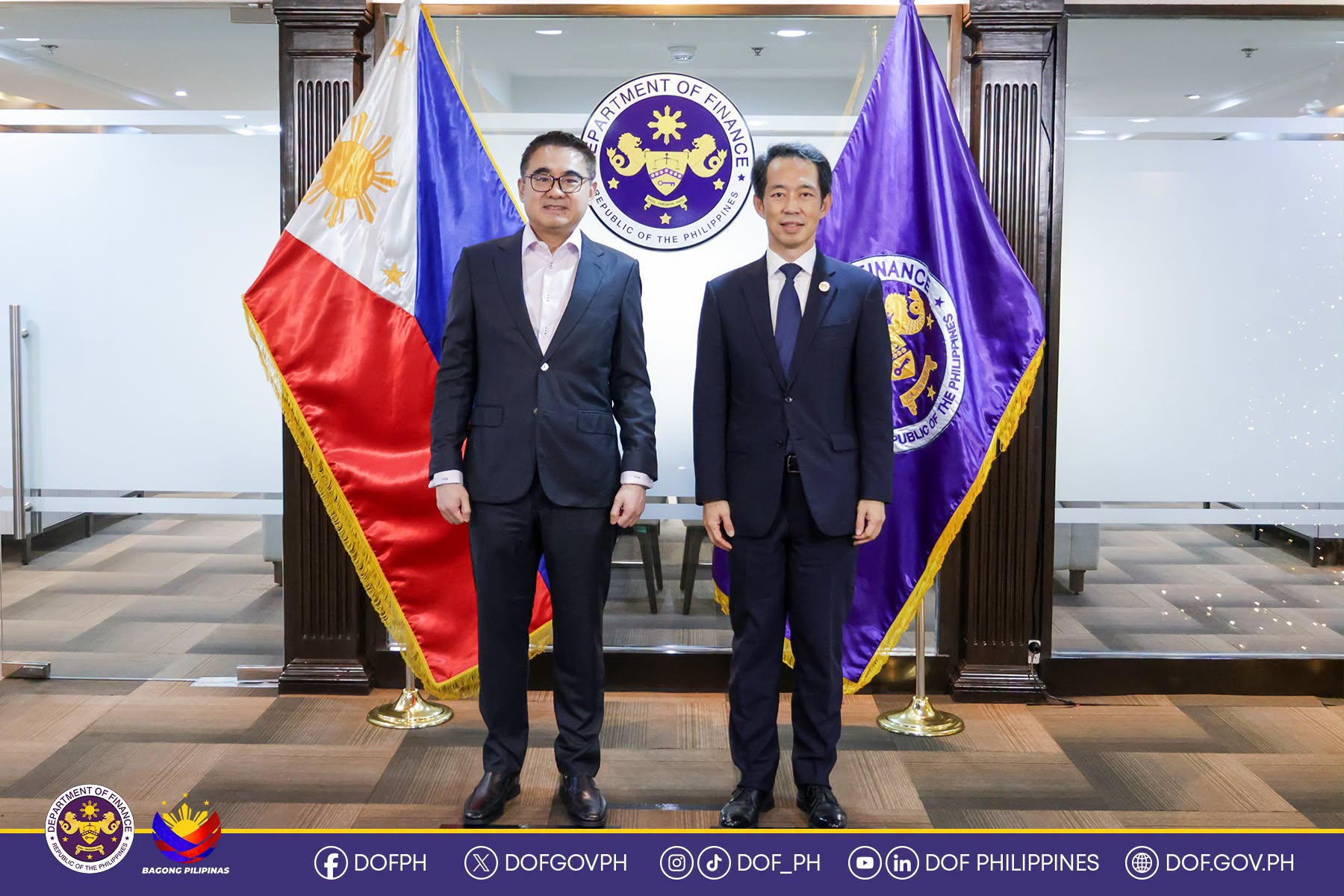

MANILA, Philippines — Finance Secretary Frederick Go met with Japanese Ambassador to the Philippines Kitagawa Katsuro to discuss funding for major railway infrastructure projects and measures to address concerns affecting Japanese businesses operating in the country.
The meeting focused on advancing Japan-supported infrastructure projects, particularly the North-South Commuter Railway (NSCR) and the Metro Manila Subway Project, which are expected to improve public transportation, reduce travel times, and strengthen connectivity across Metro Manila and surrounding provinces.
According to the Department of Finance (DOF), Japanese officials expressed interest in moving forward with the railway projects, with discussions centering on funding requirements and continued cooperation to support their implementation.
The NSCR is designed to provide a modern commuter railway system connecting Metro Manila with neighboring provinces, while the Metro Manila Subway Project aims to establish an underground mass transit network to help address congestion in the capital region.
Both projects form part of the government’s broader infrastructure development efforts to improve mobility, enhance transportation efficiency, and support economic activity.
Aside from railway development, the two sides discussed administrative concerns affecting Japanese companies and foreign investors in the Philippines.
Japanese Ambassador Kitagawa recommended exploring ways to accelerate the processing of Alien Employment Permits (AEPs), which are required for foreign nationals seeking employment in the country, subject to applicable labor regulations.
Go expressed support for examining the proposal, recognizing the importance of efficient government procedures in facilitating investments and business operations.
The finance chief said the DOF would relay the recommendations to the Department of Labor and Employment (DOLE), the government agency responsible for administering the issuance of AEPs.
Streamlining permit processing could help businesses address staffing requirements more efficiently while maintaining compliance with Philippine labor laws and regulations.
Japan remains a major development partner of the Philippines, particularly in transportation infrastructure, with Japanese assistance supporting large-scale railway projects intended to modernize the country’s public transport system.
The discussions also highlighted the importance of addressing regulatory and administrative concerns that may affect investment decisions and business expansion.
Continued cooperation on railway funding could help sustain the implementation of critical transportation projects, while improvements in investment-related procedures could contribute to a more efficient business environment.
However, the DOF announcement did not specify additional funding commitments, revised project completion schedules, or a timetable for possible changes to the processing of foreign employment permits.
The proposed permit-processing improvements will require further coordination with DOLE, while discussions on the railway projects are expected to continue through the relevant government agencies and Japanese counterparts.
The meeting reaffirmed efforts by the Philippines and Japan to strengthen economic cooperation through infrastructure development, investment facilitation, and improved public transportation.