The Philippine Commission on Women (PCW) is urging stronger recognition of the care economy as a key pillar of peace, security, and sustainable development, emphasizing women’s vital role as caregivers and peacebuilders.
PCW Deputy Executive Director for Operations Anette Baleda said the government is developing a national framework to ensure that women’s paid and unpaid care work is properly acknowledged and integrated into national recovery and peace efforts.
“‘Di ba kapag may conflict sa isang lugar mas tumataas ang care, ang demand for care (When there is conflict in an area, the need for care, the demand for care increases),” Baleda said in a Bagong Pilipinas Ngayon interview.
“Ibig sabihin, kung halimbawa, may conflict ang area, kailangan natin ng mga taong nagbabantay sa ating mga bata, sa mga taong nasugatan, sa mga taong naging biktima ng karahasan o mga nadamay doon sa conflict (This means that, for example, when there is conflict in an area, we need people to look after the children, the wounded, and those who have become victims of violence or have been affected by the conflict),” she added.
Baleda explained that most of this care work is done by women, covering a range of tasks from household and community caregiving to healthcare and social support. She said these roles are essential in rebuilding communities, especially in conflict-affected and disaster-prone areas.
The PCW, in coordination with the National Steering Committee on Women, Peace and Security, is crafting the Philippine Plan for the Care Economy based on the seven “Rs” of care: Recognize, Reduce, Redistribute, Reward, Represent, Re-educate, and Reclaim.
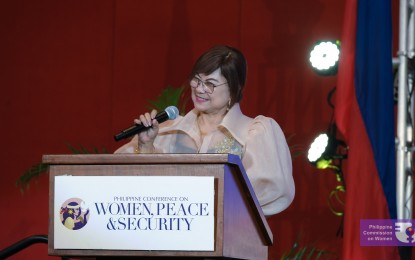
Through the Philippine Conference on Women, Peace and Security, the PCW also gathers women leaders and advocates to build a localized, gender-responsive roadmap for peace and community resilience.