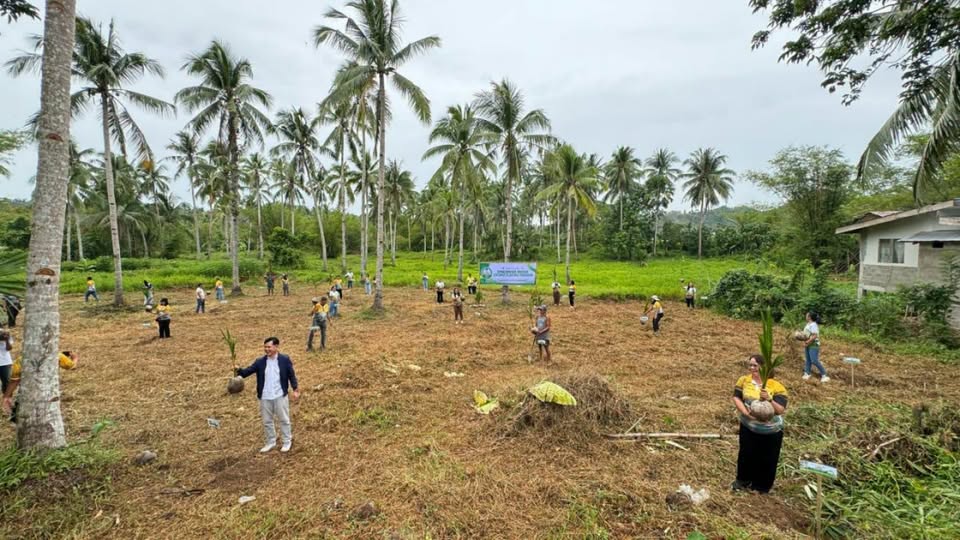

(Photo courtesy of PCA-Eastern Visayas)
TACLOBAN CITY – The Philippine Coconut Authority (PCA) intensified efforts to replant 128,000 coconut trees across Eastern Visayas ahead of the anticipated peak of El Niño, taking advantage of prevailing rainfall to improve the survival rate of newly planted seedlings.
PCA-Eastern Visayas Manager Marlon Terrado said Wednesday that the agency had already accomplished more than half of its quarterly replanting target and was accelerating operations to complete the remaining work in the coming weeks.
The Philippine Atmospheric, Geophysical and Astronomical Services Administration (PAGASA) projected that El Niño would peak before the end of 2026, with its effects expected to persist until the first half of 2027.
“The target is to achieve significant progress in the replanting activity while the region is still experiencing rainfall. We will start distributing incentives to farmers to encourage more of them to actively participate in the program,” Terrado said.
Under the Massive Coconut Planting and Replanting Project, the PCA provides financial incentives to farmers who cultivate seedlings and replace aging or damaged coconut trees.
Qualified beneficiaries may receive up to Php 85 per seedling in two installments. An initial Php 40 is granted once seedlings reach at least one foot in height and meet prescribed health standards, while the remaining Php 45 is released after successful transplantation and establishment in the field.
Terrado emphasized the importance of replacing aging coconut trees that have become less productive over the decades, particularly amid increasing international demand for coconut products.
“There are many vacant spaces in existing coconut farms. If we do not replace these old trees, we will have a shortage in the future, especially with the growing global demand for coconut products,” he said.
Eastern Visayas aims to plant one million coconut trees, with approximately half of the target already accomplished since the program began in 2023.
The regional undertaking forms part of the national government’s goal of planting 100 million coconut seedlings by 2028 to strengthen the industry’s resilience, sustainability, and global competitiveness.
The program also seeks to increase the coconut industry’s contribution to the national economy while improving the livelihoods and income opportunities of Filipino coconut farmers.
According to PCA data, coconut plantations covered approximately 3.6 million hectares nationwide in 2022, accounting for 27 percent of the country’s agricultural land.
The agency plans to sustain and expand its replanting initiatives over the next 10 to 15 years to rehabilitate the coconut industry, which has faced significant challenges from climate change and natural disasters over the past decade.