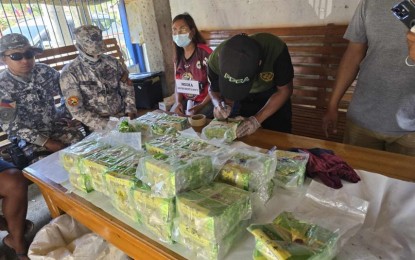
President Ferdinand R. Marcos Jr. has ordered the Philippine National Police (PNP) and the Philippine Coast Guard (PCG) to enhance security at all major drug entry points and ensure the immediate destruction of confiscated narcotics to prevent them from reentering the streets. In his latest podcast aired Wednesday, Marcos stated, “Sinabi ko sa Coast Guard at saka PNP, bantayan na ninyo dahil ayokong bumalik sa merkado ‘yan. Sirain na ninyo agad. As quickly as possible (I told the Coast Guard and the PNP to keep watch because I don’t want those drugs returning to the market. Destroy them immediately).”
This directive is part of a recalibrated national drug strategy aimed at stopping narcotics at their source—ports, coastlines, and other maritime routes known for large-volume smuggling operations. The President emphasized the importance of full transparency and the physical presence of law enforcement during the destruction of seized drugs. “Make sure na nandun kayo para pag sinabing so many tons, ilang tonelada, ‘yan talaga ang nandiyan. Hindi nababawasan. Bilangin ninyo nang husto, tapos buhusan nyo ng gasolina, sunugin na ninyo (Make sure you are there so when they say it’s several tons, it’s really all there. Nothing’s missing. Count it thoroughly, then douse it with gasoline and burn it),” he instructed.
Marcos’s remarks followed significant drug seizures in Zambales, Bataan, Ilocos Sur, and Pangasinan provinces on June 10, where 66 sacks containing 1,297.9 kg of shabu, valued at PHP 8.8 billion, were discovered by coastal communities.
The President also highlighted the need to address small-scale drug activity in communities while cracking down on major syndicates, advocating for parallel ground-level interventions. “Kaya ‘yung Cops on the Beat, that’s the solution to that,” he said, referring to the foot patrol visibility program launched under PNP Chief Gen. Nicolas Torre III.
Despite the increase in drug seizures in recent years, Marcos noted that statistics alone are insufficient unless the public perceives and feels the change. “It’s not sufficient that you are safe, you must feel safe,” he concluded.