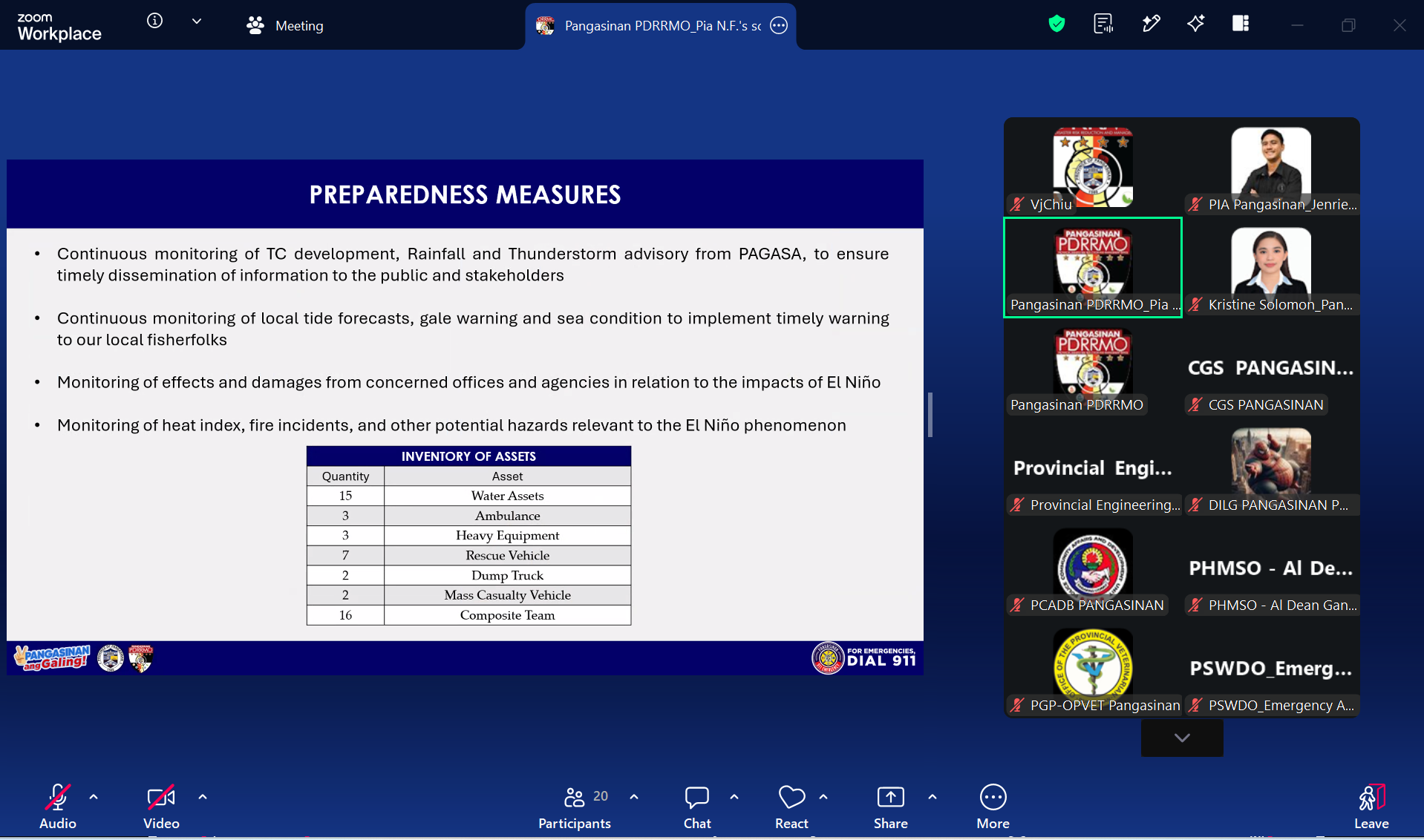

(Photo by PIA)
STA. BARBARA, Pangasinan — Pangasinan is intensifying preparations for possible prolonged dry conditions as El Niño is expected to bring below- to way-below-normal rainfall in the coming months, threatening water supplies, agriculture and local livelihoods.
During a Pre-Disaster Risk Assessment meeting on Sept. 25, Pia Flores, head of the Emergency Operations Center Unit of the Provincial Disaster Risk Reduction and Management Office, said below-normal rainfall is expected in October and December 2026.
Way-below-normal rainfall may occur in November 2026 and from January to March 2027, while dry spells are possible in November 2026 and February 2027.
The outlook comes as DOST-PAGASA reported that a strong El Niño is active in the tropical Pacific and may intensify into a very strong event between September and December 2026. The weather bureau expects the phenomenon to persist through the first half of 2027.
El Niño increases the likelihood of reduced rainfall, which can lead to dry spells and drought in some parts of the country. PAGASA, however, noted that rainfall patterns may still vary, with western areas potentially receiving above-normal rainfall during the southwest monsoon.
For Pangasinan, prolonged rainfall deficits could put additional pressure on water resources and farm production, especially in communities dependent on rainfall and irrigation.
Livestock and fisheries may also be affected, while hotter and drier conditions could increase the risk of fires as vegetation becomes more susceptible to ignition.
Flores said the PDRRMO is closely monitoring possible impacts on agriculture, heat index levels, fire incidents and other hazards linked to prolonged dry weather.
Provincial offices and concerned agencies have also been directed to submit reports on observed impacts to help authorities identify emerging problems and determine where assistance may be needed.
The province continues to monitor rainfall and thunderstorm advisories, tropical cyclone developments, local tide forecasts, gale warnings and sea conditions to provide timely information to communities, farmers and fisherfolk.
Residents are advised to conserve water, monitor official advisories and take precautions against heat, fire and other El Niño-related hazards.
Farmers and other livelihood sectors are also encouraged to use official climate and agricultural advisories in planning their activities as rainfall patterns become less predictable.
Pangasinan officials said early preparation and continued monitoring are intended to help reduce the social and economic impact of prolonged dry conditions.

