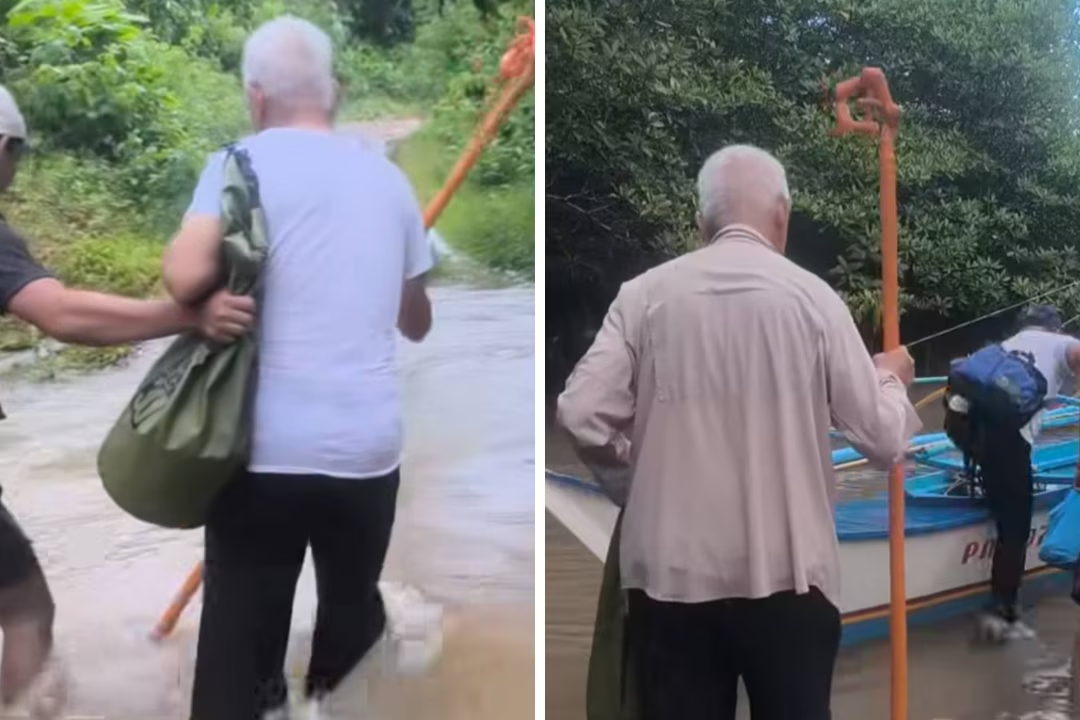
Apostolic Vicar Broderick Pabillo of Taytay, Palawan, braved knee-deep floods and difficult terrain to reach Cuilon Island for a pastoral visit, emphasizing the importance of being physically present to support faith in remote areas.
“Marami sa kanila, first time lang na nakakita ng obispo, first time na minamisahan ng obispo, at natutuwa sila na nabigyan sila ng halaga kahit na sila ay nasa periphery, nasa laylayan ng lipunan,” Pabillo told ABS-CBN News.
After heavy rains flooded their path, Pabillo and his group abandoned motorcycles and continued on foot. The residents expressed joy at the visit despite the harsh weather.
“Nagpahayag sila na natutuwa sila na nabisita sila, kahit na ganun ang panahon, umuulan, malakas ang ulan. Akala nga nila hindi na sila mapupuntahan,” he said.
Pabillo was moved by the locals’ hospitality during a “bring and share” gathering, where families contributed food from their harvests, fostering community unity.
“Ang pinagsasaluhan namin ay bunga ng kanilang bayanihan, pansit man yan, o biko man yan, saging, o kaya kamote, nakakatuwa. At dahil dito, nagkakaisa yung community [sa] pinagsasaluhan nila,” he said.
He noted that the difficult journey mirrors what priests assigned to remote parishes endure regularly.
“Ang dinadaanan ko, ‘yan yung dinadaanan ng mga pari namin, yung mga pari namin [na] naka-assign doon,” Pabillo said. “They even visit those places at least once a month, so nararanasan ko ang kahirapan ng mga pari namin.”
While bishops usually visit parishes, Pabillo aims to reach most of the over 500 chapels under the Apostolic Vicariate of Taytay every two years. He completed his first round in 2023 and expects to finish the second by 2026.
During visits, he listens to residents’ concerns and reports recommendations to local parishes, following up after two years. He acknowledges that many issues, like infrastructure repairs, require local government action.
“Pangarap ko na malaman ang sitwasyon [nila] at kung minsan makatugon sa kanilang pangangailangan,” he said.
Adjusting to basic living conditions during visits is challenging, but it deepens his understanding of the people’s daily struggles.
“Yung adjustment na yan ay medyo nakaka-challenge. Yung mga paliliguan mo, yung kakainin niyo, yung tutulugan mo, makiisa sa mga pamilya, sa mga tao, at every time, ganun [ang] gagawin,” he said.
“It’s a day-to-day struggle sa kanila, kaya yun ang dapat pagtugunan. Kaya parang malayo sa kanilang pag-iisip yung magplano pa sa sunod na taon, kasi ang struggle na ay paano mabuhay ngayon?”