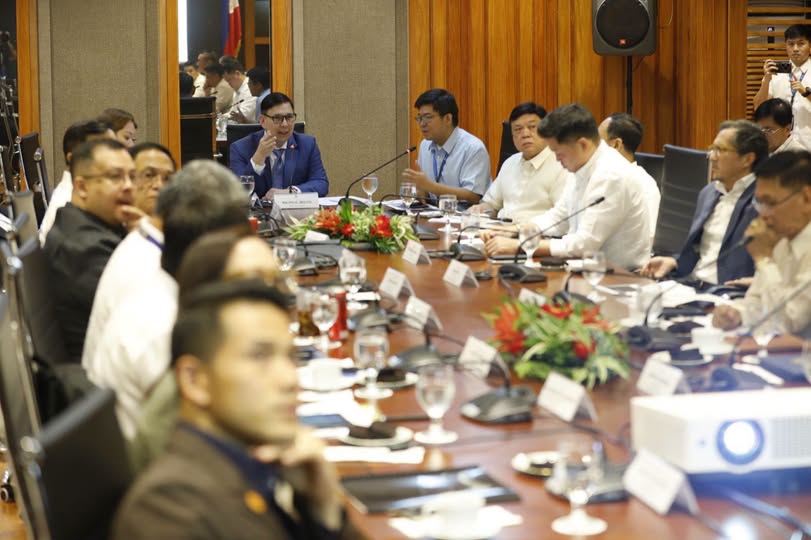

(Photo ciurtesy from the Office of the Executive Secretary)
Malacañang has ordered government agencies and local government units (LGUs) to step up preparations for a potentially strong El Niño in January 2027, prioritizing measures to secure water, food, and electricity supplies while protecting vulnerable communities.
Following President Ferdinand Marcos Jr.’s directive, Executive Secretary Ralph Recto led a meeting with key government officials on Wednesday to assess the country’s readiness for prolonged dry conditions and extreme heat.
Recto stressed that preparations must address the specific needs of communities most vulnerable to water shortages, agricultural losses, rising temperatures, and possible power disruptions.
“Mararamdaman ang El Niño sa buong bansa, pero iba-iba ang magiging epekto nito sa bawat lugar. May komunidad na tubig ang pangunahing problema. Sa iba, kuryente o matinding init,” Recto said in a statement released Friday by the Office of the Executive Secretary (OES).
“Kaya dapat alam natin kung sino ang pinakananganganib at anong tulong ang kailangan nila,” he added.
Recto instructed agencies to identify high-risk areas and prioritize the distribution of equipment and assistance based on local conditions.
Pampanga and Cavite are among the provinces being closely monitored due to possible water supply constraints.
LGUs were also directed to assess their requirements for generators, solar power systems, and water supply facilities. Recto raised the possibility of reviewing priorities under the Local Government Support Fund to help finance local preparedness programs.
Water and electricity supply
The Metropolitan Waterworks and Sewerage System (MWSS) assured the public that water reserves remain adequate, with Angat Dam’s water level recorded at 208.70 meters as of November 3, above its minimum operating level of 180 meters.
The government is strengthening water conservation programs, improving dam management, and identifying alternative water sources to reduce the risk of shortages.
Private companies are also being encouraged to support the development of water supply facilities in nearby communities.
The Department of Health (DOH), meanwhile, offered assistance to LGUs in testing alternative water sources to ensure their safety for drinking.
To prevent electricity disruptions, the Department of Energy (DOE) is accelerating power plant maintenance, streamlining permit processing, and securing adequate fuel and energy reserves.
Authorities are also expanding battery storage systems and promoting energy conservation, particularly to maintain reliable electricity for hospitals, schools, and water facilities during periods of extreme heat.
Support for farmers and vulnerable sectors
The Department of Agriculture (DA) assured that the country’s food supply remains sufficient, with continued monitoring of rice and other basic commodity prices.
The agency, in coordination with the National Irrigation Administration, is expanding solar-powered irrigation systems to help farmers maintain crop production despite reduced rainfall.
Marcos also directed concerned agencies to accelerate the release of fuel subsidies for farmers and fisherfolk.
Meanwhile, the Department of Social Welfare and Development (DSWD) and Department of Labor and Employment (DOLE) are preparing temporary employment programs and other assistance for families and workers whose livelihoods may be affected.
The government is also strengthening measures to protect students, workers, senior citizens, children, and individuals with existing health conditions from extreme heat.
Among the planned interventions are solar-powered systems for schools, improved classroom ventilation, and additional cooling facilities.
The DOH will coordinate with LGUs to identify residents most vulnerable to heat-related illnesses and ensure appropriate health interventions.
Recto emphasized that a coordinated, whole-of-government response is essential to ensure resources reach communities facing the greatest risks.
The Palace said preparations will continue ahead of the anticipated El Niño to minimize disruptions to essential services, agricultural production, and public health.