
(Photo by DSWD)
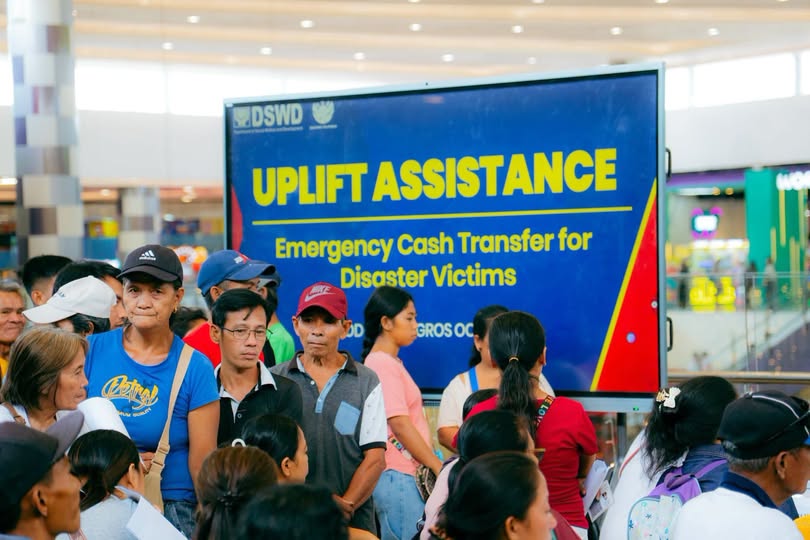
Around 6.49 million Filipinos have received the first tranche of financial assistance under the government’s Unified Package for Livelihoods, Industry, Food, and Transport (UPLIFT) Program, Malacañang announced Tuesday, October 13.
The Office of the Executive Secretary (OES) said the government had disbursed Php 19.55 billion as of October 7 to support vulnerable households affected by rising fuel and commodity prices.
The expanded UPLIFT Program, implemented under the directive of President Ferdinand Marcos Jr., aims to assist approximately 7.5 million families nationwide.
Under the program, around 3.5 million beneficiaries of the Pantawid Pamilyang Pilipino Program (4Ps) and Walang Gutom Program are entitled to a one-time additional cash assistance of Php 2,000.
Meanwhile, approximately 2.5 million poor and near-poor households identified through the Community-Based Monitoring System (CBMS) and 1.5 million low-income workers and families validated through the Social Security System (SSS) are eligible to receive Php 2,000 monthly from July to December.
Executive Secretary Ralph Recto said the government would use findings from a recent independent survey to improve the distribution of financial assistance and develop more sustainable support programs for workers.
A Social Weather Stations (SWS) survey conducted on May 26 and 27 found that 96 percent of 1,200 surveyed transport workers who received Php 5,000 in fuel assistance said the subsidy helped them continue operating or return to their routes.
The survey was commissioned by the Australian government’s Social Protection, Inclusion and Gender Equality (SPRING) Program and covered 1,200 registered cash assistance beneficiaries of the Department of Social Welfare and Development (DSWD).
Recto welcomed the findings, saying they provided valuable feedback on the effectiveness of government assistance.
“This is proof that the President’s timely assistance is working and making a big difference,” Recto said.
However, the survey also revealed gaps in social protection coverage, with more than one-third of respondents reporting that they were not enrolled in government programs such as SSS and PhilHealth.
Recto said the findings present an opportunity to use the DSWD’s beneficiary database to connect more vulnerable workers with existing government services and social protection programs.
The Palace emphasized that the administration would continue improving assistance mechanisms to ensure financial support reaches eligible Filipinos amid economic challenges.