
by Cristina Arayata
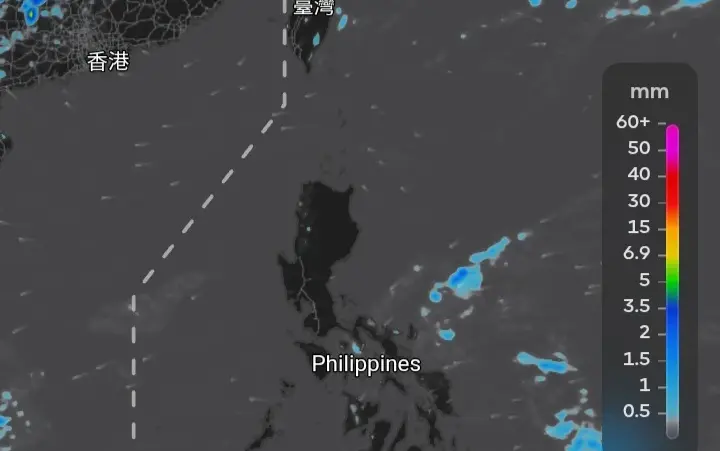
MANILA – The government weather bureau on Tuesday launched the integration of artificial intelligence (AI) to its PANaHON (weather) app.
Through the AI-powered for a Resilient Philippines (AI-4RP) project, the Philippine Atmospheric, Geophysical and Astronomical Services Administration (PAGASA), in collaboration with the Advanced Science and Technology Institute (ASTI) and US-based firm Atmo, has developed a high-resolution weather forecasting model using AI atmospheric science technologies on local meteorological data.
“AI forecasting models or tools are based on decades of historical data. AI models use pattern recognition to generate forecasts faster,” PAGASA Administrator Nathaniel Servando told the Philippine News Agency in an interview.
In terms of accuracy, Servando said they will continue evaluating and improving the model.
Servando also clarified that despite the availability of AI forecasting, PAGASA will still use the traditional model, Numerical Weather Prediction or NWP.
“Compared to AI forecasting, NWP models use complex physics and mathematical equations, which require bigger capacity of supercomputers to improve,” he explained.
Using AI also allows for a 14-day forecast, as opposed to the five-day forecast period using NWP model, Servando added.
Meanwhile, during the launch in Pasay City, Department of Science and Technology (DOST) Secretary Renato Solidum, Jr. said the integration of AI forecasting is in line with the government’s commitment to harnessing AI as a tool for national development.
“By delivering localized forecasts down to a 2-km grid resolution, extending lead times up to 14 days, and accelerating data processing toward 15-minute intervals, this AI technology offers immense promise to protect agricultural yields, sharpen early flood warnings, and strengthen community resilience,” Solidum said.
He acknowledged that while traditional forecasting methods remain essential, AI offers another way of analyzing large amounts of weather data and identifying important weather patterns.
“A paradigm shift in weather forecast modeling and leveraging the potential of AI is crucial for delivering more efficient, accurate, and detailed forecast guidance,” Solidum said. (PNA)