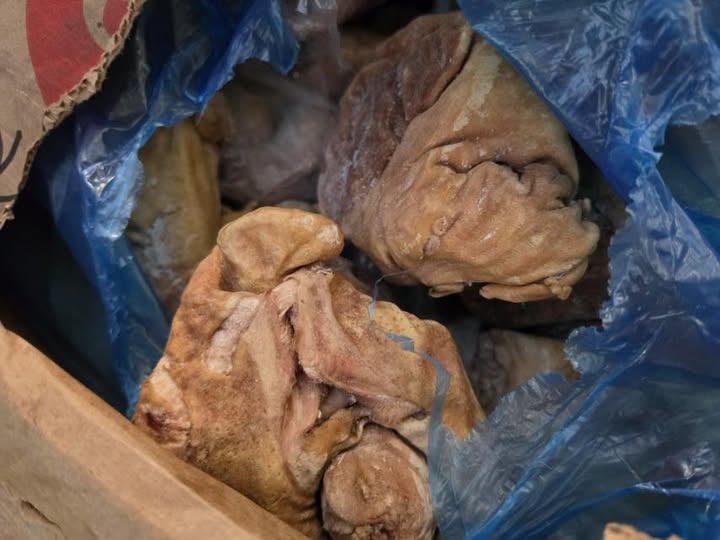

MANILA – The Department of Agriculture-National Meat Inspection Service (DA-NMIS) on Monday said it has seized PHP50 million worth of hot meat nationwide ahead of the Christmas season.
In an ambush interview, DA Secretary Francisco Tiu Laurel Jr. said the majority of the seized hot meat came from other countries.
“Siguro mga PHP50 million… China, may US din (Perhaps about PHP50 million… These originated from China, from US also),” he said.
The NMIS said 90 percent of the confiscated hot meat is imported, while the remaining 10 percent is local.
For his part, NMIS OIC Executive Director Fernando Lontoc vowed to further intensify their crackdown measures during the holiday season.
“Nasa 240 tons na nakukumpiska natin. Malaki-laki na iyon, lalo na ngayong ber months, patuloy nating i-intensify ang ating operations (We have confiscated about 240 tons. That’s huge, especially now during ber months, we will continue to intensify our operations),” he said.
“Kasi unang-una, tungkulin natin na i-safeguard ‘yung consuming public at nakakatulong din tayo sa (First, our job is to safeguard the consuming public and to help our) hog raisers.”
To date, the NMIS said the concentration of seized hot meats is in Metro Manila, Central Luzon, and Calabarzon.
No unusual spike
Tiu Laurel, meanwhile, assured that no unusual spike in pork prices is seen amid the holiday season.
“We do not see any unusual spike. Kung sakaling mayroon mang ganun, naka-monitor naman. Mayroong Bantay Presyo (In case there is, we are monitoring it. We have the Price Watch), we will call their attention,” he said.
As of Sunday, the price of local pork ham (pigue) ranges from PHP240 per kilogram to PHP380 per kg; while PHP300 per kg to PHP440 per kg for local pork belly (liempo), according to the DA-Bantay Presyo.
Imported kasim (pork shoulder), meanwhile, ranges from PHP210 per kg. to PHP270; while PHP280 per kg. to PHP350 per kg for imported pork liempo.
The agriculture chief said the price uptick may only range from 3 percent to 5 percent, considering both the projected demand hike and stable stock inventory.
To date, the Philippines has at least 170 days of stock inventory of pork, according to the DA. (Stephanie Sevillano/PNA)