
By Che Palicte
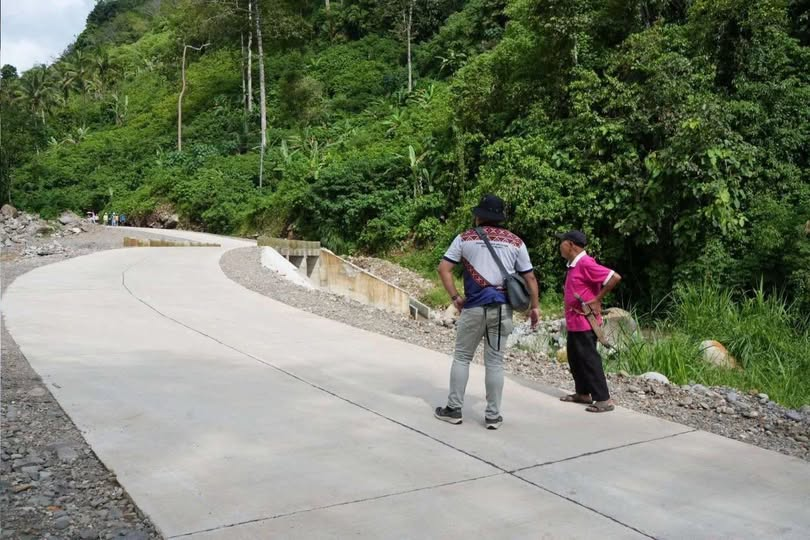
DAVAO CITY – Decades of isolation and hazardous travel have ended for the Obo Manuvu Indigenous Peoples (IP) community with the recent turnover of a 6.11-km. farm-to-market road (FMR) worth PHP107.3 million in Magpet, Cotabato province.
In a statement issued on Wednesday, the Department of Agriculture – Mindanao Inclusive Agriculture Development Project (DA-MIADP) said that the infrastructure project connects the remote farming sitios of Mabato and Timodos in Barangay Manobisa directly to the town center.
DA-Davao Region Director Macario Gonzaga, also the MIADP project director, noted that while the road boosts agricultural trade, its impact reaches far deeper into daily community life.
“With this road, you now have the opportunity to become more productive. It also provides greater safety for our children going to school and makes it easier for families to access hospitals during emergencies,” Gonzaga added.
He highlighted that the project focuses on building climate-resilient and culturally responsive infrastructure in partnership with IP communities.
For generations, local farmers – who rely heavily on coconut and rubber production – struggled to bring their harvests to market.
Heavy rains routinely turned the old dirt path into a muddy, impassable hazard, cutting off access to schools and emergency medical care.
“We cannot transport our harvests, and students cannot go to school. The road was so bad that even horses and carabaos would get stuck in the mud,” Barangay Manobisa village chief Roquel Udag said of the FMR project turned over to them on Nov. 16.
The new FMR cuts travel time from the farms to the Magpet town market in half, reducing a grueling more-than-an-hour trip to about 30 minutes.
To ensure year-round accessibility during severe weather, engineers integrated three box culverts into the road’s design to manage water flow across local waterways.
The new route also eliminates the need for residents, schoolchildren, and farmers to cross a dangerous river three times – a trek that previously forced them to navigate strong currents and large boulders.
Funded by the World Bank, the DA-MIADP aims to sustainably boost agricultural productivity, climate resilience, and market access for selected Indigenous communities, farmers, and fisherfolk across Mindanao. (PNA)