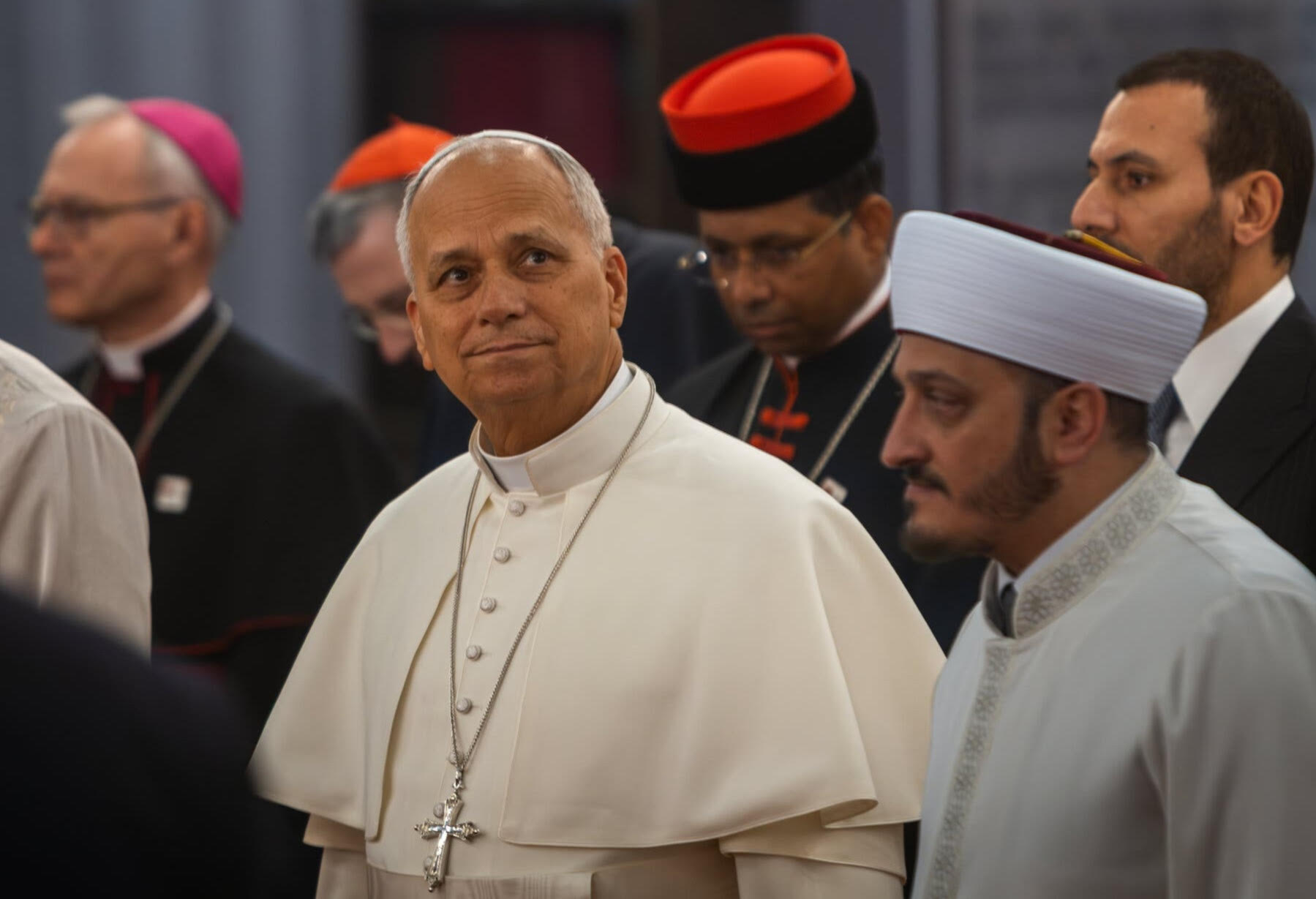

Pope Leo while visiting a mosque in Istanbul where he conversed with many Muslim leaders to focus on the importance of peace and respect for religious differences.
VATICAN CITY, Rome — Traveling through the Mideast, Pope Leo XIV channeled many of his predecessor Francis’ messages but, in his deliberate manner, called out the risks of artificial intelligence and other rapidly advancing technologies.
On December 3, the pope boarded Shepherd One, as the papal plane is known, for his first international trip with the world wondering if the mild-mannered American pope might suddenly reveal something unexpected with an edgy comment or spontaneous gesture.
Instead, Leo returned to Rome after the highly scripted six-day tour to Turkey and Lebanon that confirmed his stolid, quiet, what-you-see-is-what-you-get character. The American pontiff was composed and self-effacing as he continued in Francis’s footsteps and, like him, Leo called for the protection of migrants and the environment and reiterated the Vatican’s longstanding support for a two-state solution to the Israeli-Palestinian conflict.
By making Turkey his first destination, Leo was upholding a commitment made by Francis before he died. Yet if Francis often seemed ready to stray from the script, courting controversy, Leo stuck resolutely to the themes of peace and unity that he had declared would be the primary message of his visits.
In Turkey, Leo quietly worked to soothe tensions between the Catholic and Orthodox churches, which have feuded over doctrinal differences for over a millennium. In Lebanon, he offered a Mass at the site of a devastating blast at the Beirut port in 2020, where he spoke with family members of the victims. And in both countries, he repeatedly called for an end to violence across the often war-torn region.
Showing a consistency in his priorities, he warned—as he has since his election—of the risks of rapidly advancing technologies such as artificial intelligence “that could otherwise exacerbate injustice instead of helping to overcome it.”
He also spoke about the importance of women in social and political life and how they represent “a factor of true renewal throughout the world,” raising questions from some observers of whether he intends during his papacy to allow women a greater role in church life and leadership. VATICAN CITY, Rome — Traveling through the Mideast, Pope Leo XIV channeled many of his predecessor Francis’ messages but in his deliberate manner called out the risks of artificial intelligence and other rapidly advancing technologies.
On December 3, the pope boarded Shepherd One, as the papal plane is known, for his first international trip with the world wonderinh if the mild-mannered American pope might suddenly reveal something unexpected with an edgy comment or spontaneous gesture.
Instead, Leo returned to Rome after the highly scripted six-day tour to Turkey and Lebanon that confirmed his stolid, quiet, what-you-see-is-what-you-get character. The American pontiff was composed and self-effacing as he continued in Francis’s footsteps and like him, Leo called for the protection of migrants and the environment and reiterated the Vatican’s longstanding support for a two-state solution to the Israeli-Palestinian conflict.
By making Turkey his first destination, Leo was upholding a commitment made by Francis before he died. Yet if Francis often seemed ready to stray from the script, courting controversy, Leo stuck resolutely to the themes of peace and unity that he had declared would be the primary message of his visits.
In Turkey, Leo quietly worked to soothe tensions between the Catholic and Orthodox churches, which have feuded over doctrinal differences for over a millennium. In Lebanon, he offered a Mass at the site of a devastating blast at the Beirut port in 2020, where he spoke with family members of the victims. And in both countries, he repeatedly called for an end to violence across the often war-torn region.
Showing a consistency in his priorities, he warned—as he has since his election—of the risks of rapidly advancing technologies such as artificial intelligence “that could otherwise exacerbate injustice instead of helping to overcome it.”
He also spoke about the importance of women in social and political life and how they represent “a factor of true renewal throughout the world,” raising questions from some observers of whether he intends during his papacy to allow women a greater role in church life and leadership.