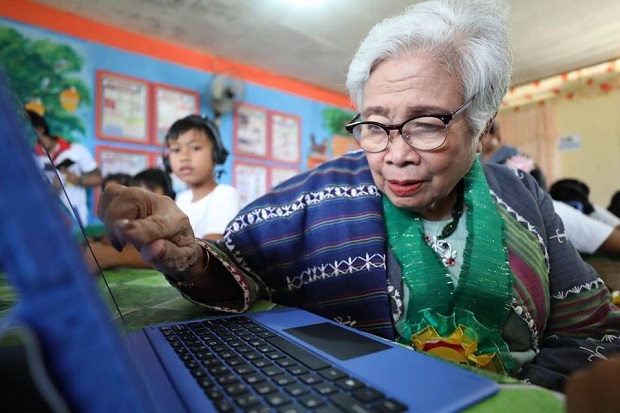

In a damning development that revives scrutiny over pandemic-era government spending, the Office of the Ombudsman has formally recommended graft and falsification charges against several former high-ranking officials, including ex-education secretary Leonor Briones and former budget undersecretary Lloyd Lao. The case stems from a controversial P2.4 billion laptop procurement project meant to provide devices to public school teachers during the COVID-19 pandemic.
The laptops, intended to support remote learning, were not only delayed and fewer in quantity than originally planned, but also plagued with issues ranging from inflated pricing to subpar performance, according to findings by both the Commission on Audit (COA) and the Senate Blue Ribbon Committee.
The procurement, facilitated by the Department of Education (DepEd) and the Procurement Service of the Department of Budget and Management (PS-DBM), originally aimed to distribute 68,500 laptops. However, due to what investigators called an “unjustifiably high” unit cost of P58,300 per laptop, only 39,583 units were ultimately acquired—almost 29,000 fewer than planned. The COA stated there was no valid basis for this inflated price, which resulted in an estimated P979 million loss to government funds.
Worse still, the laptops reportedly failed to meet even the most basic performance standards. Technical reviews labeled the units as outdated, overpriced, and unable to support the intended educational needs of teachers during distance learning.
Faulty procurement and questionable endorsements
One of the key concerns flagged by investigators was DepEd’s decision to delegate procurement responsibilities to PS-DBM. According to the Ombudsman’s report, this move lacked any clear legal or procedural basis, especially given that DepEd had the internal capability to manage the procurement directly.
Moreover, investigators revealed that there was no valid Memorandum of Agreement (MOA) in place when procurement activities began. Although documents suggest the MOA was signed in May 2021, it was backdated to February 2021, casting doubt on the legitimacy of the process. The Ombudsman emphasized that the MOA was critical, especially since the funding for the laptops came from the Bayanihan 2 Act (RA 11494), which required specific compliance.
Adding to the list of irregularities, the contract was awarded to a bidder whose technical proposal did not meet required standards—violating key government procurement protocols. Later purchases by DepEd of cheaper laptops with better specifications further highlighted the discrepancies.
A pattern of neglect or deliberate oversight?
The Senate Blue Ribbon Committee, which first raised alarms over the transaction in 2023, had already noted what it called “gross inexcusable negligence” and “manifest partiality” among those involved. The Ombudsman’s office echoed these findings, stating that the decision-making process appeared to be guided less by urgency and more by questionable intent.
“The circumstances suggest a deliberate effort to inflate prices,” the report read. “This caused undue disadvantage to the government and the very teachers the project was supposed to support.”
Alongside Briones and Lao, several other former DepEd officials were included in the Ombudsman’s recommendation for charges. These include Annalyn Sevilla, Alain Bustamante Pascua, Salvador Malana III, Abram Abanil, and Marcelo Bragado—all of whom played varying roles in either the approval or execution of the procurement deal.
A test of accountability
The Ombudsman’s recommendation does not automatically translate to court cases, but it represents a major step in holding top officials accountable for one of the most controversial government procurements in recent memory.
As the nation continues to recover from the pandemic’s fallout, this case serves as a stark reminder of how mismanagement—or worse, deliberate exploitation—of emergency funds can sabotage public service and erode public trust.
Whether this will lead to convictions or just another unresolved scandal remains to be seen, but for now, the laptop deal is once again in the national spotlight—this time with legal consequences looming.