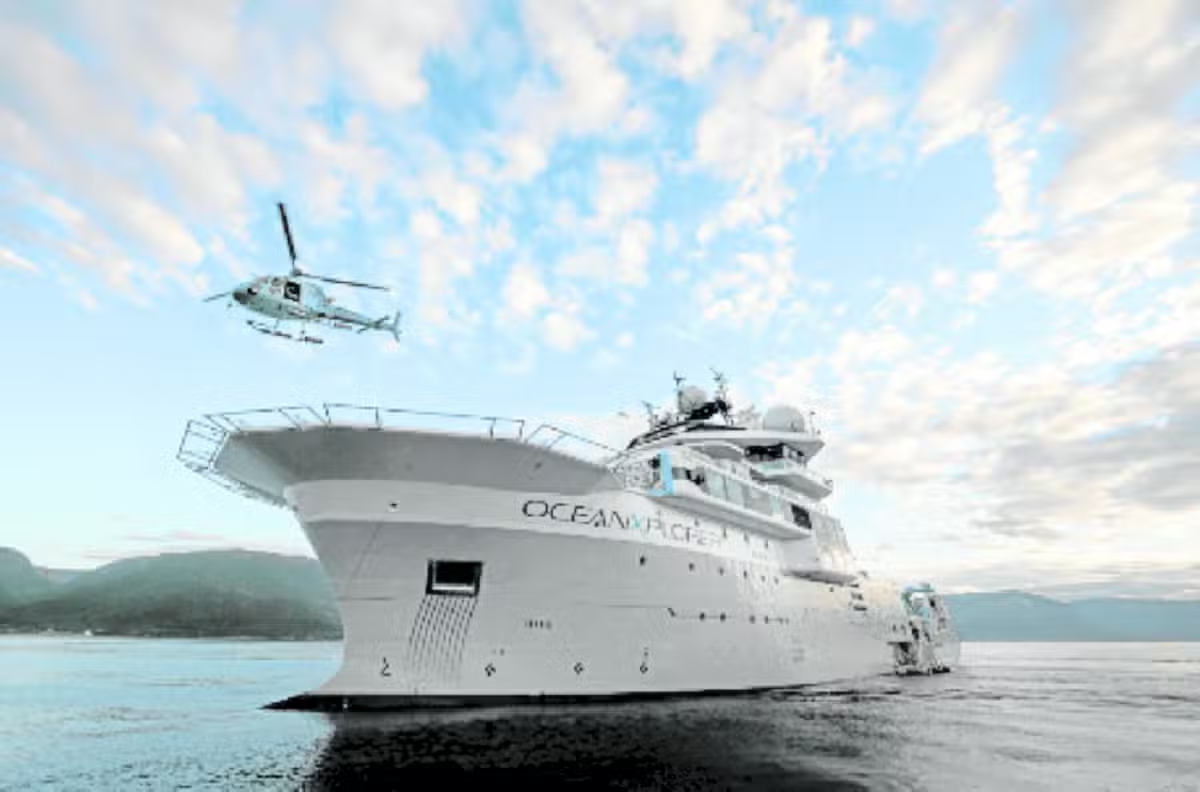
OceanXplorer, the world’s most advanced ocean exploration and media vessel, is scheduled to begin its mission in the Philippines in early 2026. Originally set for late 2025, the timeline was moved due to scheduling conflicts, according to OceanX founder and co-CEO Mark Dalio.
Dalio, who visited the Philippines last year, expressed excitement about the country’s vast and rich marine resources. “Part of the challenge is that you have a lot of water, a lot of amazing locations. So it is almost like being a kid in a candy store in terms of location,” he said.
OceanX is partnering with the Department of Agriculture (DA) to assess the health and diversity of the country’s fisheries. Agriculture Secretary Francisco Tiu Laurel Jr. said the partnership aims to generate data that will help preserve and optimize marine resources.
“The data we gather will provide invaluable insights into our marine resources, our vast coastline and the unique biodiversity we hold. It will help us devise better strategies for preserving and optimizing these resources for future generations,” said Tiu Laurel.
Dalio added, “Our partnership with the DA exemplifies how science and innovation can come together to create a long-term impact, not only in understanding marine ecosystems but also in supporting communities that depend on them.”
OceanXplorer, a retrofitted former oil survey vessel, houses advanced submersibles capable of diving 1,000 meters and capturing high-quality footage while collecting scientific samples. It serves both as a research lab and a media production studio.
OceanX aims to collaborate with Filipino scientists, policymakers, and educational institutions to ensure the mission delivers lasting benefits. “We look forward to working with the many scientists, policymakers and community stakeholders, aimed to inspire stewardship of the oceans while equipping future generations with the knowledge and tools to ensure their sustainability,” Dalio said.
He also emphasized the potential economic impact of their work. “If we can help determine the health of the fisheries and outline data points, we can help keep them healthy,” he said. “Being able to do the research and with more real-time assessment of data, we will have long-term benefits.”