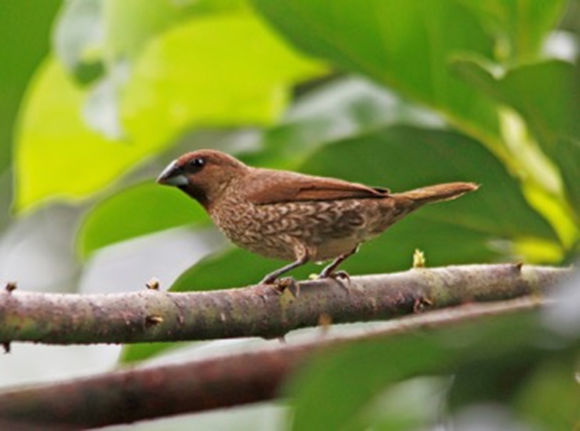

Scaly-breasted Munia sighted in the rehabilitated areas in Didipio Mine.
OceanaGold (Philippines), Inc. (OGP) has unveiled a game-changing approach to mine rehabilitation that’s cutting costs dramatically and transforming barren mine sites into thriving forests years ahead of schedule.
Called the Harmony in Diversity (HiD) Effect, this innovative method has reduced rehabilitation expenses from P3.5 million ($63,000) per hectare in 2023 to just P1.3 million ($23,000) per hectare in 2025. The secret? Moving away from the traditional hydroseeding approach, which relied on imported mulch and high-maintenance grass, and instead using nature’s own playbook to restore biodiversity.
“Through the HiD Effect, we can turn a disturbed mining area into a self-sustaining forest in just three to five years—compared to the 15 years it used to take,” said Donna Del Moro, OGP’s Acting Superintendent for Environment.
A nature-inspired blueprint
The HiD Effect integrates four powerful techniques:
- Miyawaki Method from Japan, which accelerates dense native forest growth
- Zai Pit Technique from Burkina Faso, which improves soil fertility and water retention
- Mycorrhiza fungi to enrich soil nutrition
- Decomposing logs and twigs to build mini-ecosystems for beneficial fungi and bacteria
Instead of forcing fast-growing grass onto the land, HiD mimics the original forest ecosystem. By fostering natural plant and animal succession from the start, forest layers grow simultaneously—speeding up biodiversity recovery and reducing the need for human intervention.

HiD Effect: Various indigenous and pioneering species are planted in an experimental area.
Big savings, bigger impact
The cost savings have allowed OGP to redirect funds from expensive maintenance toward other environmental programs, strengthening its broader sustainability agenda. Early signs of success are clear: endemic birds like pacific swallows, swiftlets, and wagtails are returning, while native plants are naturally reappearing—carried by wildlife that’s reclaiming the area.
“We’ve seen plants we didn’t even plant sprouting on their own, showing that animals are spreading seeds again. With richer biodiversity and better water retention, these rehabilitated zones will also be more resistant to erosion and landslides,” Del Moro noted.
Ahead of national policy and inspiring change
First rolled out in mid-2024, HiD is already aligned with the Mines and Geosciences Bureau’s Memorandum Order No. 2025-001, which calls for leveraging natural succession in mine rehabilitation. Its early success has drawn attention from the Department of Environment and Natural Resources’ Ecosystem Research and Development Bureau (ERDB) and the MGB, who visited OGP’s Didipio Mine last April to study its impact.
“We value the opportunity to collaborate with DENR’s principal research arm, combining their institutional knowledge with our on-the-ground innovation,” said Nericel Langres-Daulayan, OGP’s Mine Environmental Protection and Enhancement Office Manager.
OGP and ERDB are now in talks to develop industry-wide rehabilitation standards based on the HiD model.
A greener legacy
Since 2013, OGP has spent USD2.5 million on progressive rehabilitation, successfully regenerating 55 hectares—or 16%—of the mine’s 345 disturbed hectares as of June 2025. And the company isn’t stopping there.
“OceanaGold is committed to proving that responsible mining means more than extracting resources—it’s also about regenerating ecosystems,” Langres-Daulayan said. “The HiD Effect ensures that post-mining lands can thrive again and support communities for generations.”