
MANILA, Philippines – The Office of Civil Defense (OCD) led coordinated emergency preparedness and response operations during the 49th ASEAN Summit and Related Meetings, mobilizing personnel from government agencies, uniformed services, medical institutions, and local government units to ensure readiness for potential emergencies throughout the international gathering.
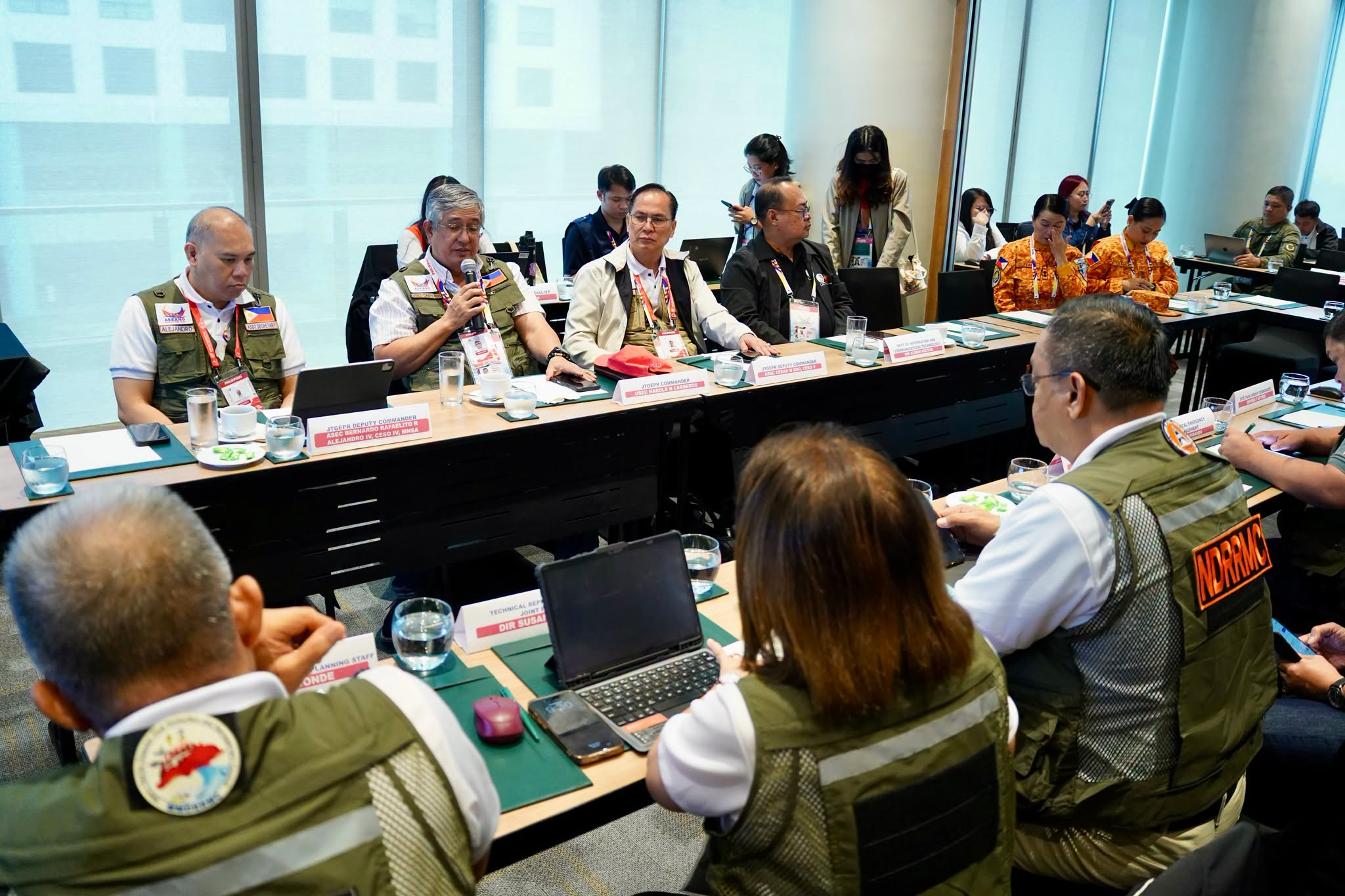
Through the Joint Task Group on Emergency Preparedness and Response (JTGEPR), the OCD spearheaded planning, coordination, and monitoring activities aimed at strengthening emergency response capabilities during the Philippines’ hosting of the regional summit.
OCD Administrator and Task Group Commander Undersecretary Harold Cabreros supervised the task group’s operations, including a series of situational briefings, coordination meetings, and monitoring activities to assess operational readiness.
Approximately 50 OCD officials and personnel were deployed to work alongside representatives from participating government agencies, hospitals, uniformed services, and local government units.
The deployment supported the implementation of emergency preparedness measures and coordinated response arrangements throughout the summit.
The JTGEPR operated under the Committee on Security, Peace and Order, Emergency Preparedness and Response (CSPOEPR), chaired by the Department of the Interior and Local Government (DILG), with the Department of National Defense (DND) serving as vice chairperson.
The task group was responsible for coordinating a wide range of emergency services, including search, rescue, and retrieval operations, disaster risk reduction and management, fire suppression, and medical emergency response.
Its responsibilities also covered preparedness and response to chemical, biological, radiological, and nuclear (CBRN) incidents, as well as emergency telecommunications, camp management, logistics, and public works and engineering support.
These operational components were designed to ensure that participating agencies could respond to various emergency scenarios, including disasters, hazardous incidents, and other situations requiring coordinated government action.
The inter-agency coordination also sought to strengthen communication and resource mobilization among emergency responders, medical institutions, and local authorities during the high-level international event.
Through the JTGEPR, the OCD worked to ensure that emergency response resources and personnel were prepared to provide assistance when necessary while supporting the overall security and public safety arrangements for the summit.
The operations highlighted the importance of coordination among national government agencies and local authorities in managing emergency preparedness requirements during major international gatherings.
The 49th ASEAN Summit and Related Meetings brought together regional leaders and international delegations, requiring coordinated security, public safety, and emergency response arrangements across participating government agencies.