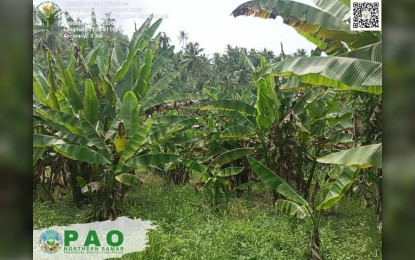
The Northern Samar provincial government has initiated a series of interventions aimed at revitalizing the local abaca industry, a significant contributor to the economy of Eastern Visayas.
As part of these efforts, the local government will soon operate a tissue culture laboratory at the Provincial Agriculture and Fishery Extension Center in Catarman town and establish an abaca nursery at the Libas Estate Multiplier Farm in Pambujan town. “These interventions aim to ensure the availability of quality, disease-free planting materials and sustainable replanting efforts,” the Provincial Agriculture Office stated in a press release on Monday.
The province has been allocated PHP 11.4 million to support abaca plantations under the Coconut and Other Shade Trees Project in Silvino Lubos town. This funding is provided by the Tingog party-list and implemented by the Philippine Fiber Industry Development Authority (PhilFIDA).
In addition, the provincial government has previously donated PHP 5.1 million worth of abaca farm machinery to local farmer groups to enhance the value of the fiber that thrives in the region. An abaca fiber consolidation center has also been established, serving as a drying area, storage facility, and stripping shed.
Abaca, commonly known as Manila hemp, is of significant economic importance to Northern Samar, being one of the province’s priority commodities. According to the Philippine Statistics Authority, Northern Samar accounts for 60 percent of the region’s abaca output, with Mondragon and Lope de Vega identified as the top-producing towns.
In 2024, Northern Samar produced 656.14 metric tons of abaca fiber, as reported by PhilFIDA. The presence of bunchy top and mosaic virus diseases on Leyte Island in recent decades has prompted the government to focus on expanding abaca planting in the Samar provinces.Bookmark messageCopy message