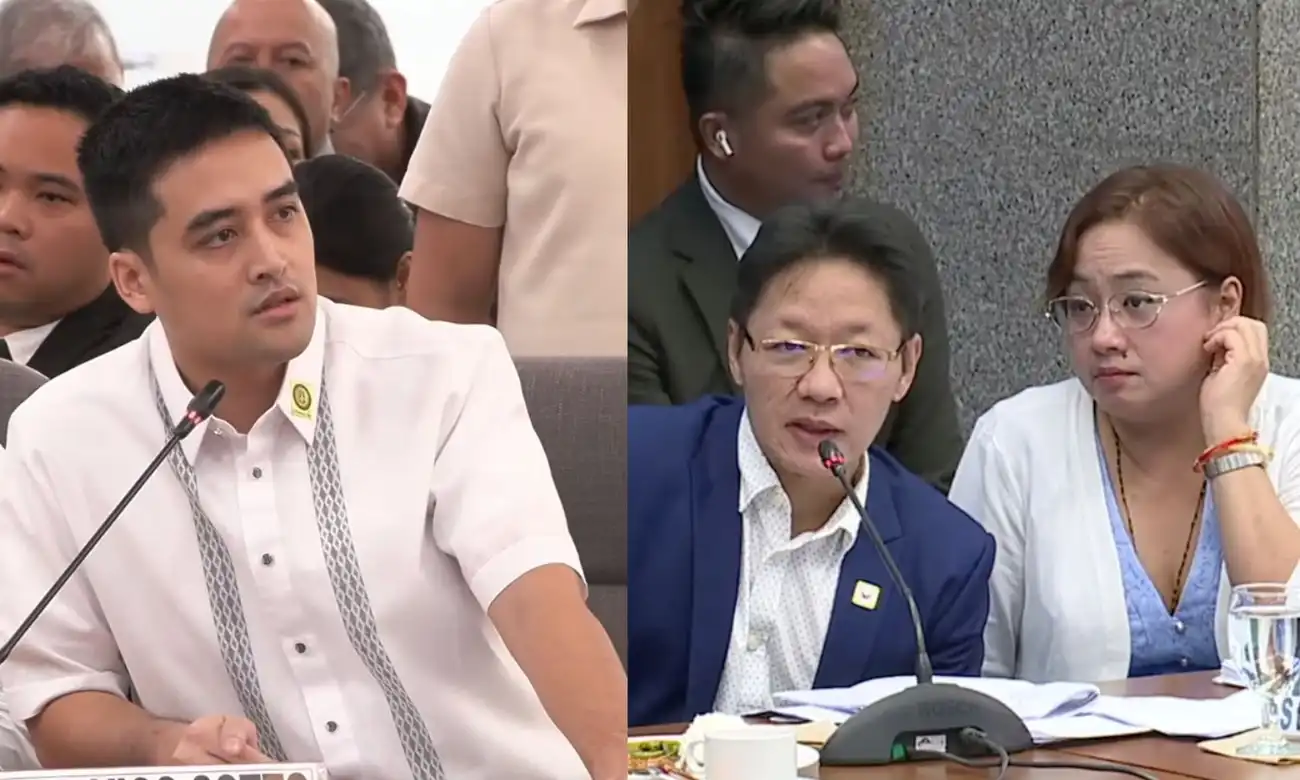

Pasig City Mayor Vico Sotto went for the jugular after the arrest of Sarah Discaya, blasting what he called a shameless “victim act” meant to distract from what authorities and lawmakers now describe as one of the most brazen infrastructure rackets in recent memory.
Discaya was arrested on December 18 after the National Bureau of Investigation served two warrants against her—one for violating the Anti-Graft and Corrupt Practices Act, and another for malversation of public funds through falsification. The cases stem from an alleged ghost flood-control project in Davao Occidental worth millions of pesos. She was flown to Cebu to face trial at the Lapu-Lapu City Regional Trial Court.
But for Sotto, the arrest barely scratches the surface.
In a fiery video statement, the Pasig mayor warned the public not to fall for what he described as a carefully rehearsed narrative portraying the Discayas as helpless scapegoats.
“Don’t bite their propaganda,” Sotto said bluntly. “They are not small fish. They are not victims. They are the ones who started this.”
According to Sotto, the Discaya operation was not accidental corruption but a full-blown system—one that thrived across administrations and flourished under political protection. Citing findings reportedly flagged by the Anti-Money Laundering Council, he claimed that more than ₱180 billion flowed through bank accounts linked to the couple, and that figure covers only four of their nine companies.
Sotto alleged that the Discayas did not wait to be offered projects. Instead, they actively hunted them—courting lawmakers, requesting meetings through chiefs of staff, laying out available budgets from the Department of Public Works and Highways, and openly offering advances, percentages, and SOPs as if corruption were standard operating procedure.
“They weren’t just contractors chasing work,” Sotto said. “They were pitching corruption like a business plan.”
The clash is deeply personal. Discaya was Sotto’s rival in the May 2025 Pasig mayoral race, a contest he won by a landslide for his third term. Long before her arrest, Sotto had already raised alarms over Discaya-linked flood-control projects—sparking a chain reaction that exposed a web of alleged anomalies and dragged powerful political names into the spotlight.
What enraged Sotto further was Discaya’s public turn to emotional appeals. In interviews, she tearfully invoked her children—several of whom reportedly have ADHD—suggesting that the investigation was tearing her family apart.
Sotto was unmoved.
He pointed out that multiple companies tied to the Discayas were named after their children or saints associated with them, arguing that the kids were not innocent bystanders but woven directly into the business structure. He cited corporate records allegedly showing that one son acquired a construction firm at just 18 years old for ₱245 million—before securing billions of pesos in government infrastructure projects. Another son, he said, registered a company with tens of millions in capital as a teenager and reportedly booked ₱3 billion in projects in a single year.
His accusation landed with surgical cruelty: the Discayas, he said, did not merely steal public money—they trained their children to do it.
Sotto also accused the couple of having zero remorse. He pointed to shifting stories and outright contradictions—from boasting about DPWH-linked wealth, to claiming minimal profits, to suddenly denying knowledge of political figures they had previously named.
Worse, Sotto claimed the operation did not stop with the arrest. He alleged that the Discayas are still working behind the scenes—attempting to blackmail lawmakers and intimidate former employees into silence. According to him, at least two congressmen have confided that they were asked for cash in exchange for not being named in alleged ledgers, while former staff were reportedly threatened to keep them from testifying.
“This is not repentance,” Sotto said. “This is damage control.”
For the mayor, the arrest marks a crack in a long-standing wall of impunity—but not its collapse. Just six months ago, he noted, the scale of the alleged corruption was barely known, and those involved believed themselves untouchable.
That illusion, he said, is finally breaking.
Sotto ended with a warning that sounded less like a plea and more like a declaration of war: this will not end with one arrest, one family, or one headline.
“Don’t stop,” he urged. “Everyone has a role. And everyone who stole must answer.”