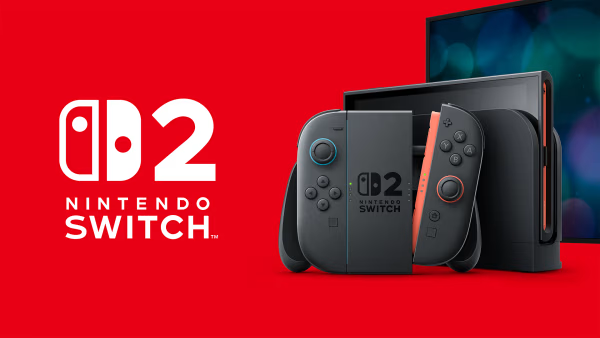
Nintendo’s upcoming Switch 2 is shaping up to be a technical leap forward, boasting a handful of blockbuster titles like Elden Ring: Tarnished Edition and Cyberpunk 2077. Paired with first-party crowd-pleasers like Mario Kart World and Donkey Kong Bananza, the next-gen console has generated serious buzz. But beyond the initial hype lies a brewing issue that could slow its momentum: a growing silence from third-party developers.
Despite the promise of robust hardware and cross-platform hits, many game studios are still on the sidelines. In a recent episode of the Nate the Hate podcast, gaming insider Nate revealed that a surprising number of studios have yet to receive development kits for the Switch 2 — tools essential for building or porting games to the system.
“It’s not just indie teams,” Nate explained. “Mid-tier developers and even those in the lower AAA space still don’t have dev kits. They’re essentially in a holding pattern, unsure of when or if they’ll be brought into the fold.”

This bottleneck appears to date back to the 2025 Game Developers Conference, where sources, including Digital Foundry, reported that distribution of dev kits was limited and selective. Months later, the situation doesn’t seem to have improved.
Modern Vintage Gamer, Nate’s co-host and a developer himself, added that potentially two-thirds of the studios that contributed to the Switch’s game library are currently locked out of development for its successor. Without access to hardware or specifications, many studios can’t plan their releases — much less begin work on them.
The irony? Big-name publishers like Capcom, Ubisoft, Sega, and Bandai Namco are reportedly eager to get games on the Switch 2. Microsoft, too, is said to be preparing content for Nintendo’s ecosystem. But all that enthusiasm could be delayed — not by lack of interest, but by lack of access.
“They’re ready,” Nate said. “They have games they want to bring to the table. But without the hardware in hand, announcements might not come until 2026.”
Why Nintendo is dragging its feet remains unclear. The company has historically been tight-lipped and cautious with its hardware rollout strategy, often prioritizing internal security and long-term planning over rapid developer access. But in an era where third-party support is more vital than ever, this hesitance could hurt the Switch 2’s long-term appeal.
As it stands, the Switch 2 is poised for a strong launch — but whether it can sustain that momentum depends largely on how soon Nintendo opens the gates to the broader development community. Until then, fans might have to wait longer than expected for a full library of diverse, third-party experiences.