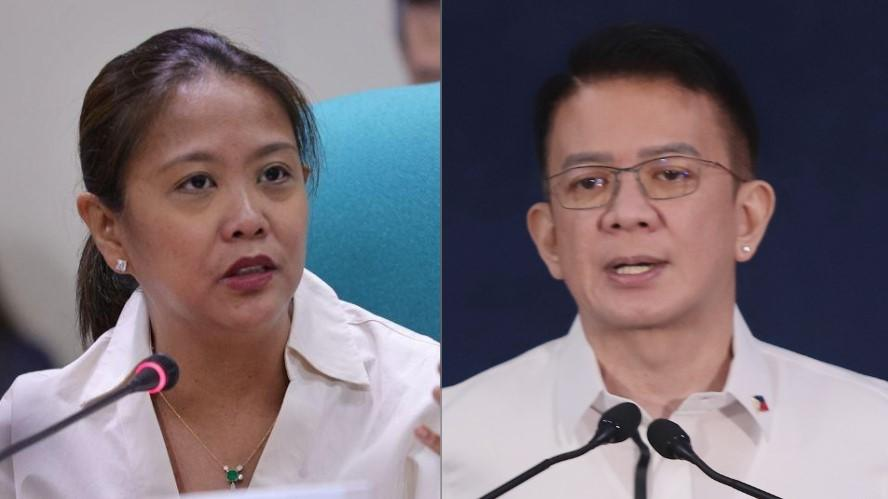

Justice Secretary Jesus Crispin Remulla on Thursday confirmed that the National Bureau of Investigation (NBI) has recommended the filing of criminal charges against Senator Francis Escudero, Makati City Mayor Nancy Binay, and several other high-profile figures in connection with the alleged misuse of billions of pesos in infrastructure funds.
According to Remulla, the NBI’s report includes sufficient basis to pursue indirect bribery and malversation of public funds charges. The recommendation stems from testimonies and evidence gathered from former Department of Public Works and Highways (DPWH) undersecretary Roberto Bernardo, who earlier testified before Congress and tagged a network of politicians and contractors allegedly benefiting from anomalous flood-control projects.
“This is a serious matter. The NBI has recommended charges based on evidence they reviewed. The Department of Justice will now assess the findings and decide the next course of action,” Remulla said, stressing that due process will be strictly observed.
A scandal unfolds
Bernardo’s revelations before the Senate Blue Ribbon Committee triggered a political firestorm earlier this month. He claimed that commissions—allegedly as high as 15 percent—were demanded in exchange for securing contracts or budget allocations for flood-control projects. Among those implicated were lawmakers, mayors, and even senior Senate leaders.
The alleged scheme involved questionable allocations of unprogrammed appropriations for projects that were either overpriced, unfinished, or in some cases, never constructed at all—yet fully paid by the government. These so-called “ghost projects” were said to have been cornered by favored contractors, including companies linked to the controversial Discaya family, long accused of wielding influence within the DPWH.
Escudero and Binay in the spotlight
The inclusion of Senator Escudero and Mayor Binay in the NBI’s recommendation immediately sent ripples through the political establishment. Both are prominent figures in Philippine politics: Escudero is the Senate President, while Binay is the daughter of former Vice President Jejomar Binay and a long-serving mayor of one of the country’s most affluent cities.
Political analysts noted that the accusations, if pursued, could have far-reaching implications. “This isn’t just about corruption anymore—it’s about the credibility of institutions,” said Prof. Ramon Casiple, a governance expert. “When sitting senators and city mayors are implicated, it shakes public confidence in the entire system.”
DOJ’s next move
While the NBI has made its recommendation, Remulla underscored that it is only the first step in a long legal process. The Department of Justice (DOJ) will conduct its own review before deciding whether to file cases in court.
He also cautioned against rushing to judgment. “Our justice system must ensure fairness. Allegations, no matter how explosive, must be proven in court,” Remulla said.
Still, critics argue that the DOJ now faces a crucial test of political will. Civil society groups have urged the agency to act decisively, warning that failure to prosecute would further erode public trust at a time when corruption scandals continue to dominate headlines.
Public pressure mounts
On social media, reactions have been swift and unforgiving. Hashtags calling for accountability trended within hours of the announcement. “If true, this shows how deep corruption runs in our politics. No one should be spared,” one netizen wrote.
Meanwhile, flood-prone communities—supposed beneficiaries of the shelved or unfinished projects—have expressed outrage. For them, the scandal isn’t just about missing funds, but about lives put at risk. “We were promised flood protection, but all we got were empty promises. Now we find out the money may have been stolen,” said a resident of Davao Occidental, where a “ghost” flood-control project was recently uncovered.
A Defining Test
The controversy marks one of the most high-profile corruption cases under the Marcos administration. Whether the DOJ files charges against Escudero, Binay, and the others named will likely define not only the credibility of the justice system but also the government’s commitment to its anti-corruption drive.
For now, the nation waits. Will the case unravel into another political spectacle with little accountability, or will it finally break new ground in the fight against entrenched corruption?