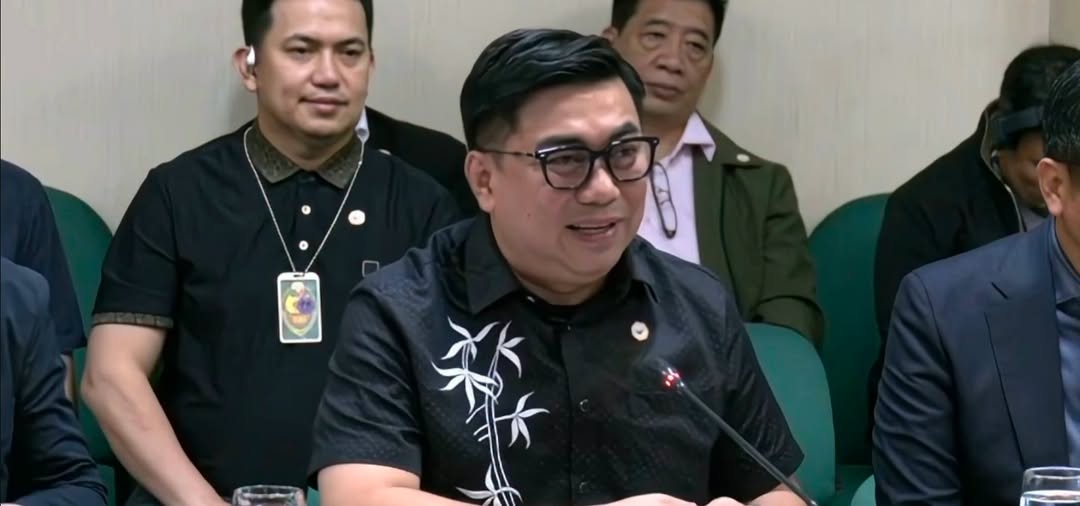

(Screengrab from Senate livestream)
The National Bureau of Investigation (NBI) is pushing for stricter measures against foreign nationals who fraudulently obtain Filipino citizenship documents, including the cancellation of falsified identities, deportation and possible seizure of illegally acquired assets.
During a Senate Committee on Justice and Human Rights subcommittee hearing chaired by Sen. Risa Hontiveros on Thursday, NBI Director Melvin Matibag said existing procedures allow individuals accused of citizenship fraud to continue using Philippine identity documents and operating businesses while their cases remain unresolved.
“They should be banned from entering our country,” Matibag said, referring to foreign nationals found to have fraudulently acquired Filipino citizenship.
Matibag warned that relying solely on criminal prosecution could allow suspects to retain privileges reserved for Filipino citizens because court proceedings may take years to conclude.
He proposed establishing a legal mechanism for the prompt cancellation of fraudulently obtained birth certificates, passports and other government-issued documents, subject to appropriate legal proceedings.
The NBI is also coordinating with the Anti-Money Laundering Council (AMLC) and other government agencies to identify properties and financial assets potentially linked to fraudulent citizenship schemes.
Investigators are examining whether assets acquired through falsified Filipino identities could be frozen and eventually forfeited in favor of the government.
However, Matibag acknowledged that asset freezing and forfeiture must comply with existing laws and judicial safeguards.
The NBI chief raised concerns that foreign nationals using fraudulent Filipino identities could acquire land, establish businesses in sectors restricted to Filipino citizens and potentially participate in elections.
He cited the case of a Chinese national who allegedly secured a genuine Philippine Statistics Authority (PSA) birth certificate through late registration using false personal information.
The individual reportedly used the birth certificate to obtain additional government documents, including an NBI clearance, and was found to have an active taxpayer identification number.
Matibag said the case illustrated how a birth certificate obtained through fraudulent registration could be used to secure other legitimate government credentials.
Senate eyes stronger safeguards
Hontiveros said the Senate panel would study the NBI’s recommendations as it prepares legislative measures to address vulnerabilities in the country’s civil registration and citizenship documentation systems.
“What we have here is a terrible combination of factors,” Hontiveros said, referring to the exploitation of government identity procedures and institutional weaknesses that allow fraudulent registrations.
She emphasized the need to strengthen coordination among government agencies to prevent foreign nationals from using falsified Filipino identities to obtain restricted privileges or engage in activities that could pose national security risks.
The NBI earlier launched a nationwide investigation into suspicious late birth registrations following reports of possible irregularities in the issuance of civil registry documents.
Matibag clarified that delayed birth registration is not automatically fraudulent and that investigators are focusing on cases involving evidence of falsification or other irregularities.
As part of the investigation, authorities uncovered 27 late birth registrations in Santa Cruz, Davao del Sur, that reportedly had no corresponding payment records in the local treasury.
The NBI also disclosed that seven foreign nationals have been charged in connection with the suspected registration scheme.
Arrest warrants have been issued against the respondents, although some remain at large.
The proposed measures remain subject to further legal review and possible legislative action as authorities continue investigating suspected fraudulent citizenship schemes.