
By Sarwell Q. Meniano
TACLOBAN CITY – The National Bureau of Investigation (NBI) has completed DNA analysis for 90 percent of the more than 2,200 victims of Super Typhoon Yolanda in this city, 13 years after the disaster, the agency said Wednesday.
NBI Eastern Visayas Regional Director Jeremy Lotoc said the DNA results will be turned over to Mayor Alfred Romualdez for distribution to the victims’ surviving families ahead of the 13th anniversary of the disaster on Nov. 8, 2026.
A team of medico-legal and forensic experts from the NBI central office returned to Metro Manila on Oct. 27, signaling the completion of the latest round of DNA analysis.
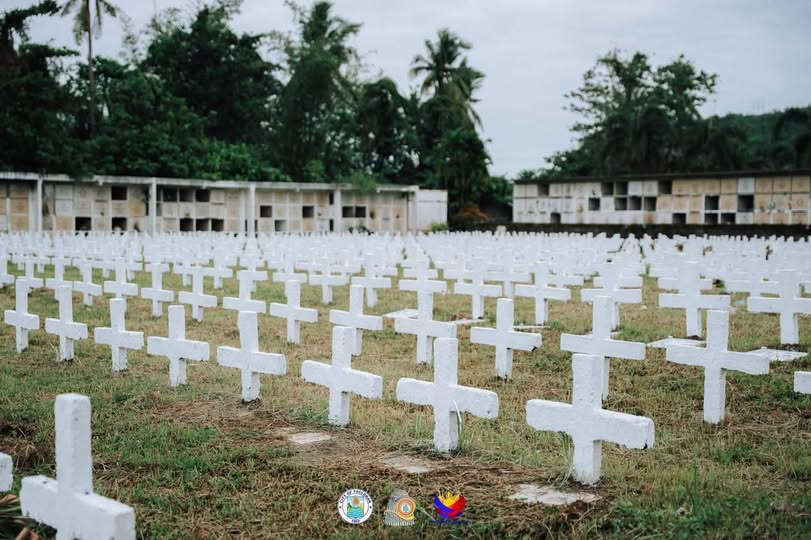
“The analysis aims to help surviving families identify the specific burial locations of their loved ones in a mass grave at Holy Cross Memorial Park,” Lotoc said in an interview.
He said the DNA analysis was expedited following his appointment as regional director in the last week of August.
Lotoc, a resident of the city’s coastal district of Sagkahan, lost his wife and father when Yolanda devastated Tacloban in 2013.
DNA testing is used as a last resort when families cannot provide dental or fingerprint records to help establish the identities of their missing loved ones.
“There are still issues for the remaining 10 percent of victims since we need more specimens, but they will be identified too,” Lotoc said.
The intensified DNA analysis was conducted with assistance from Tingog Party-list and the Department of Public Works and Highways.
In previous years, the NBI acknowledged delays in the identification process, noting that DNA testing was available only at its central office in Manila.
Lotoc said the agency will also work to identify victims buried in mass graves in the nearby coastal towns of Palo and Tanauan.
In the immediate aftermath of Yolanda, bodies were rapidly recovered and initially buried in temporary or common burial sites in various areas to prevent a public health crisis.
In early 2014, the city government transferred thousands of recovered remains to the mass grave at Holy Cross Memorial Park to consolidate the burial site and establish a dedicated memorial area.
While awaiting DNA test results, many families remain uncertain about the exact burial locations of their loved ones. They continue to visit the common graves to light candles, offer flowers, and prayers. (PNA)