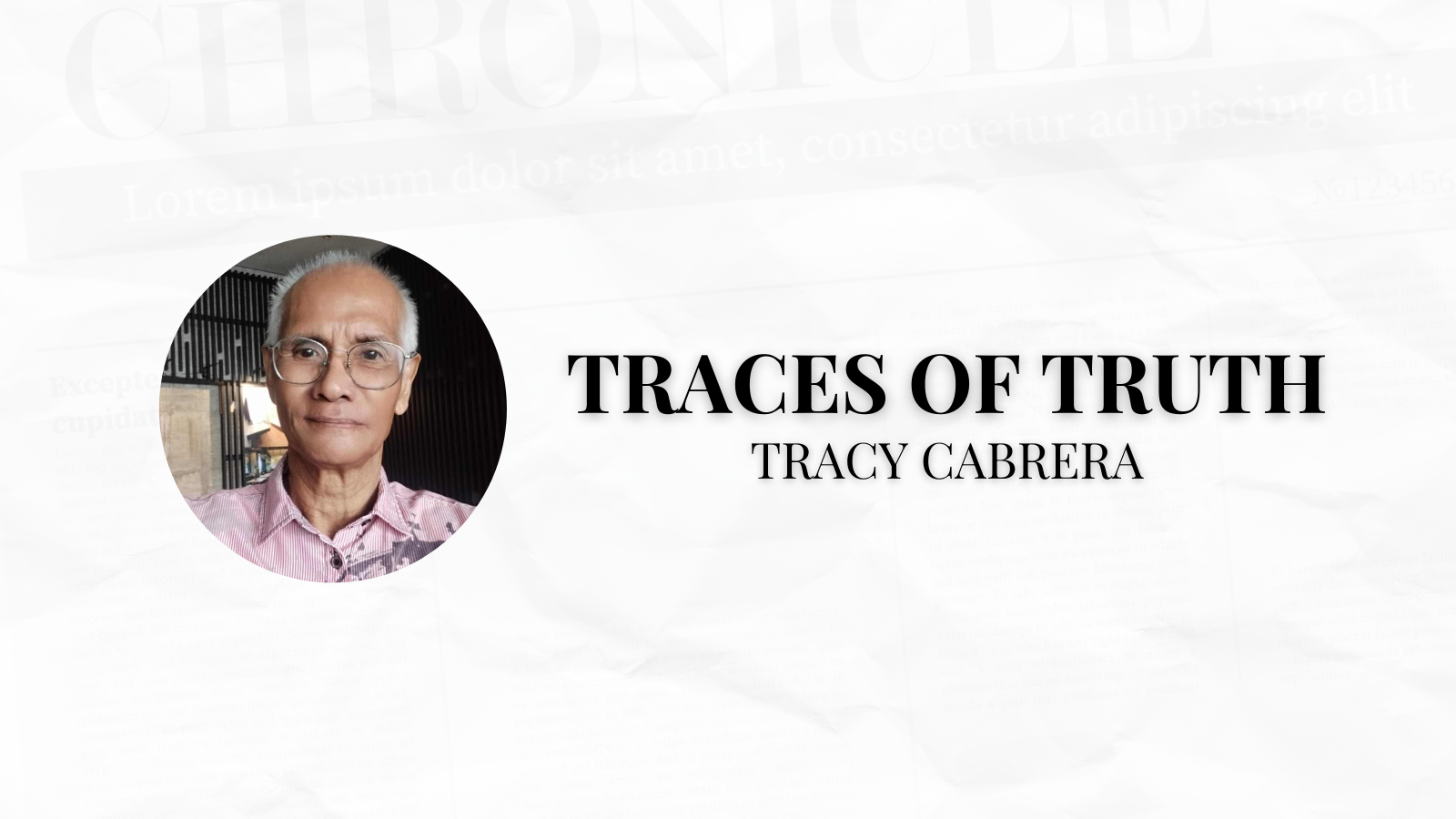
I have been a professional journalist and public relations specialist for more than 30 years now.
This is a polite way of saying I cut my teeth when the frantic clatter of typewriters provided the soundtrack to our smoke-filled newsrooms. In those days, the rules were as unyielding as the lead type we used to print the news.
For those of us who walked the police and justice beats, we were trained to believe in the “gold standard.” A police blotter was solid ground; a court order was a fortress. These were our “smoking guns” — the ultimate shield against the dreaded libel suit.
The logic was simple: If a judge or a public prosecutor signed a document and a clerk of court hammered it with an official seal, it became public property.
It belonged to the people. We reported it, analyzed it, and moved on to the next deadline with the confidence that the truth was its own defense.
But today, the lines are blurring in ways that should make every wielder of the pen — and every online reporter — deeply uneasy.
Jun’s Case
A case currently unfolding in Albay hits closer to home than most. It involves Redencion “Jun” de Leoz, an online publisher who once worked under my watch as a reporter during my Daily Tribune days.
Jun is now facing the sharp end of a legal spear thrown by former Legazpi City Mayor Carmen Geraldine B. Rosal.
The heart of this matter isn’t about “fake news” or what was said. Rather, it is about who has the right to show the truth.
What is fascinating — and frankly, alarming — is the evolution of the prosecution’s theory.
While the City Prosecutor of Legazpi dismissed the cyber libel charges for lack of basis, they allowed charges of “unlawful means of publication” and “unjust vexation” to move forward.
The logic being tested here is a slippery one. The prosecution isn’t arguing that the document — a court order — was false or defamatory. Instead, they argue that the act of posting it was criminal because the publisher was “not authorized” to do so.
This raises a chilling question for our industry: When does the act of publishing an official, public document become a subject of criminal scrutiny?
A Chilling Shift
If a court order is a public record, does a journalist now need a “permission slip” from the parties involved to tell the people it exists?
If “lack of authority” becomes the new legal threshold for criminalizing the dissemination of non-confidential government records, then the very backbone of investigative journalism is at risk of snapping.
Journalism has always relied on the paper trail. Court resolutions, pleadings, and orders are the bedrock of factual reporting. They are the primary sources that prevent “he-said, she-said” reporting from descending into mere gossip.
Yet, we are seeing a shift where the digital space is being used to reframe the rules of engagement.
By focusing on the manner of publication and the identity of the publisher rather than the veracity of the content, we risk creating a “pay-to-play” environment for information.
A Call to NPC
We must be clear: every individual has the fundamental right to seek legal remedy. That is not in dispute.
Furthermore, the specifics of Jun’s case remain under the jurisdiction of the courts, and it is there where his liability or innocence will be determined.
However, the broader implications are too heavy to ignore. When we start scrutinizing the act of sharing public documents, we aren’t just policing one publisher in Albay; we are potentially discouraging legitimate reporting across the entire archipelago.
If a journalist cannot rely on an official government document without the fear that the act of publishing it will be construed as “unjust vexation,” then the “watchdog” is effectively being muzzled.
I think it’s about time the National Press Club (NPC), where I used to be one of the members of the Board of Directors, and other professional media groups, make a stand.
We need these professional media groups to lead the way in defending the right of every legitimate journalist to do their jobs without fear of being prosecuted and persecuted.
We cannot afford to be silent while the tools of our trade — official records — are turned into liabilities.
In an era where information moves at the speed of a “share” button, we need more clarity, not more cages.
The question isn’t just about whether a document can be published — it’s about whether we can still call ourselves a free press if the most official of truths are suddenly rendered off-limits to the people.
It is time to draw the line.