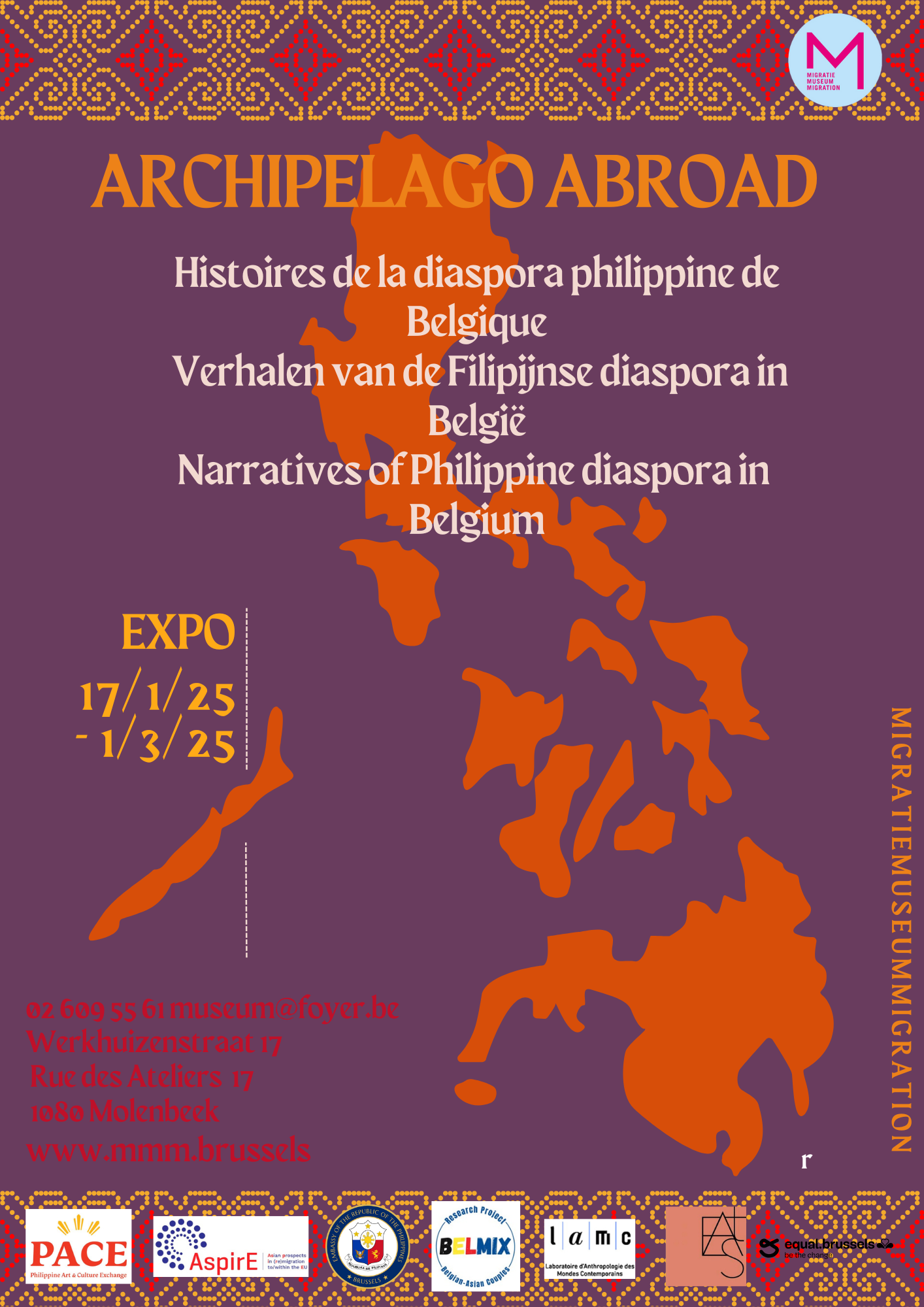

The video documentary of a Filipino woman who sailed from Manila to Antwerp was among the stories that moved visitors to tears at Archipelago Abroad, an exhibition on the Philippine diaspora in Belgium that opened at the Museum of Migration in Brussels January 17.
Organized by the Brussels-based non-profit Philippine Art and Culture Exchange (PACE), the exhibit is a poignant narration of the many roads taken and reasons why Filipinos left their country to settle in another.
Artworks, photographs, personal objects, podcasts, essays and films carry heart-rending testimonies of the Filipinos’ migration story.

PHILIPPINE Ambassador Jaime Victor Ledda gives the keynote speech during the opening cocktails.
Apart from the video documentary on the voyage of “Crissie,” Archipelago Abroad also features the majestic wire sculpture of internationally-renowned artist Racso Jugarap, an interview with Belgian fashion designer Maxime Edward who was adopted from the Philippines at age 10 months, a podcast of a former cabaret dancer, and displays of a variety of objects including baskets, old passports, a wedding gown, prayer books, and traditional costumes.
The exhibit also includes a jeepney photo booth with a set of Filipino attire that visitors may wear.

LOUISE Baterna is founder and president of the Philippine Art and Culture Exchange (PACE) which organized the exhibition Archipelago Abroad with the assistance of volunteers and a network of supporters.
Louise Baterna, PACE founder and president, said that “sharing our stories, our art and culture, leads to a better understanding and appreciation of the Filipinos as a people and as contributing members of the Belgian society.”

OIL on canvas by Belgium-based artist Chiara Daez Capony.
Volunteers, supporters
With a year of preparation, PACE was able to maximize this rare opportunity with an army of volunteers and the support of the Philippine Embassy in Brussels as well as of the Philippine Studies Network of the Université Libre de Bruxelles headed by Filipino Professor Asun Freznosa-Flot.
The Museum of Migration is confident the exhibition will generate a significant number of visitors during its run. Museum director Loredana Marchi said it opens a cultural dialogue and invites visitors to reflect on how these individual experiences are part of Belgium’s broader migration history.
“Archipelago Abroad gives a voice to a community that is often under represented,” Marchi added.
Philippine Ambassador Jaime Victor Ledda, who was welcomed by museum president, Professor Johan Lemans, said in a speech that “Archipelago Abroad is a contemplation of our unity in diversity and how the Filipino migrant communities, even as they contend with the challenges to integrate, adapt and thrive in foreign lands, are living mirrors of our national identity.”
At the opening cocktails, visitors navigated the exhibition through three floors of the museum building.

ONE of the many religious objects submitted to the exhibit.
Co-curator Sam Domingo noted that Archipelago Abroad is a collection of testimonials that celebrate triumphs but also exposes the “dark side” of migration such as human trafficking, isolation, and the hardships of integration.
The mixed crowd of Filipinos and Belgians were treated to a Philippine buffet and a mini-concert with Belgium-based Filipino talents: opera singer Janine Santos, violinist Iris Ramonida, composer-singer-musician Christopher Malapitan and multi-disciplinary artist Django Valmores.

COLLAGE work by Filipina women reflecting their aspirations.
It has been observed that since the late 1960s, Filipinos have been migrating to Belgium. The entry to the country has used various channels such as official or unofficial labor recruitment, mixed marriages, family reunifications, and tourism. The majority of early migrants were women who acquired jobs in the domestic service and care sector.
However, over the years, professionals working in the field of science, engineering, technology and international road transport have increased. Filipinos born in Belgium have also acquired higher studies that allowed them access to professions that were not possible with the first generation of Filipino migrants even with their Philippine diplomas.
An estimated total of 22,000 Filipinos have settled in Belgium since the first wave of Filipina nurses were invited by the Belgian government some fifty years ago.
Archipelago Abroad will run until March 1 and will include events, such as a conference on migration, a Filipino Community Day, a film showing on political refugees, and a conference on Philippine underwater bounty. (Susan A. de Guzman)