
(Photo courtesy of Yahoo Sports)
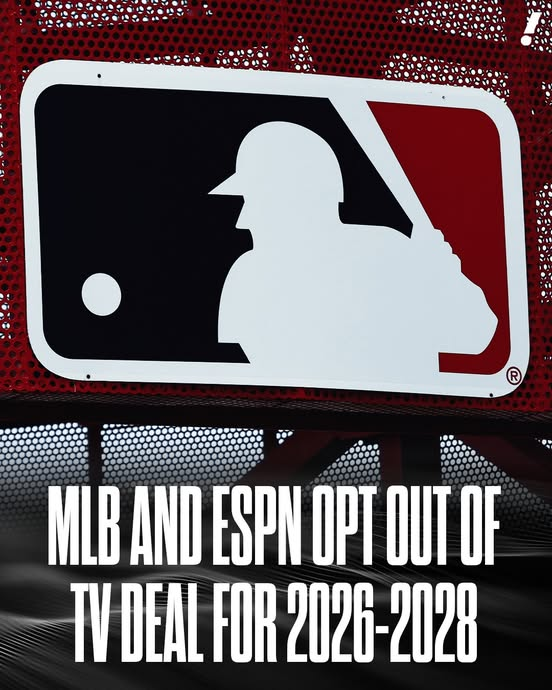
After more than three decades of partnership, Major League Baseball (MLB) and ESPN will go their separate ways following the 2025 season. According to a memo from MLB Commissioner Rob Manfred obtained by
The Athletic’s Evan Drellich reports that the league, the sports network, and the league have mutually agreed to terminate their broadcasting agreement, which was originally set to run through 2028. The decision came ahead of a contractual opt-out deadline on March 1.
Frustration over diminished coverage
In the memo, Manfred expressed MLB’s growing dissatisfaction with ESPN’s baseball coverage, citing a significant reduction in attention beyond live game broadcasts. The league believes the network has scaled back its investment in baseball, an issue brewing for several years.
In a public statement, MLB underscored this sentiment, pointing out that despite baseball’s strong viewership and demographic appeal, ESPN’s declining investment did not align with the sport’s value.
“We have had a long and mutually beneficial partnership with ESPN since our first MLB broadcast in 1990. However, in recent years, we have witnessed a notable decrease in ESPN’s baseball coverage and overall commitment,” MLB said.
It added, “Given that MLB delivers valuable content, including exclusive rights to signature events like the Home Run Derby, ESPN’s push for reduced rights fees is simply unacceptable. As a result, both parties have agreed to part ways after 2025.”
ESPN’s response
For its part, ESPN framed the decision as a business move driven by financial prudence while leaving the door open for alternative MLB coverage in the future. The network released a statement acknowledging the longstanding relationship while emphasizing its commitment to fiscal responsibility.
“We are grateful for our long history with Major League Baseball and proud of our coverage to super-serve fans. As we expand our audience across linear, digital, and social platforms, we have applied disciplined financial decision-making to ensure the sustainability of our industry-leading live events portfolio. While our current agreement with MLB will conclude after 2025, we remain open to exploring new opportunities to serve baseball fans across our platforms,” the network said.
The end of an era
The split marks a significant shift in MLB’s national broadcasting landscape. ESPN has been a fixture in baseball broadcasting since 1990, with “Sunday Night Baseball” becoming one of the league’s marquee weekly television events. In addition to regular-season games, ESPN has aired “Baseball Tonight,” postseason games, and the highly popular Home Run Derby.
This development comes amid a broader upheaval in sports media distribution. In the past, MLB’s television rights model was anchored by regional sports networks (RSNs) and national contracts with Fox, ESPN, and TBS, supplemented by the league’s MLB.tv streaming platform.
However, the decline in cable subscriptions has disrupted that formula. Diamond Sports Group, which operated numerous RSNs, declared bankruptcy, leading several teams to develop direct-to-consumer streaming services under MLB’s guidance.
Future of MLB broadcasting
Amid these challenges, MLB has aggressively pursued deals with streaming platforms. The league has inked agreements with Apple TV+ and The Roku Channel, while Amazon Prime has picked up select New York Yankees games. Peacock also previously streamed MLB games, further signaling a shift from traditional cable television.
Despite ESPN’s investments in streaming through Disney-owned platforms like ESPN+ and Hulu, the network’s existing MLB deal did not align with the league’s vision for its digital future.
As MLB navigates a rapidly evolving media landscape, the conclusion of its relationship with ESPN marks both the end of an era and a turning point for the sport’s broadcasting strategy.