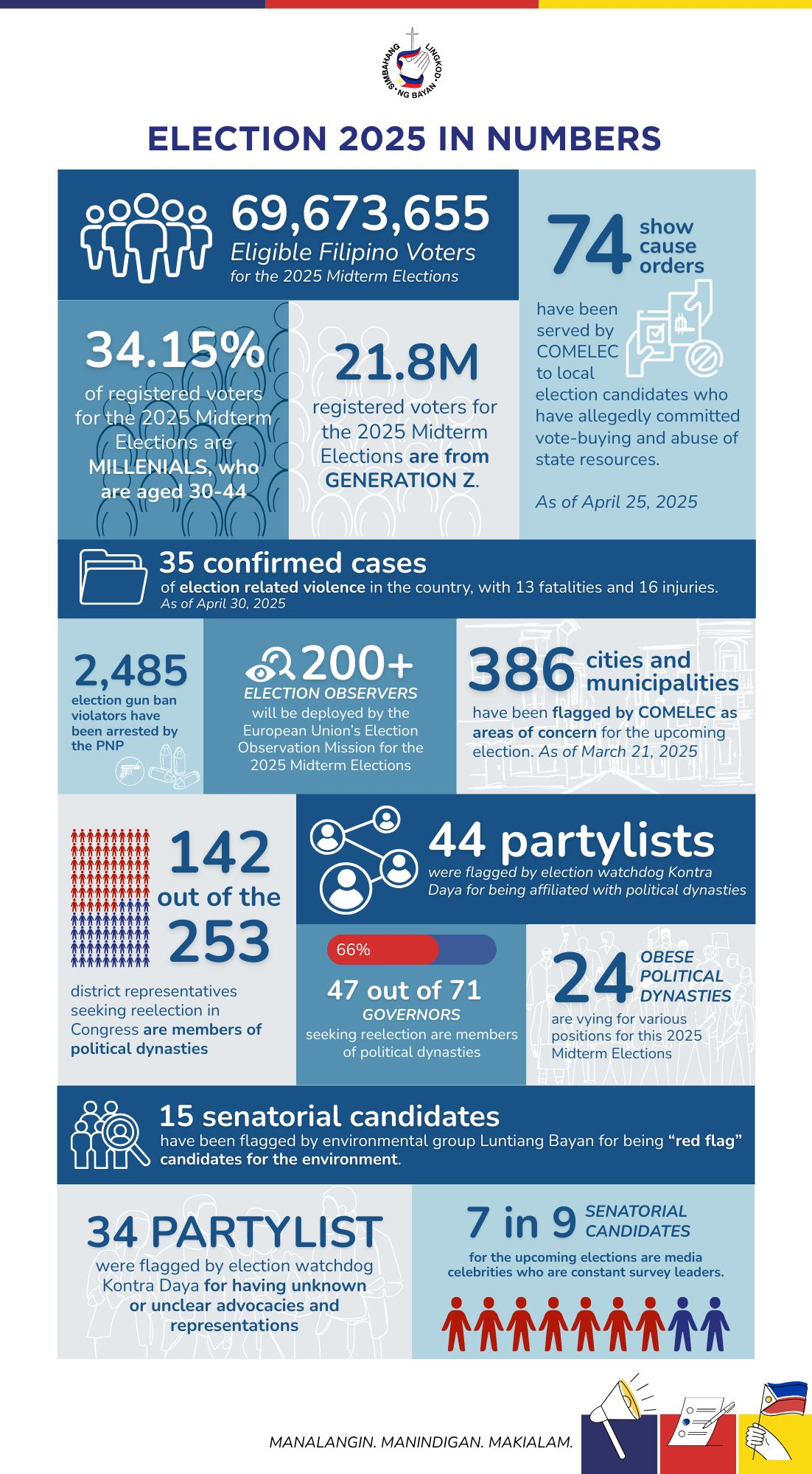

The electorate in the Philippines is a highly diverse and dynamic group, shaped by demographic trends, cultural factors, and social structures. Understanding the composition of voters is key to analyzing political behavior, campaign strategies, and electoral outcomes.
1. Generational Breakdown
The Filipino electorate can be broadly categorized into the following generational cohorts:
| Generation | Approx. Birth Years | Age in 2025 | Characteristics |
|---|---|---|---|
| Gen Z | 1997–2012 | 13–28 | Tech-savvy, highly connected online, values authenticity, influenced by social media. The older half (18+) makes up a growing voting bloc. |
| Millennials | 1981–1996 | 29–44 | Largest group of working-age voters. Generally progressive, issue-oriented, urbanized, and active online. |
| Gen X | 1965–1980 | 45–60 | Often heads of households, stable careers, more conservative, values stability and leadership credentials. |
| Baby Boomers | 1946–1964 | 61–79 | Smaller share due to natural attrition. Traditional in values, often loyal to political brands or personalities. |
Key Insight:
Millennials and Gen Z combined constitute more than 50% of the voting population, signaling a youth-dominated electorate with increasing influence of social media and digital platforms in political discourse.
2. Religious Affiliations
Religion plays a strong role in shaping the political attitudes of Filipino voters. The breakdown of major religious affiliations is as follows:
| Religion | Approx. % of Population | Influence on Voting Behavior |
|---|---|---|
| Roman Catholic | ~78% | Strong bloc, conservative values on issues like divorce and abortion. The Church does not officially endorse candidates, but clergy influence remains in some regions. |
| Islam | ~6% | Concentrated in BARMM (Bangsamoro Autonomous Region in Muslim Mindanao); identity politics and regional autonomy are key concerns. |
| Iglesia ni Cristo | ~2–3% | Known for “bloc voting,” where members are expected to follow leadership endorsements. |
| Evangelical/Protestant | ~3–5% | Growing demographic, especially among middle-class urban voters; may support candidates with moral and religious undertones. |
| Others/No Religion | ~1–2% | Small but growing number, typically younger, more secular, urban-based. |
Key Insight:
While the Philippines is predominantly Catholic, minority religions such as Iglesia ni Cristo and Muslim voters play strategic roles, particularly due to bloc voting and regional concentration.
3. Sex (Gender Distribution)
According to the Commission on Elections (COMELEC) data:
| Gender | Approx. % of Electorate |
|---|---|
| Female | ~51–52% |
| Male | ~48–49% |
Women slightly outnumber men in the voting population.
Key Insight:
While gender does not create substantial voting bloc divisions, female voters often respond strongly to issues of welfare, family, education, and healthcare. However, representation of women in elected positions remains low, despite this demographic edge.
4. Age Distribution
As of the 2022 elections and projections leading into 2025, the age distribution is roughly:
| Age Group | % of Registered Voters | Characteristics |
|---|---|---|
| 18–24 (Youth) | ~15–20% | First-time or early voters, influenced by online trends, often issue-driven. |
| 25–34 | ~25% | Largest cohort, digitally engaged, employment-driven concerns. |
| 35–44 | ~20% | Family-oriented, economic stability-focused. |
| 45–59 | ~20% | Often more traditional, established in careers, involved in local politics. |
| 60+ | ~10–15% | Less mobile, strong allegiance to traditional parties or figures. |
Key Insight:
More than 60% of voters are below the age of 45, making the Philippines a youth-heavy democracy, though voter turnout among younger groups tends to be lower than older cohorts.
Overall Observations
- Youth Dominance
The growing influence of Millennials and Gen Z is transforming the electoral landscape, pushing political discourse toward digital platforms and issue-based engagement (climate change, education, job creation, corruption). - Religious and Cultural Influences
While the Catholic Church’s political influence has somewhat waned, bloc-voting religious groups like Iglesia ni Cristo and regional religious identities (like in BARMM) remain potent electoral forces. - Gender Considerations
Despite women comprising the majority of voters, gender parity in political representation remains a challenge. Campaigns that prioritize family welfare, education, and health tend to perform well with female voters. - Urban vs Rural Divide
Not explicitly covered above but closely tied to generational and educational demographics, urban voters tend to be more progressive and exposed to digital media, while rural voters remain influenced by patronage politics and local personalities.