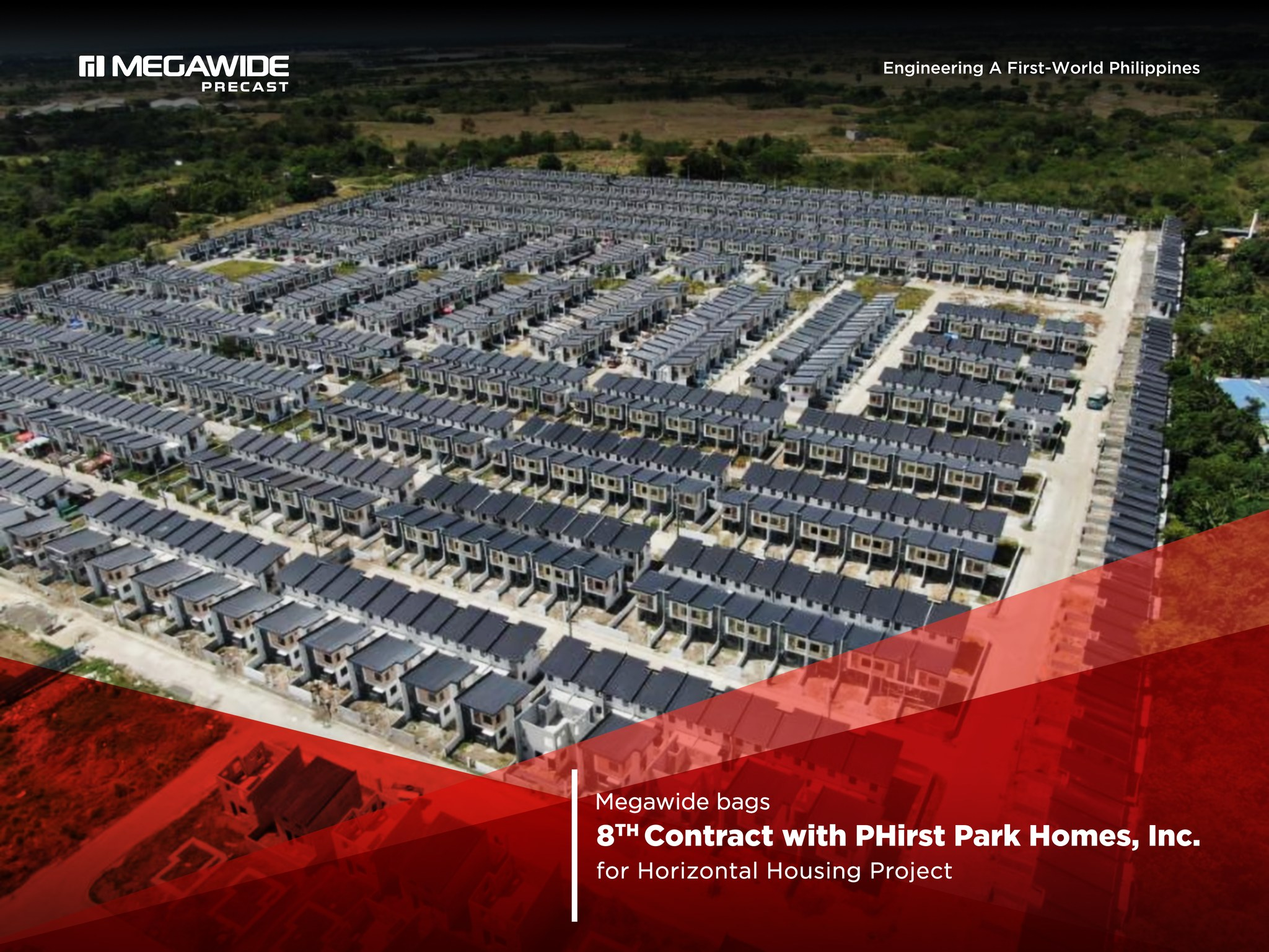

With millions of Filipinos still without permanent homes, Megawide Construction Corp. is doubling down on an industrial-style solution to one of the country’s most persistent problems: how to build decent housing faster and at scale.
The listed engineering and infrastructure firm is preparing to invest as much as P2 billion to expand its precast construction operations, a move that reflects both surging demand and a strategic shift toward factory-built components rather than traditional on-site construction.
The expansion, which could take about 18 months to complete once approved, would involve setting up an additional precast facility to complement Megawide’s existing plant in Rizal.
According to company president and chief executive officer Edgar Saavedra, Megawide’s current precast capacity is already being stretched to the limit as developers seek faster and more efficient ways to roll out housing projects. Demand, he said, has effectively quadrupled, prompting management to seriously consider expansion by year-end.
Rather than chasing luxury developments, Megawide’s bet is anchored on what Saavedra calls the “real market”: mass housing for Filipinos who remain underserved by the traditional real estate pipeline. Market studies conducted by the company show that the country’s housing backlog remains deep, particularly in areas outside the high-end condominium segment that has dominated recent years.
To meet this demand, Megawide is eyeing a more geographically balanced footprint for its precast operations. With its current facility located in Taytay, the company sees strategic value in building another plant in the south, with Cavite emerging as a likely site.
The long-term plan is to also establish a presence in the north, allowing Megawide to efficiently serve Metro Manila and the wider Greater Manila Area while cutting transport time and costs.
The push highlights Megawide’s confidence in precast technology as a game changer for Philippine construction. Instead of relying on labor-intensive hollow block methods, the company manufactures key structural components inside factories, then assembles them on-site.
This approach shortens construction timelines, improves quality control, and allows developers to deliver homes more quickly to the market.
Saavedra said this speed advantage is becoming increasingly attractive as both private developers and public sector agencies look for ways to accelerate housing delivery without sacrificing safety or durability. In a country frequently hit by typhoons and earthquakes, factory-built components also offer greater consistency compared to conventional methods.
Funding for the expansion has yet to be finalized. Megawide is keeping its options open, including a possible tap of the capital markets, depending on timing and overall market conditions.
Beyond precast, Megawide continues to operate across a broad portfolio that includes property development, airport and transport terminals, logistics, and overseas construction units. Still, the planned expansion underscores how central housing has become to the company’s long-term growth story.
As urbanization accelerates and the housing gap persists, Megawide’s P2-billion precast bet signals a clear message: the next phase of growth may not come from building taller, but from building smarter—and faster—for the many Filipinos still waiting for a place to call home.