
For decades, Mariah Carey was celebrated as the voice of soaring ballads and sparkling pop perfection. But behind the glitter and glass-shattering high notes, she carried a secret—one that only recently came to light: in the mid-1990s, at the very height of her fame, Carey moonlighted as the driving force behind a grunge-inspired rock band.
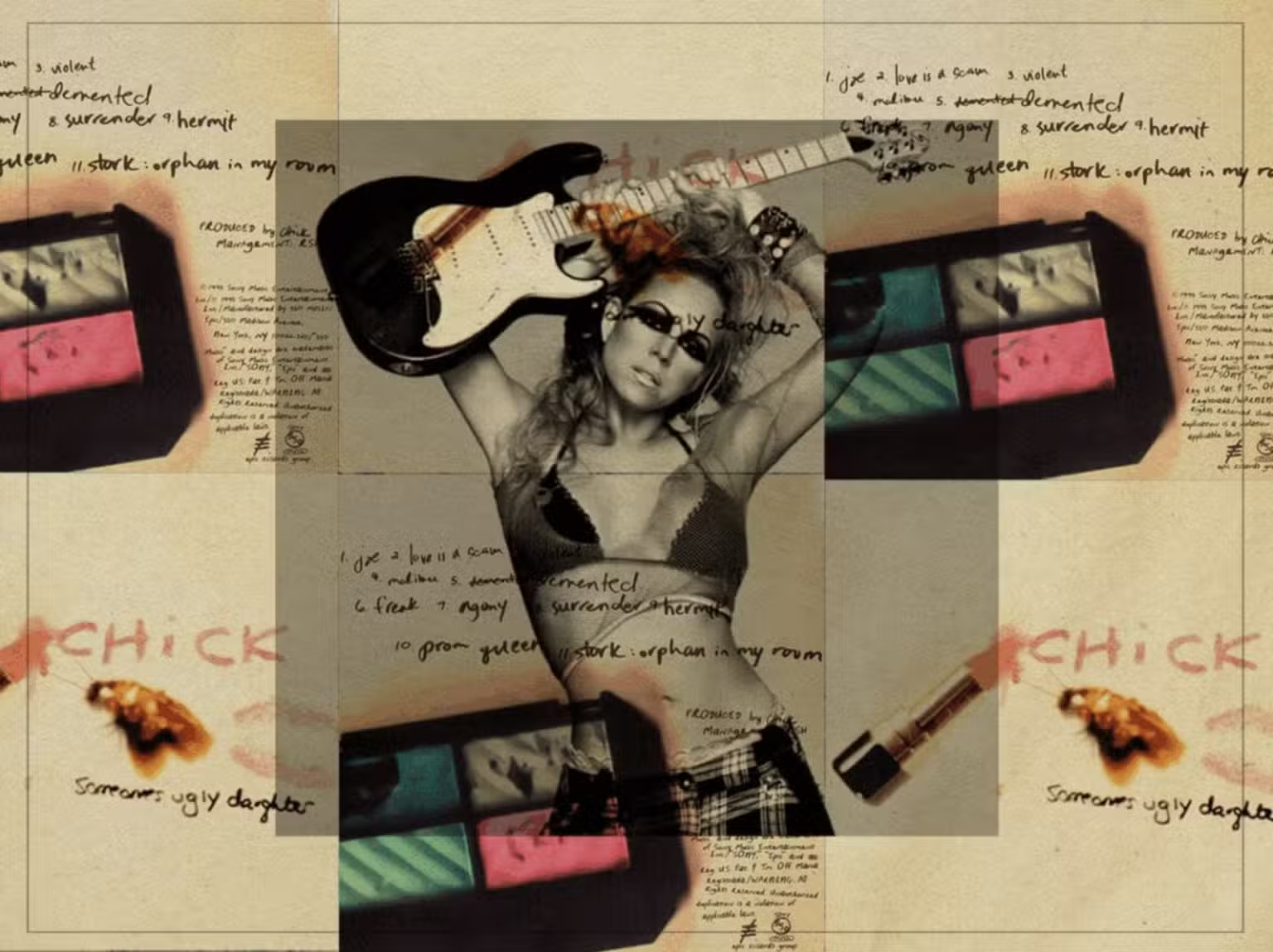
The revelation emerged unexpectedly during a recent live-streamed event, when a fan presented Carey with a bootlegged CD that looked suspiciously familiar. Onstage, she froze. She recognized the artwork—because she had drawn it herself three decades earlier. Without hesitation, she confessed to the stunned audience that the disc contained tracks from Chick, a side project she had written, produced, and performed in secret during the recording of her 1995 pop juggernaut Daydream. Moments later, she played one of the songs. The crowd roared.
A pop icon in disguise
In the mid-’90s, grunge and alternative rock were at their peak, shaping not just the sound of the charts but the cultural mood of a generation. For Carey—then trapped in the gilded cage of her pop stardom and a notoriously controlling record label—the raw energy of the genre became a form of therapy.
She poured her frustration and defiance into distorted guitars and snarling lyrics, yet her label panicked at the thought of America’s princess of pop fronting a rock band. The compromise? A trusted friend, Clarissa Dane, was brought in to sing lead vocals on Carey’s lyrics while Carey retreated to the shadows, layering herself into background vocals. Chick was released quietly, with no trace of Carey’s name.
It was a stealth rebellion—Mariah Carey, the world’s best-selling female artist at the time, hiding her true voice to escape corporate censorship.
The album that almost was
Listening to those recordings today, one thing is clear: Carey wasn’t just dabbling. She committed. The riffs were gritty, the mood was angsty, and beneath it all was her unmistakable vocal texture, ghosting every track. It wasn’t parody—it was conviction.
Had the label allowed her to release the record under her own name, the ’90s musical landscape might look different. Imagine Carey—at the height of her chart dominance—breaking into the same space as Alanis Morissette, Hole, or Garbage. She could have been the bridge between pop royalty and rock authenticity, a genre-shifting move that anticipated the kind of boundary-crossing artists we now celebrate.
A legacy reconsidered
Three decades later, the rediscovery of Chick reframes Carey’s career. Her catalog already stretches from R&B to hip-hop collaborations, but the grunge chapter proves her artistry was always more restless than the industry let on. For fans, it offers a rare glimpse of Mariah unfiltered—furious, playful, and unafraid to rebel.
Now, with Carey hinting that she still owns the original recordings with her lead vocals intact, the question isn’t whether the world is ready for Chick. It’s whether we can finally see Carey for what she was all along: not just a pop diva, but a genre-defying visionary.
And if those unreleased tracks ever see daylight, the narrative around Mariah Carey’s career won’t just be rewritten—it’ll be re-scored, with distortion pedals and drum crashes echoing the sound of an artist who refused to stay in her lane.