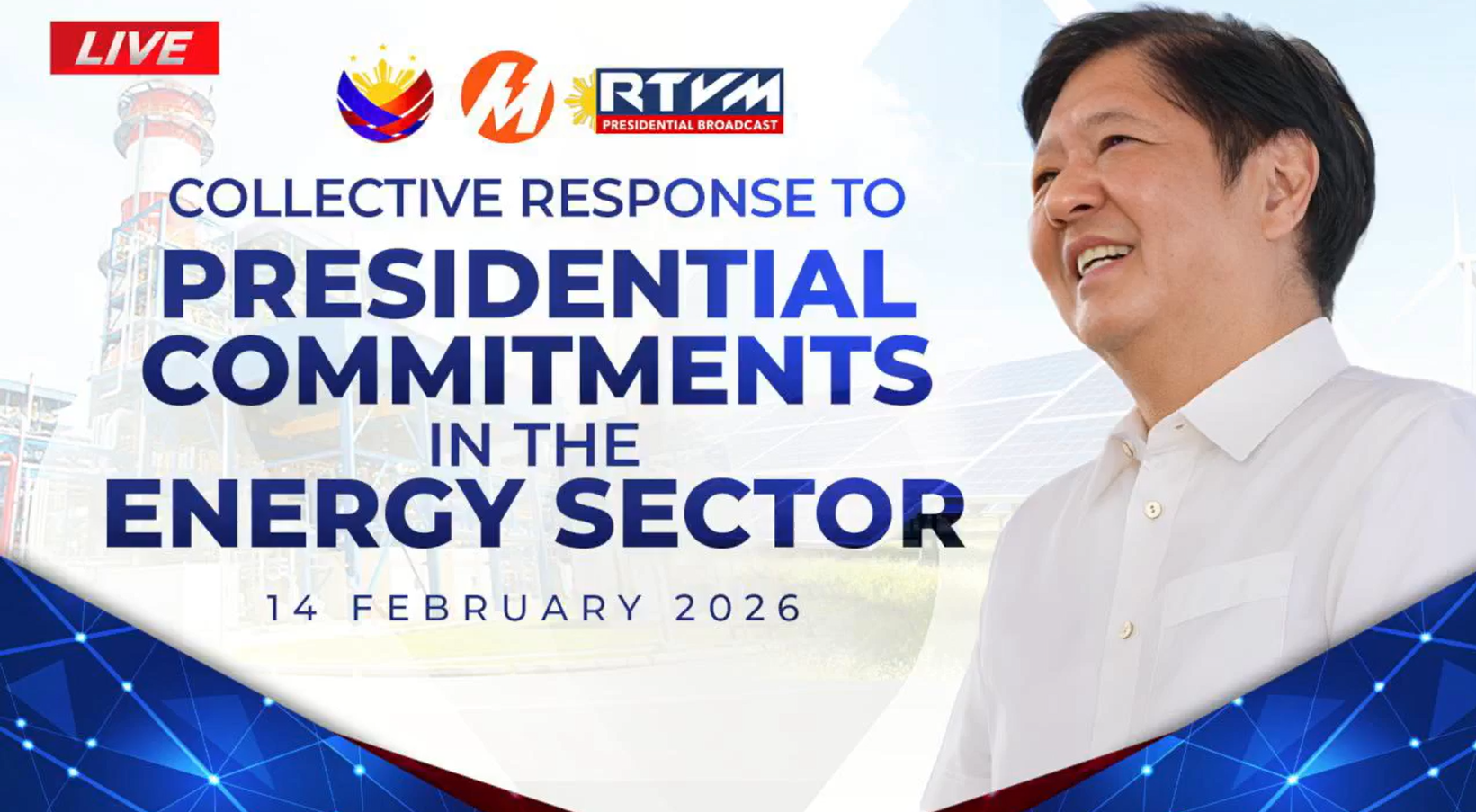

With the country grappling with rotational brownouts, volatile electricity prices, and millions of homes still off-grid, President Ferdinand R. Marcos Jr. on Saturday placed the spotlight on innovation and collaboration as he toured the Manila Electric Company’s energy exhibit at the Meralco Theater.
The visit underscores Malacañang’s broader push to deliver on commitments outlined in the 2025 State of the Nation Address: stabilizing supply, modernizing infrastructure, and accelerating electrification for an estimated three million Filipino households still without reliable power.
Rather than a ceremonial walkthrough, the event functioned as a working showcase of scalable solutions — from decentralized solar systems for remote communities to digital metering platforms designed to empower consumers and reduce system losses.
At the forefront of the exhibit was the community electrification program of the One Meralco Foundation, which deploys solar-powered systems to low-income households and geographically isolated and disadvantaged areas within the franchise zone of Manila Electric Company.
The approach reflects a shift in electrification strategy: instead of waiting for costly grid expansion, modular solar installations can deliver immediate access to lighting, phone charging, and small appliance use — critical for education, microenterprise, and public safety in off-grid sitios.

Equally notable was the evolution of a grassroots e-mobility project in Valenzuela City. What began as a simple charging outlet for electric tricycles has matured into a fully operational charging station at the Mulawinan Street terminal in Lawang Bato.
Developed in partnership with the Department of Social Welfare and Development and the local government, the facility supports drivers enrolled in a sustainable livelihood program. At Php5 for every 25 minutes of charging, the model ensures affordability while allowing revenues to be shared among association members. The station remains open to the public, benefiting e-trike operators under MULCETRODA and beyond.
The project illustrates how energy infrastructure can double as an economic multiplier — reducing fuel costs, cutting emissions, and generating steady income streams at the community level.
Technology demonstrations at the exhibit highlighted the digital backbone of a modernized power sector. KLoad’s prepaid household platform enables real-time balance alerts, reload reminders, and automated disconnection or reconnection notifications — tools aimed at improving payment discipline and giving consumers tighter control over consumption.
An Advanced Metering Infrastructure-ready elevated metering configuration was also featured, equipped with compact, connectivity-enabled meters capable of remote reading and near real-time analytics. Simulated remote operations showcased how utilities can detect anomalies faster and manage loads more efficiently.
Meanwhile, a smart-home demonstration mapped energy flows between the main grid, rooftop solar photovoltaic systems, and battery storage units under different usage scenarios. Integrated with AMI and net-metering mechanisms, the system illustrated how households could both consume and export electricity, signaling a more participatory energy ecosystem.
On the generation side, Meralco PowerGen Corporation (MGEN) presented its “Powering Better Tomorrow” portfolio, emphasizing a balanced mix of dependable baseload and cleaner energy investments.
Its affiliate, MTerra Solar, reported successful grid synchronization and energization — a milestone that signals readiness for safe and stable integration into the Luzon grid. The development is expected to contribute additional capacity at a time when reserve margins remain tight during peak demand months.
The administration’s broader target — in coordination with the Department of Energy and the National Electrification Administration — is to close the country’s power gap by 2028.
Achieving that objective will require synchronized investments in generation, transmission, distribution, and off-grid solutions. Friday’s exhibit suggests that policymakers and private sector players are aligning around a hybrid strategy: expand capacity, digitize the grid, and decentralize access where conventional infrastructure falls short.
For households enduring intermittent supply and rising bills, the stakes are immediate. For the broader economy, reliable electricity is foundational — enabling manufacturing, digital services, and investment flows.
As the President toured the installations, the message was clear: energy reform is no longer confined to policy pronouncements. It is being operationalized through technology, partnerships, and community-level innovation — with 2028 set as the benchmark for measurable results.