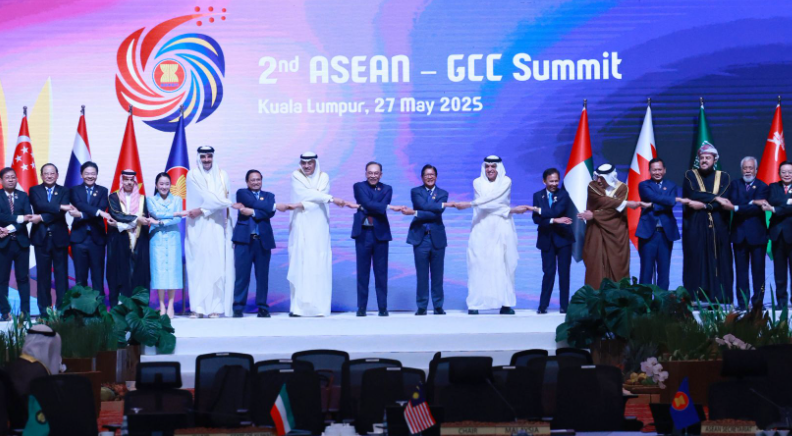
President Ferdinand “Bongbong” Marcos Jr. on Tuesday formally sought the support of wealthy Arab nations for the Philippines’ bid for a seat in the United Nations Security Council. The request was made during his engagement with members of the Gulf Cooperation Council (GCC) as part of efforts to rally international backing ahead of the elections.
“Our success in the Bangsamoro Autonomous Region and mostly Mindanao in the southern Philippines is the centerpiece of our country’s experience in building peace and forging new paths of cooperation that can enrich the work of the United Nations Security Council,” Marcos said during the 2nd ASEAN – Gulf Cooperation Council (GCC) Summit.
“We take this opportunity to reaffirm the Philippines’ candidature to the United Nations Security Council for the term 2027-2008. We hope to count on your valuable support as we seek to bring our region’s perspective to the United Nations Security Council,” he added.
According to information on the official website of the United Nations, the UN Charter created six principal organs that serve as the foundation of the international body. Among these is the UN Security Council, which holds the primary responsibility for preserving international peace and security.
The Security Council has the authority to convene at any time whenever global peace and stability are at risk. Its ability to respond promptly to crises makes it one of the most critical and powerful entities within the UN system.
The United Nations Security Council plays a pivotal role in maintaining global peace and order. It is tasked with identifying the presence of any threat to peace, breach of peace, or act of aggression. Once such threats are recognized, the Council urges the parties involved to resolve their conflicts diplomatically and peacefully. It also proposes specific methods for resolving disputes and recommends terms for settlement.
The Philippines has previously served as a non-permanent member of the UN Security Council on four separate occasions: in 1957, 1963, from 1980 to 1981, and from 2004 to 2005. These past memberships reflect the country’s longstanding commitment to contributing to international peace and security efforts.