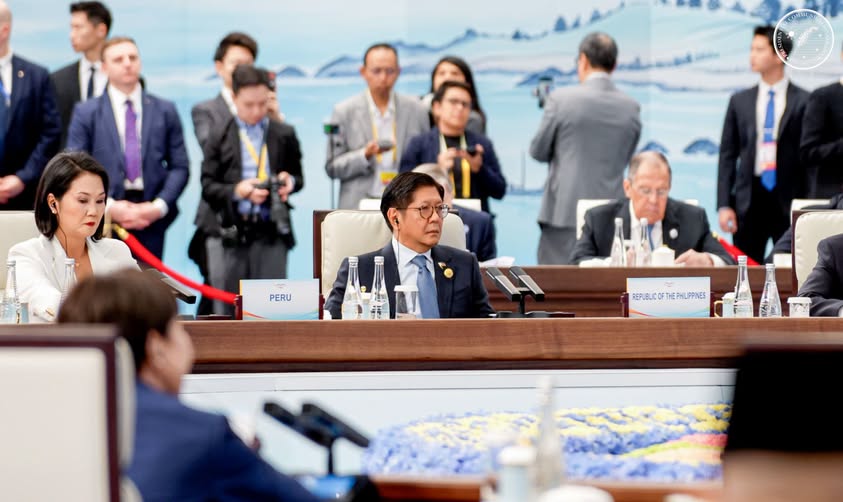

(Photo courtesy of PCO)
SHENZHEN, China – President Ferdinand Marcos Jr. called for broader access to artificial intelligence (AI) and digital technologies for small businesses, alongside stronger regional cooperation on sustainable fisheries, healthcare and economic development during the 33rd Asia-Pacific Economic Cooperation (APEC) Economic Leaders’ Meeting on Thursday, November 19.
In a Facebook post, Marcos highlighted the Philippines’ participation in the annual summit as an upper-middle-income economy for the first time.
The World Bank upgraded the country’s income classification effective July 1, 2026, after its gross national income (GNI) per capita reached USD 4,850, surpassing the USD 4,636 threshold. The Philippines had been classified as a lower-middle-income economy since 1987.
During the summit, Marcos reaffirmed the country’s commitment to expanding international trade while advocating greater access to AI and digital tools to help small enterprises become more competitive.
“We also called for stronger cooperation in sustainable fisheries, healthcare, and preparing our economies for changing demographics,” Marcos said.
“Our goal is clear. APEC cooperation must deliver real gains for our people through better jobs, stronger businesses, and a more prosperous future,” he added.
The President’s push for digital transformation comes as APEC member-economies work to accelerate technological innovation and encourage the responsible adoption of emerging technologies.
China, which is hosting this year’s summit, has identified openness, innovation and cooperation as key priorities under the theme “Building an Asia-Pacific Community to Prosper Together.”
The 21-member economic bloc continues to promote policies aimed at strengthening trade, improving connectivity and supporting sustainable growth across the region.
Meanwhile, ASEAN leaders, under the Philippines’ chairship, have signed the Digital Economy Framework Agreement, described as the world’s first region-wide binding digital economy agreement.
The agreement seeks to simplify digital trade procedures, encourage paperless transactions and expand market access for businesses across Southeast Asia.
Marcos emphasized that regional economic cooperation should translate into concrete benefits for ordinary citizens, particularly through employment opportunities, stronger enterprises and long-term economic growth.