
MANILA – President Ferdinand R. Marcos Jr. on Wednesday called for faster release of qualified persons deprived of liberty (PDLs) whose discharge is delayed by paperwork or lack of legal assistance, while directing prison authorities to ensure that every release undergoes strict legal review.
“Every release should be done painstakingly. Second chances should never come at the expense of public safety,” Marcos said during the 32nd National Correctional Consciousness Week at the New Bilibid Prison reservation in Muntinlupa City.
Marcos stressed that no one should receive special treatment and called for an end to illegal cellphone use and drug operations inside correctional facilities.
At the same time, he said qualified PDLs should not remain behind bars simply because they cannot afford legal assistance or have yet to complete the paperwork required for their release.
“Completing a sentence should mean going home to your family, not waiting for delayed paperwork,” he said.
Marcos said the government had released 36,000 PDLs over the past four years through correctional reforms aimed at improving access to legal assistance and expediting the review of inmates’ records.
These initiatives include the Department of Justice’s (DOJ) Katarungan Caravan, which brings legal services closer to communities and correctional facilities, and the Bilis Laya Program, which taps volunteer lawyers to review PDL records and determine their eligibility for release.
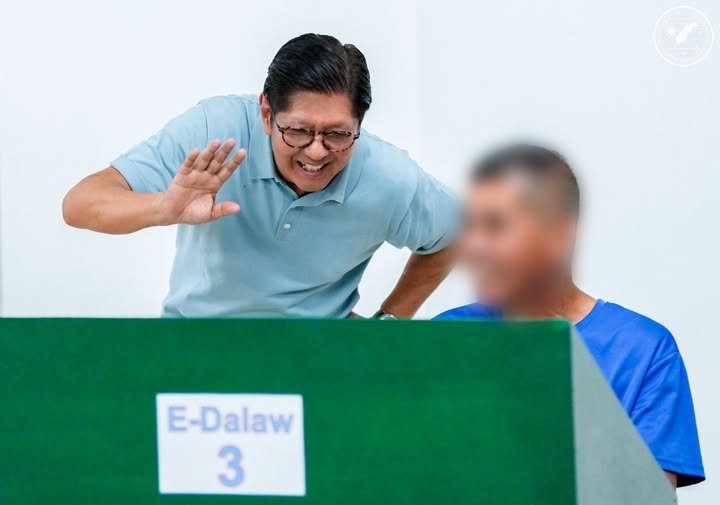
During First Lady Liza Araneta-Marcos’ visit to New Bilibid Prison on Oct. 20, 43 qualified PDLs received certificates of discharge, while 857 others benefited from legal services, Marcos said.
He also urged local government units to partner with law schools and lawyers’ organizations to expand free legal assistance, including through qualified law students working under the supervision of lawyers.
Marcos called on government agencies, local governments and the private sector to help former PDLs reintegrate into society by providing employment and livelihood opportunities.
He said correctional reform must go beyond prison infrastructure to include education, vocational training and livelihood programs that prepare PDLs for their return to their communities.
He also cited overcrowding, delays in case proceedings and limited access to legal assistance as persistent challenges in the correctional system.
*Addressing prison congestion*
Marcos acknowledged that overcrowding remains a longstanding problem in the country’s penal facilities.
“Mahirap ang magbagong-buhay kung masikip at hindi maayos ang ating mga bilangguan (It is difficult to be a better person when our prisons are cramped and in poor condition),” he said.
To address the problem, the government is improving prison facilities nationwide to ensure inmates’ safety and provide a conducive environment for rehabilitation.
Marcos cited ongoing works at Iwahig Prison and Penal Farm in Palawan, the proposed Sablayan Mega Ecozone in Occidental Mindoro and Bureau of Corrections Global City in Muntinlupa, as well as the establishment of the Central Luzon Regional Prison Facility in Palayan City, Nueva Ecija. (Darryl John Esguerra/PNA)